
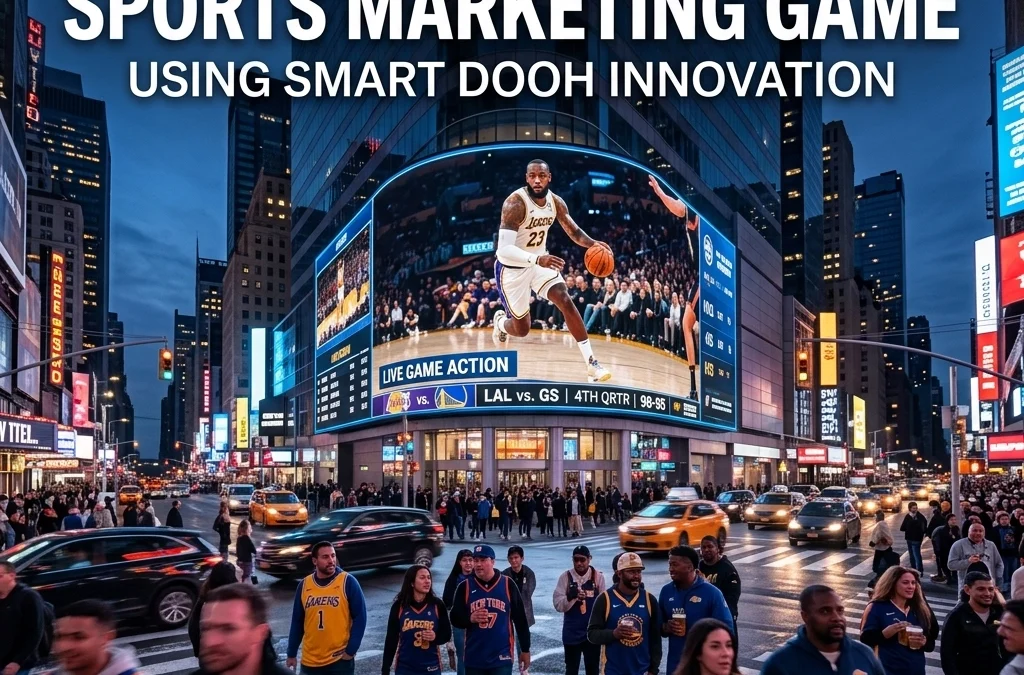
Sports marketing has fundamentally changed. The days of relying solely on a fixed logo on a stadium wall or a single television spot are fading. Today, the most successful brands are capturing fan attention across everyday spaces. This shift focuses on reaching fans during their commutes, while they eat at sports bars, and as they shop. Digital Out-of-Home (DOOH) advertising has transformed sports marketing from simple location-based buys into routine-based strategies that follow fans throughout their entire day.
Winning the sports marketing game now requires a combination of real-time data, strategic placement, and smart technology. OOH Sports provides the tools to bridge the gap between physical advertising and the fast-paced world of live athletics.

The Strategic Shift in Sports Audience Engagement
Traditional sports advertising was often static. A brand would purchase a billboard near a stadium and hope for the best. While this provided visibility, it lacked the flexibility needed to react to the high-energy, unpredictable nature of sports. Smart DOOH innovation solves this by introducing programmatic capabilities.
Programmatic DOOH allows media buyers to purchase screen time based on specific triggers. These triggers can include weather conditions, the time of day, or even the current score of a game. This level of precision ensures that a marketing message is always relevant to the context of the fan's experience. Instead of a generic ad, a brand can display a celebratory message immediately after a home team victory. This relevance is what drives engagement and increases brand recall.
Real-Time Dynamic Creative: The Ultimate Game Changer
One of the most powerful aspects of modern sports marketing is Dynamic Creative Optimization (DCO). This technology allows creatives to be updated instantly based on live game data. This is not just a trend; it is a fundamental shift in how brands interact with audiences.
Leveraging Live Match Data
When a fan sees a digital panel that displays the live score of an ongoing game, the ad becomes more than just a promotion. It becomes a piece of utility content. This keeps the message fresh and highly relevant. For example, a sports betting brand can stream live odds to screens in sports bars or high-traffic urban areas. Fans see value in the information, which reduces the "ad fatigue" often associated with traditional marketing.
Research into successful campaigns shows that real-time sports betting DOOH campaigns can be launched and converted in very short timeframes. Brands that utilize these real-time sports betting strategies see a significant increase in immediate action from consumers.

Capitalizing on Emotional Moments
Sports are driven by emotion. Smart DOOH innovation allows brands to capitalize on these high-energy moments. If a star player breaks a record or a team clinches a playoff spot, digital screens can pivot to show congratulatory content within seconds. This makes the brand feel like part of the celebration, building a stronger emotional connection with the fan base.
Navigating the Fan Journey: Beyond the Stadium
A common mistake in sports marketing is focusing exclusively on the venue. However, the majority of fan engagement happens outside the stadium walls. To win the game, brand managers must map out the entire fan journey.
The Commute and Pre-Game Build-up
The fan experience starts hours, sometimes days, before the whistle blows. Digital urban panels and transit displays can build excitement with countdowns and match previews. By reaching fans during their commute, brands establish a "priming effect." This initial exposure makes subsequent ads inside the stadium or on social media much more effective.
Retail and Social Touchpoints
Fans often visit grocery stores to stock up on snacks or head to local bars to watch the game. Placing DOOH ads in these specific locations creates a direct link to the point of purchase.
A notable example of this success can be seen in how major beverage brands use the medium. Mike’s Hard Iced Tea, for instance, utilized programmatic DOOH to drive a 119% lift in positive brand image by appearing in the right context at the right time. Details of this brand image lift highlight the power of contextual relevance.

Measuring Success: Data-Driven Results in Action
The beauty of smart DOOH innovation is the ability to measure impact with precision. Unlike traditional billboards, digital campaigns offer a wealth of data that can be used to prove Return on Investment (ROI).
Case Study: White Claw
When White Claw launched a programmatic DOOH campaign for a new vodka product, the results were definitive. The campaign drove a 74% lift in purchase consideration. By targeting specific audiences and using high-impact digital screens, the brand was able to move the needle significantly. You can read more about the White Claw purchase consideration lift to see the mechanics of a high-performing campaign.
Case Study: Sea-Doo
Similarly, Sea-Doo used its first digital OOH campaign to increase purchase consideration by 144%. The strategy focused on reaching outdoor enthusiasts in locations where they were already thinking about recreation. This Sea-Doo case study proves that even brands not directly tied to a specific stadium event can win by using sports-adjacent DOOH strategies.

Programmatic DOOH vs. Traditional Stadium Sponsorships
Many brands still debate whether to invest in traditional stadium sponsorships or shift budgets toward programmatic DOOH. While stadium ads offer prestige, they are often locked into long-term contracts with no flexibility.
Programmatic DOOH offers several distinct advantages:
- Cost-Effectiveness: Brands can bid for impressions only when they are most valuable, rather than paying for a static sign that remains up even when the stadium is empty.
- Targeting: DOOH allows for perimeter targeting, reaching fans just outside the venue who may be more attentive to their surroundings than those distracted by the game inside.
- Agility: If a campaign isn't performing well, it can be optimized or paused in real-time.
For a deeper dive into how these two methods compare, the analysis of programmatic DOOH vs. traditional stadium ads provides a clear breakdown of where the better ROI lies for modern marketers.
Common Pitfalls to Avoid in Sports DOOH
Even with the best technology, execution matters. There are several mistakes that media planners frequently make when launching sports-related campaigns.
Ignoring Local Relevance
A "one-size-fits-all" creative rarely works in sports. Fans in New York have different sensibilities and loyalties than fans in Los Angeles. Smart DOOH innovation allows for hyper-local personalization. Failing to adapt the creative to the specific market is a missed opportunity for engagement.
Poor Timing
Running a celebratory ad 24 hours after a game has ended feels stale. The power of DOOH is its immediacy. Brands must ensure their triggers are set correctly so that the right message reaches the audience at the peak of their interest.
Neglecting the Perimeter
Many marketers focus so much on the "main event" that they forget the surrounding area. Stadium perimeter targeting is a highly effective way to catch fans as they enter and exit, providing a less cluttered environment for the brand message. Avoiding these 7 common mistakes in sports DOOH is essential for any brand manager looking to maximize their budget.

The Future of Sports Marketing Innovation
The industry is moving toward a future where sports DOOH will continue to grow at a rapid pace. Some projections suggest that the sector could reach significant milestones in the coming years. This growth is driven by the fact that media planners are increasingly shifting budgets away from traditional channels and toward more measurable, digital outdoor options.
Artificial intelligence (AI) is also beginning to play a larger role. AI-powered DOOH can analyze traffic patterns, weather, and game sentiment to automatically select the best creative to display. This reduces the manual workload for media buyers while increasing the effectiveness of the campaign. The choice between AI-powered DOOH and traditional ads is becoming a central theme in strategic planning meetings across the country.
Winning the Game
To win the sports marketing game, brands must be as dynamic as the games they are sponsoring. It is no longer enough to be present; a brand must be relevant, timely, and data-driven. By leveraging smart DOOH innovation, brands can ensure they are part of the fan's journey from the first morning commute to the final celebratory post-game drink.
OOH Sports provides the network and the technology to make these high-impact campaigns a reality. Whether it is through real-time score updates, location-based targeting, or programmatic efficiency, the goal remains the same: to capture the hearts and minds of fans wherever they may be.
The sports marketing landscape is evolving. Those who embrace the innovation of digital out-of-home advertising will find themselves ahead of the competition, standing on the podium with measurable results and a more loyal fan base. For more information on how to start your journey, visit OOH Sports to explore the possibilities of the modern digital landscape.