
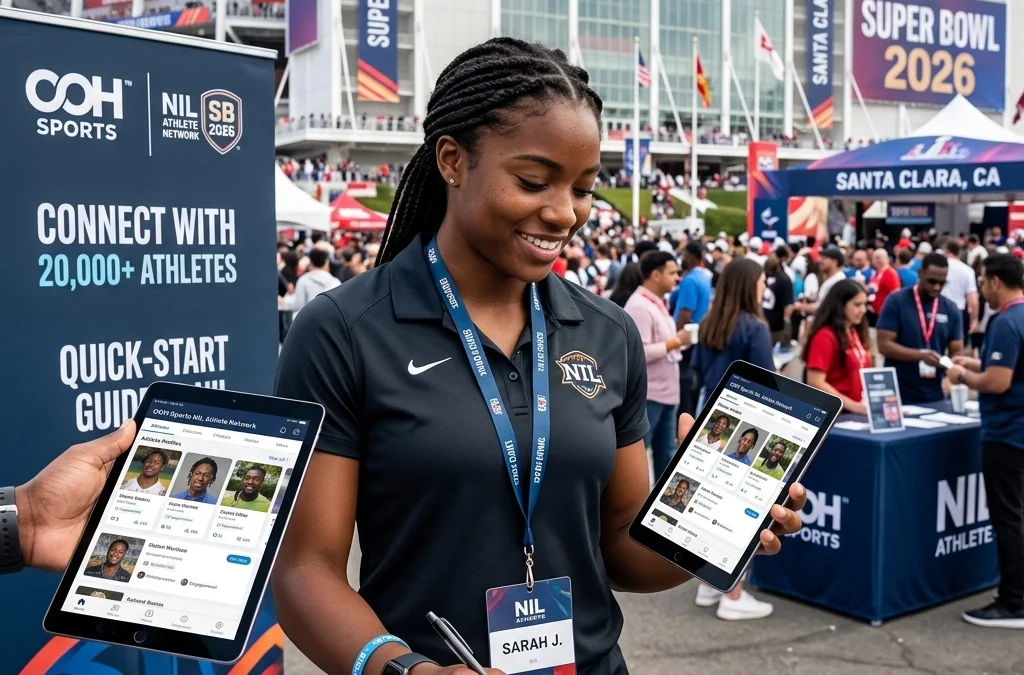
The advertising world changed significantly during the Super Bowl 2026 cycle. While traditional television spots still carry a massive price tag, the real battle for consumer attention has moved to the second screen. Media buyers are no longer just looking for a single celebrity endorsement. Instead, the strategy has shifted toward massive scale and authentic voices. Name, Image, and Likeness (NIL) partnerships have become the most effective way to reach diverse audiences in real time.
Connecting with over 20,000 athletes might sound like a logistical nightmare, but with the right platform and a clear strategy, it is the most powerful move a brand can make. This guide breaks down how OOH Sports and modern NIL platforms allow brands to dominate the conversation by leveraging a literal army of student-athlete influencers.
Why NIL and the Super Bowl are a Perfect Match
Super Bowl 2026 proved that community-level trust outperforms high-gloss production. When a fan sees a college football star from their alma mater or a local hero talking about a brand during the big game, the engagement is far higher than a generic national commercial.
NIL allows brands to partner with college and even high school athletes legally and at scale. This strategy creates thousands of touchpoints across social media, turning a one-day event into a weeks-long narrative. By using an NIL platform, media buyers can move away from manual outreach and transition into automated, data-driven campaign management.
Defining the 20,000-Athlete Strategy
To manage 20,000 athletes, a brand must segment its roster. It is not about treating every athlete the same; it is about using different "tiers" to achieve different goals.
Tier 1: The Heroes (5 to 20 Athletes)
These are the household names. These athletes are used for high-quality creative and PR-heavy moments. They are the faces of the campaign.
Tier 2: The Anchors (100 to 500 Athletes)
These are starters at Power-5 schools or elite stars in sports like basketball or volleyball. They provide predictable reach across specific regions and demographics.
Tier 3: The Long-tail (15,000 to 20,000 Athletes)
This is where the true scale happens. These are micro-creators with highly engaged followers in their local communities. While one post from a Tier 3 athlete might only reach 2,000 people, 20,000 such posts create an aggregate reach that rivals any traditional media buy.

The Technology Behind the Scale
Managing 20,000 relationships manually is impossible. Media buyers need an NIL platform that handles the heavy lifting. Key features to look for include bulk campaign tools, automated payment systems, and real-time analytics.
A robust tech stack allows a brand to distribute a creative brief to 20,000 people simultaneously. It also ensures that FTC-compliant disclosures, such as #ad or partner tags, are used every single time. Most importantly, it handles the tax paperwork and 1099s, which is a critical part of maintaining company policies and legal compliance at this scale.
Before choosing a partner, media buyers should ask if the platform can handle real-time triggers. For example, if a specific team scores during the Super Bowl, can the platform automatically prompt 5,000 athletes to post a "celebration" video? This level of agility is what separates successful 2026 campaigns from the rest.
A Simple Creative Playbook
When working with thousands of athletes, the goal is structure combined with freedom. If a brand provides a strict script, the content feels fake. If it provides too little guidance, the brand message gets lost.
The best approach is to provide content frameworks. Athletes should be encouraged to show their pre-game rituals, their watch party setups, or their post-game reactions. These moments feel organic to their followers.
Required Guardrails:
- A one-sentence brand story.
- Two key benefits of the product.
- A clear call to action, such as a discount code or a link to marketing landing pages.
- Specific "do not" lists to ensure brand safety.
To see how high-level sports marketing and digital integration work in action, watch this overview:
https://www.youtube.com/watch?v=l6J-0zileKE
The Three Phases of Super Bowl Activation
A successful NIL campaign for the Super Bowl is not a single-day event. It requires a strategic timeline.
Phase 1: The Build-Up (2 to 4 weeks out)
The goal here is to warm up the audience. Tier 1 and Tier 2 athletes start sharing content about their preparation and how the brand fits into their daily routine. This builds familiarity before the high-intensity game day period.
Phase 2: Game-Day Real-Time Activation
This is where the 20,000-athlete roster shines. By using real-time triggers, brands can "own" the second screen. As big plays happen, thousands of athletes post reactions. This creates a "surround sound" effect where it feels like the brand is everywhere.
Phase 3: The Post-Game Conversion (48 to 72 hours after)
The focus shifts to sales. Athletes share content about recovering from the game or celebrating a win. Media buyers can use this time to push last-chance offers and track redemptions through unique athlete codes.

Integrating NIL with Out-of-Home Advertising
While NIL dominates social media, OOH Sports provides the physical presence that anchors the campaign. Combining digital athlete voices with physical advertising, such as Sportrons, creates a true omnichannel experience.
For instance, a brand might feature a Tier 1 athlete on a digital billboard near the stadium while thousands of Tier 3 athletes post about that same brand on TikTok. This connection between the physical and digital worlds drives massive brand lift. Data shows that programmatic DOOH campaigns, like those seen in AB InBev’s Mike’s Hard Iced Tea campaign, can significantly improve brand image when executed alongside targeted digital efforts.
Measuring Success at Scale
With 20,000 athletes, measurement must be automated. Media buyers should focus on three core areas:
- Attribution: Using UTM-tagged links and unique discount codes for every athlete to track exactly who is driving sales.
- Engagement: Monitoring not just likes, but shares and comments to gauge the sentiment of the audience.
- Brand Lift: Conducting studies to see how the campaign influenced purchase intent and brand awareness.
OOH Sports has seen incredible results with this data-driven approach. For example, a campaign for White Claw saw a 74% lift in purchase consideration by combining smart targeting with impactful creative.

Legal and Compliance Checkpoints
Scale brings risk, so legal diligence is mandatory. Contracts must be standardized and simple. It is vital to confirm that all athletes are following their specific school's NIL policies to avoid eligibility issues.
Furthermore, brands must be careful about using school marks and logos without a separate license. The NIL platform should have built-in safeguards to ensure that every post is legally sound and follows terms of service and copyright policies.
Your Quick-Start Checklist
If a brand is looking to launch a massive NIL campaign for the next major sports cycle, here are the immediate steps to take:
- Define the primary goal. Is it app installs, brand awareness, or direct sales?
- Choose an NIL platform capable of handling 20,000+ athletes.
- Set a budget that allocates funds for both "Hero" talent and "Long-tail" reach.
- Create a content playbook that prioritizes vertical video and authenticity.
- Plan for real-time triggers to capitalize on live game moments.
- Link the digital campaign to physical OOH assets for maximum impact.
The Super Bowl is the ultimate stage, but the way brands perform on that stage has changed. By embracing the power of 20,000 authentic voices, media buyers can achieve a level of resonance that traditional advertising simply cannot match.
For more information on how to integrate these strategies into a broader marketing plan, visit the OOH Sports blog or check out a case study to see real-world results. If you are ready to start planning your next big move, reach out through the contact page.