
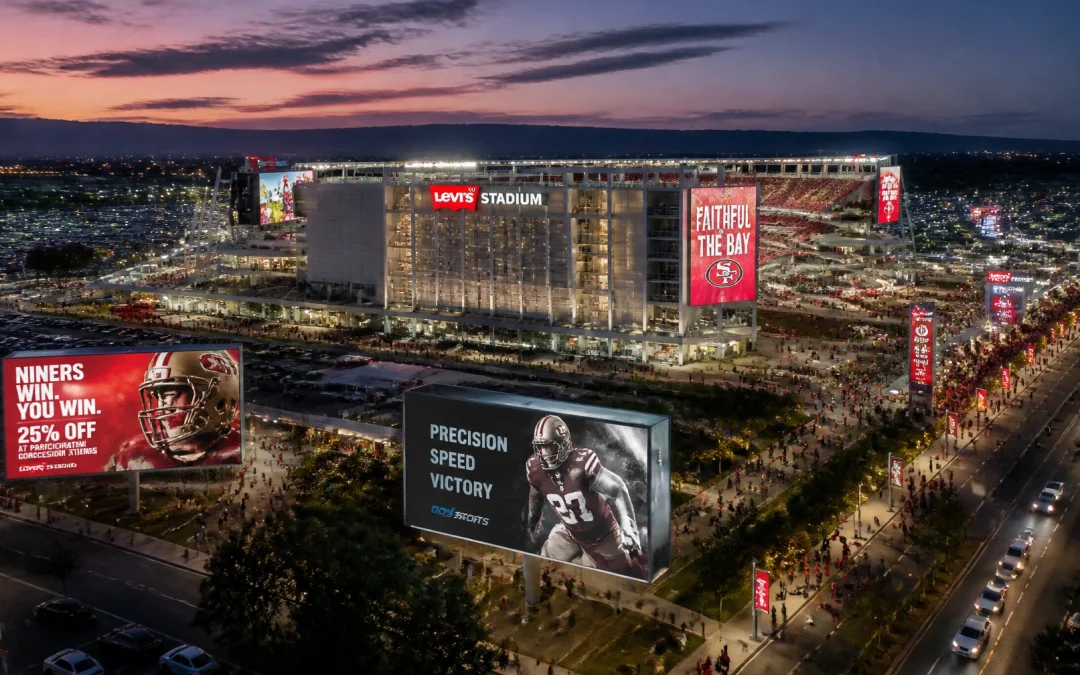
Super Bowl LX, scheduled for February 8, 2026, at Levi’s Stadium in Santa Clara, California, represents the pinnacle of sports marketing and advertising. As brands prepare to compete for the attention of over 70,000 in-person attendees and millions of viewers worldwide, the strategic deployment of out-of-home (OOH) advertising has become a critical component of any comprehensive campaign. With the cost of a 30-second national television spot reaching approximately $10 million, advertisers are increasingly looking toward venue-wide and perimeter-based strategies to maximize their return on investment.
OOH Sports, a leader in the sports media industry with four decades of expertise, provides a robust framework for navigating this high-stakes environment. By leveraging a deep understanding of fan behavior and advanced digital out-of-home (DOOH) technology, the company offers a blueprint for brand dominance that extends far beyond the traditional television broadcast.
Objective and Strategy
The primary objective for any brand participating in the Super Bowl 2026 ecosystem is to achieve "venue-wide" presence. This strategy involves creating a seamless brand experience that begins miles away from the stadium and continues until the fan is seated. The goal is to capture the attention of high-value audiences: including media buyers, brand managers, and chief marketing officers: through a multi-layered approach that combines traditional placements with innovative digital technology.
A successful strategy for Super Bowl LX focuses on the 10-mile radius surrounding Levi’s Stadium. This perimeter encompasses not only the immediate vicinity of the venue but also the transit hubs, hotels, and entertainment districts throughout Santa Clara and the broader San Francisco Bay Area. By saturating this zone, brands can establish a dominant narrative before the first whistle blows.
Venue-Wide Coverage: From Floors to Billboards
To achieve true venue dominance, advertisers must look beyond large-scale billboards. OOH Sports emphasizes a comprehensive inventory that includes every possible touchpoint within the sports environment. This includes high-impact placements such as elevator wraps, concourse screens, and even floor graphics.

Floor Graphics and Concourses
In a crowded stadium environment, floor graphics offer a unique way to capture "downward" attention. These high-durability vinyl installations are strategically placed in high-traffic areas such as entrances, food courts, and merchandise zones. When paired with large-format digital screens in the concourse, they create a 360-degree brand environment that is difficult for fans to ignore.
Digital Billboards and Highway Placements
The journey to Levi’s Stadium is an integral part of the fan experience. Utilizing the extensive network of digital billboards along Highway 101 and other major arteries in the South Bay ensures that the brand message is the first thing fans see as they arrive in the region. These billboards allow for dynamic content updates, enabling brands to react to real-time events or countdowns leading up to kickoff.
The Power of Programmatic DOOH
The evolution of advertising technology has transformed how OOH inventory is purchased and deployed. Programmatic DOOH (pDOOH) allows for data-driven targeting that was previously impossible in the outdoor space. For Super Bowl 2026, this means advertisers can trigger ads based on specific conditions such as time of day, weather, or local traffic patterns.

OOH Sports utilizes programmatic platforms to provide access to every digital video advertising board within the 10-mile perimeter of the stadium. This network allows media planners to execute omnichannel campaigns that sync with mobile and social media efforts. By exposing specific device IDs to OOH ads and then retargeting those same users on their mobile devices, brands can significantly increase brand recall and purchase consideration.
40 Years of Advertising Leadership
Experience matters in an event as complex as the Super Bowl. For 40 years, the leadership behind OOH Sports has been at the forefront of sports marketing, witnessing the transition from static posters to high-definition digital displays. This long-term perspective allows for a more nuanced understanding of logistics and execution.
Navigating the regulatory environment of a host city, securing prime inventory years in advance, and managing the technical requirements of synchronized digital displays requires a level of expertise that only decades of practice can provide. This history is not just about the past. It is about applying proven principles of mass reach to the modern digital landscape.
For a deeper look into how these strategies translate into real-world results, view the overview of OOH Sports' capabilities below:
https://www.youtube.com/watch?v=l6J-0zileKE
Technology Partners and Measurement
The success of a Super Bowl campaign is measured by more than just impressions. OOH Sports collaborates with specialized technology platforms and agencies to provide detailed attribution and impact measurements. This includes brand lift studies that track changes in brand preference and awareness among exposed audiences.
Recent data in the industry suggests that programmatic DOOH delivers a significantly better ROI compared to traditional, non-targeted stadium ads. By using device ID tracking and location-based data, advertisers can quantify the exact number of fans who saw an ad and subsequently visited a website or made a purchase.

Logistics and Execution Processes
The execution of a venue-wide campaign for Super Bowl LX involves a series of logical steps:
- Inventory Auditing: Mapping every digital and static asset within the 10-mile radius and inside the venue.
- Strategic Synchronization: Aligning the creative message across different formats (e.g., matching the billboard creative with the floor graphics).
- Programmatic Integration: Setting up the bidding parameters within the demand-side platform (DSP) to ensure maximum share of voice during peak hours.
- Real-Time Optimization: Monitoring campaign performance and adjusting creative or frequency based on live data from the stadium area.
This meticulous process ensures that the brand remains the subject of the conversation throughout the entire Super Bowl weekend.
Results and Industry Impact
While the final data for Super Bowl 2026 will be analyzed post-event, historical performance of similar campaigns provides a clear indicator of success. For instance, past programmatic DOOH campaigns for major brands have seen purchase consideration lifts as high as 144 percent. By 2030, DOOH sports advertising is projected to reach $50 billion, highlighting the growing importance of this medium.
The combination of 40 years of experience and cutting-edge technology allows OOH Sports to deliver results that are both measurable and impactful. For media buyers and CMOs, the choice is clear. Winning the venue requires a comprehensive, data-driven approach that leaves no stone unturned, from the highway billboards to the stadium floors.
For more information on how to secure your brand's place in the Super Bowl 2026 ecosystem, visit the OOH Sports Sportrons page or contact the team directly to begin the planning process.