
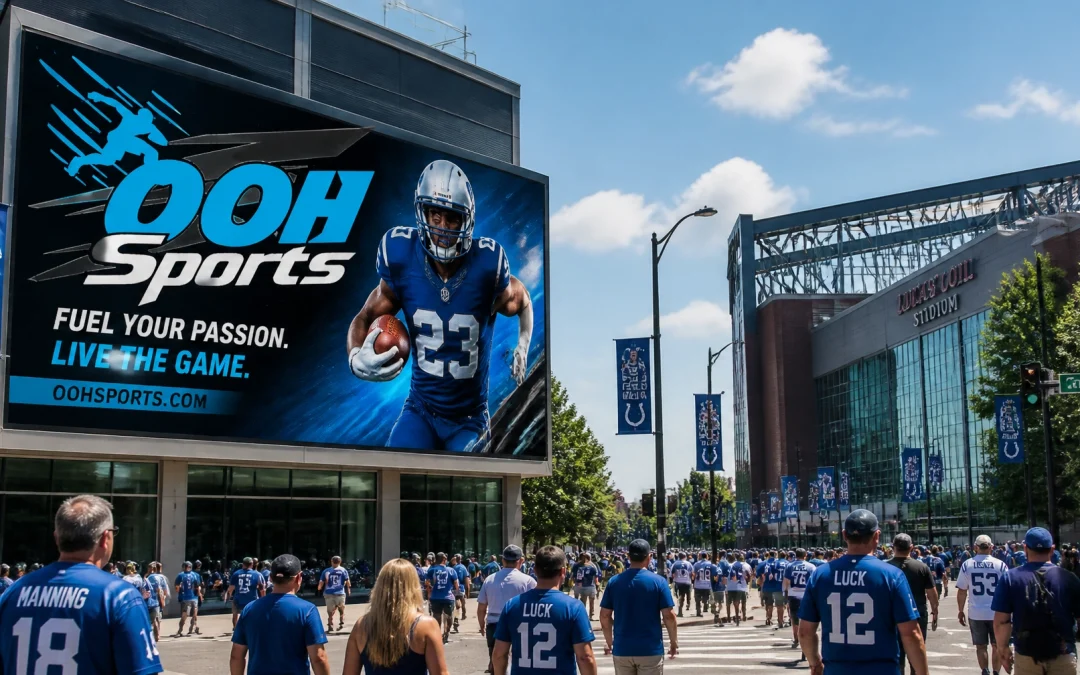
The landscape of sports marketing is undergoing a significant transformation. As traditional media consumption habits evolve, advertisers are increasingly looking for ways to capture the attention of high-value audiences in the physical world. The OOH Sports Network has addressed this need through a major expansion, positioning itself as a primary infrastructure for digital out of home (DOOH) advertising within the sports industry.
By scaling its presence to over 25,000 digital screens nationwide, the network provides a streamlined, data-driven approach for media buyers, brand managers, and chief marketing officers to reach fans where they are most engaged. This expansion is not merely an increase in inventory but a strategic realignment of how brand messages are delivered throughout the game-day experience.
1. Unprecedented Scale: Over 25,000 Digital Screens
The most immediate impact of the OOH Sports Network expansion is its physical footprint. The network now encompasses more than 25,000 digital screens across the United States. This volume of inventory allows for a level of reach that was previously difficult to achieve through fragmented local buys. By aggregating these assets into a single cohesive network, OOH Sports provides a national platform with local precision.
This scale ensures that brands can maintain a consistent presence across multiple markets simultaneously. Whether targeting a specific regional playoff or a national championship event, the availability of 25,000 screens ensures that the message remains prominent in the high-traffic areas frequented by sports enthusiasts.
2. The Strategic 10-Mile Radius
A core component of the network's strategy is the geographic concentration of its screens. The expansion focuses heavily on a 10-mile perimeter around major sports venues. This "stadium-adjacent" strategy is based on the logic that fan engagement is at its peak when they are in close proximity to the event.
By saturating the 10-mile radius, the network captures the attention of fans during the critical hours before and after a game. This perimeter targeting allows brands to dominate the local environment, creating a high-frequency experience for the target audience. The proximity to the venue adds a layer of contextual relevance to the advertisements, making them feel like an integral part of the event atmosphere.
3. Engaging the Fan Journey from Driveway to Seat
The expansion is designed to map the entire fan journey, rather than just focusing on the time spent inside the stadium. OOH Sports categorizes its inventory into distinct touchpoints that follow the fan from the moment they leave their home until they arrive at their destination.
- The Approach: Large-format digital billboards on major highways and arterial roads leading to the stadium.
- The Hubs: High-traffic pedestrian walkways and transit stations where fans congregate.
- The Social Sphere: Digital video boards in sports bars, lounges, and restaurants where fans gather for pre-game and post-game celebrations.
- The Retail Ring: Screens in shopping centers and convenience stores where fans purchase team gear, food, and tailgating supplies.

4. The Power of Programmatic Integration
One of the most significant features of the expanded network is its programmatic enablement. OOH Sports has integrated its inventory with leading Demand-Side Platforms (DSPs), such as StackAdapt. This allows media buyers to purchase DOOH impressions with the same automation and data-driven precision used in digital display and social media advertising.
Programmatic DOOH (pDOOH) offers several advantages:
- Flexibility: Campaigns can be launched, paused, or adjusted in real-time based on game schedules or weather conditions.
- Efficiency: Automated buying processes reduce the administrative overhead associated with traditional OOH contracts.
- Targeting: Advertisers can use first-party or third-party data to trigger ads when specific audience segments are most likely to be present.
5. Removing the Barriers of Traditional Sponsorships
Historically, reaching fans near a stadium required complex, multi-year sponsorship agreements with individual teams or venues. These deals often come with high entry costs and rigid requirements. The OOH Sports Network expansion offers an alternative for brands that want the impact of sports marketing without the long-term commitments of a traditional sponsorship.
By providing a turnkey, network-based solution, OOH Sports allows brands to activate around major events on a campaign-by-campaign basis. This lowered barrier to entry makes sports-adjacent advertising accessible to a wider range of brands, from local startups to global consumer packaged goods (CPG) companies.
6. Multi-Category Venue Coverage
The expansion is not limited to a single sport or league. The OOH Sports Network covers a diverse range of venue categories, including professional football, basketball, baseball, hockey, and soccer, as well as collegiate athletics and major golf tournaments.
This diversity allows advertisers to diversify their reach across different fan demographics. For example, a brand may choose to target the high-energy environment of a Saturday afternoon college football game while simultaneously maintaining a presence around a professional hockey arena in a different market. The ability to pivot between categories within a single network simplifies the planning process for media agencies.

7. Hyper-Local Data and Real-Time Flexibility
The OOH Sports Network leverages hyper-local data to optimize ad delivery. Because the screens are digital, the content can be updated instantaneously to reflect real-time events. This capability is particularly useful for industries such as sports betting, where odds and promotions can change rapidly leading up to kickoff.
Media buyers can implement dynamic creative that reacts to live scores, player updates, or even the local temperature. This level of responsiveness ensures that the advertising remains relevant and engaging throughout the duration of the campaign. The real-time capabilities of the network represent a significant leap forward from the static billboards of the past.
8. Retargeting and Mobile Integration
A key strategic choice in the expansion is the integration of mobile retargeting. By capturing anonymized device IDs of consumers exposed to the digital screens, the network allows brands to re-engage those same fans on their mobile devices.
This omnichannel approach bridges the gap between the physical world and the digital one. When a fan sees a large-format billboard on their way to the game and later receives a targeted ad on their smartphone, the brand's message is reinforced. This secondary touchpoint is highly effective for driving specific actions, such as downloading an app, visiting a website, or taking advantage of a retail promotion.
9. Measurable Success and Attribution
The expansion places a heavy emphasis on measurement and ROI. Unlike traditional OOH, which often relied on broad traffic estimates, the expanded OOH Sports Network utilizes advanced attribution models to quantify the impact of a campaign.
- Brand Lift Studies: Measurement of increases in brand awareness and purchase consideration.
- Foot Traffic Attribution: Tracking the number of exposed individuals who subsequently visited a retail location or dealership.
- Online Conversion: Linking DOOH exposure to website visits or e-commerce purchases.
Case studies have shown that this data-driven approach yields significant results. For instance, recent programmatic DOOH campaigns for major beverage brands have seen lifts in purchase consideration exceeding 74%.

10. A Turnkey Solution for Modern Media Buyers
The ultimate goal of the OOH Sports Network expansion is to provide a turnkey solution for the modern media buyer. The complexity of managing multiple vendors across different cities is replaced by a single point of contact. This streamlined process covers everything from initial planning and inventory selection to creative execution and post-campaign reporting.
The network is part of the Sports Media Inc. family, bringing years of expertise in sports marketing to every campaign. As the industry moves toward a future where DOOH sports advertising is projected to reach $50 billion by 2030, the infrastructure provided by OOH Sports is essential for brands looking to secure their share of the market.
Strategy and Execution
The expansion of the OOH Sports Network is a calculated response to the growing demand for accountable, high-impact sports media. By combining the physical presence of 25,000 screens with the technological capabilities of programmatic buying, the network offers a unique value proposition. The focus on the 10-mile radius around stadiums ensures that brands are not just visible, but relevant to the fan's immediate environment.
For media planners, the network represents a scalable tool that can be integrated into broader omnichannel strategies. The ability to retarget audiences and measure foot traffic moves DOOH from a purely top-of-funnel awareness play to a performance-driven medium.
Future Outlook
The current milestone of 25,000 screens is considered a baseline for future growth. OOH Sports continues to evaluate new venue categories and technological partnerships to further enhance the network's capabilities. As more stadiums and surrounding areas adopt digital infrastructure, the opportunities for hyper-local, fan-centric advertising will continue to expand.

The OOH Sports Network expansion is a significant development for the sports marketing industry. It provides a structured, data-driven, and scalable way for brands to connect with one of the most passionate and loyal audience segments in the world. By owning the journey from the driveway to the seat, the network ensures that the fan's experience is consistently supported by impactful brand storytelling.