
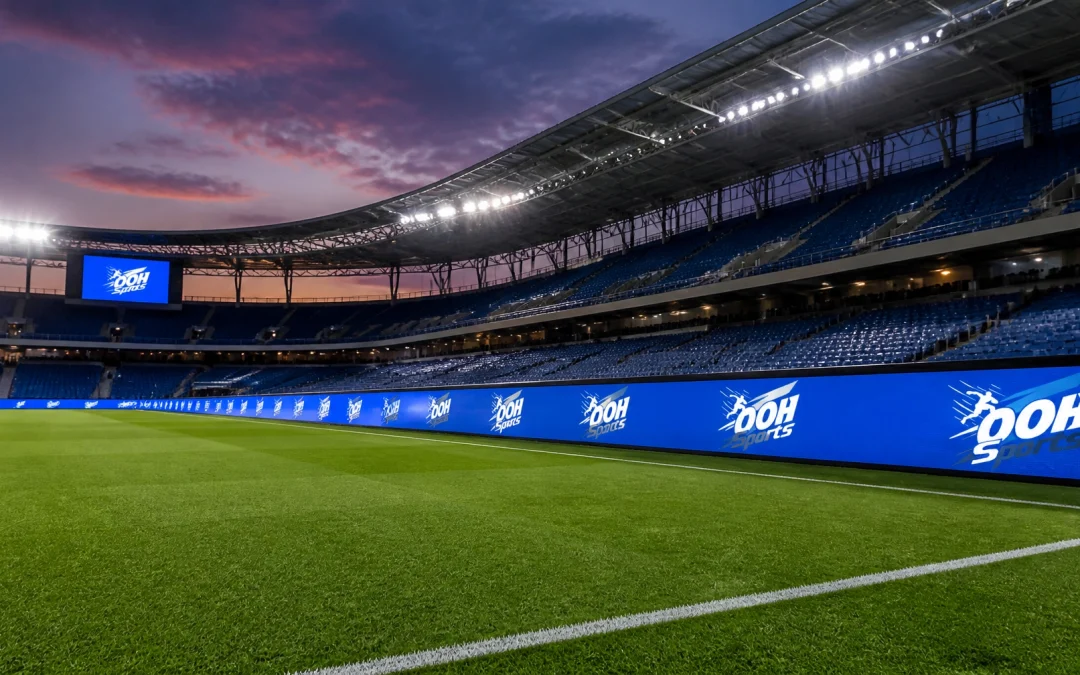
Stadium perimeter advertising has evolved from simple static boards into a sophisticated digital ecosystem capable of driving deep fan engagement. For creative directors and Chief Marketing Officers, the challenge is no longer just securing visibility, but converting that visibility into meaningful interaction. When executed correctly, stadium advertising serves as a high impact anchor for broader marketing campaigns.
OOH Sports provides a specialized network that grants access to digital video advertising boards across every category of sports. This infrastructure allows brands to establish a presence within the immediate vicinity of the action and up to a ten mile radius around major sports venues. Successful execution requires a blend of creative precision and technological integration.
Here are five essential tips to boost fan engagement using stadium perimeter advertising.
1. Streamline Creative for High-Speed Recall
The visual environment of a sports stadium is saturated with movement, sound, and competing stimuli. Fans typically offer only a few seconds of attention to perimeter boards during play or breaks. Research indicates that the most effective creative designs are those that prioritize simplicity and high contrast.
Strategy and Execution
A successful perimeter advertisement should follow the "three to five word" rule. Messaging must be concise and easy to read from a distance. Utilizing bold typography and a single, prominent brand logo ensures that the core identity is captured even in a brief glance.
High contrast color palettes are necessary for legibility, especially for broadcast audiences where camera crops may only show a portion of the board. Designs should avoid intricate details or long sentences that require cognitive effort to decode. By maintaining a clean aesthetic, brands increase the likelihood of brand recall among both in-stadium attendees and television viewers.

2. Implement Interactive Digital Touchpoints
Engagement is a two-way street. Modern LED perimeter systems, such as the Sportrons offered by OOH Sports, allow for real-time interaction that transforms a passive viewer into an active participant.
Objective and Strategy
The objective is to bridge the gap between the physical stadium and the fan's digital device. Including a clear call to action, such as a QR code or a short URL, provides a direct path to engagement. These touchpoints can lead fans to interactive polls, exclusive discounts, or real-time contests.
When a fan scans a code on a perimeter board to vote for a "Player of the Match" or enter a sweepstakes, the brand moves from being a background element to a central part of the game-day experience. This level of participation generates valuable first-party data and strengthens the emotional connection between the fan and the brand.

3. Coordinate Placement with High-Attention Windows
Timing is just as critical as the creative content itself. Fan attention is not uniform throughout an event; it peaks and valleys based on the flow of the game. Strategic media buyers must identify the high-attention windows where messaging will have the maximum impact.
Technology Partners and Logistics
Execution involves scheduling digital rotations to coincide with pre-game festivities, halftime breaks, and post-game celebrations. During these periods, fans are generally more relaxed and observant, making them more likely to process more complex messages or engage with interactive prompts.
Using programmatic DOOH (Digital Out of Home) technology, advertisers can trigger specific creative sequences based on real-time events. For instance, a celebratory animation can be deployed immediately following a goal or a touchdown. This contextual relevance ensures that the brand is associated with the most positive and energetic moments of the event.
4. Extend Reach Beyond the Sidelines
One of the most powerful aspects of the OOH Sports network is the ability to create a 360-degree brand immersion that extends well beyond the stadium walls. The perimeter of a sports venue is not just the field level. It includes the entire surrounding ecosystem where fans gather before and after the game.
Strategy
By utilizing a ten mile geofenced perimeter around the venue, brands can reach fans at various touchpoints throughout their journey. This includes digital screens at bars, restaurants, transit hubs, and retail locations.
This multi-layered approach ensures that the message seen on the stadium perimeter boards is reinforced as fans move through the city. It creates a sense of brand dominance within the local market. This strategy is particularly effective for product launches or regional promotions where high frequency and local saturation are required.

5. Deploy Data-Driven Attribution Models
For CMOs, the ultimate measure of success is the return on investment. Stadium advertising is no longer a "black box" of unmeasurable impressions. With advanced analytics and attribution modeling, it is possible to quantify the impact of perimeter campaigns on brand lift and consumer behavior.
Results and Measurement
Successful campaigns often utilize brand lift studies and device ID tracking to measure the effectiveness of the exposure. For example, a programmatic DOOH campaign for White Claw demonstrated a 74% lift in purchase consideration. These metrics provide a clear before and after comparison, allowing marketing teams to see the direct correlation between stadium presence and consumer intent.
Measurement should focus on several key areas:
- Exposure Quality: Analyzing the duration and visibility of the boards on broadcast and in-stadium.
- Digital Interaction: Tracking QR code scans, app opens, and website traffic originating from the venue.
- Brand Sentiment: Monitoring social media mentions and brand preference ratings following the event.
- Conversion Attribution: Linking exposed audiences to later store visits or online purchases.
By analyzing these data points, brands can refine their creative and placement strategies for future games, ensuring continuous improvement in campaign performance.

Conclusion
Stadium perimeter advertising offers a unique opportunity to capture the attention of a highly engaged and passionate audience. By focusing on simple creative, interactive technology, strategic timing, extended reach, and rigorous measurement, brands can significantly boost fan engagement.
OOH Sports remains at the forefront of this industry, providing the technology and network necessary to turn stadium visibility into a powerful marketing asset. For more information on how to integrate these strategies into a broader media plan, interested parties can explore the About and Marketing sections of the company website.