
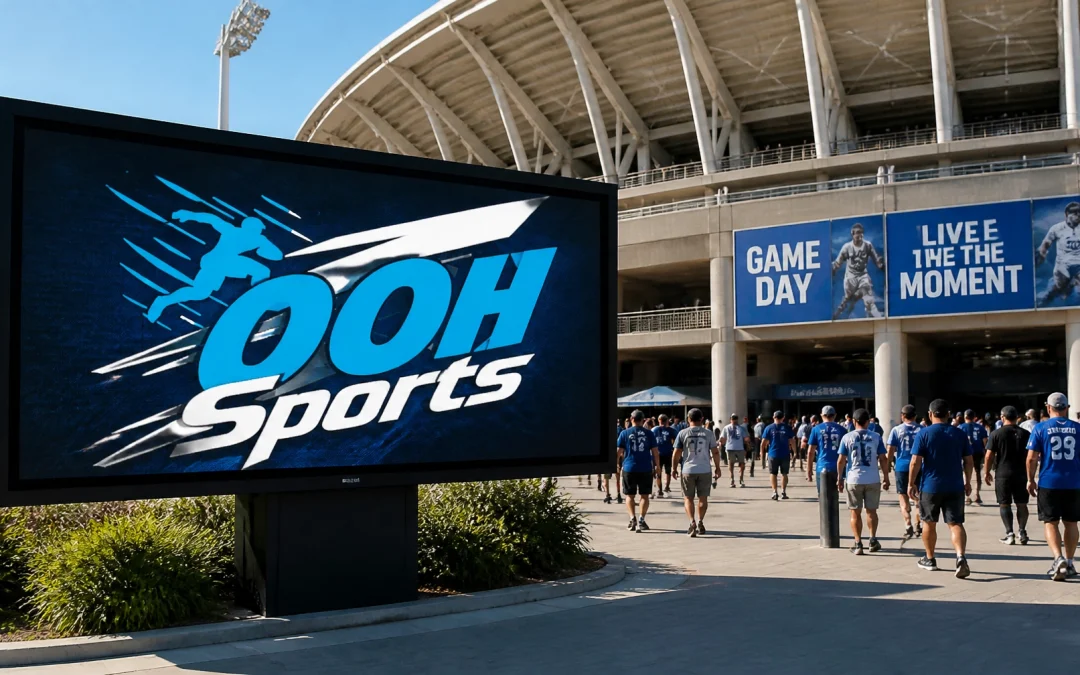
The landscape of advertising within the sports industry has undergone a radical transformation. As digital out-of-home (DOOH) technology continues to evolve, media buyers and brand managers are increasingly turning toward data-driven, programmatic solutions to reach high-intent audiences. The integration of real-time data, high-impact visuals, and precise geographic targeting has turned sports venues and their surrounding perimeters into some of the most valuable pieces of real estate in the media world.
This guide provides an analytical overview of the current DOOH landscape, focusing on market trends, programmatic advancements, and the strategic methodologies required to maximize return on investment (ROI) in sports media.
The State of the DOOH Market
The global DOOH market is currently experiencing a period of significant expansion. Projections indicate that the global market will reach approximately $22.5 billion, with the United States market alone accounting for roughly $9.73 billion. This growth is largely driven by the rapid adoption of digital formats, which now represent over 36% of total out-of-home (OOH) revenues.
Sports media serves as a primary engine for this growth. Major sporting events provide a unique environment where emotional engagement meets massive scale. Research indicates that 6 out of 10 adults recall seeing OOH advertisements for major sporting events. More importantly, 90% of those individuals take a real-world action after exposure, such as discussing the game, engaging on social media, or watching the broadcast.
Key Market Indicators
- Revenue Consistency: The industry has seen 18 consecutive quarters of revenue growth.
- Digital Dominance: DOOH is growing twice as fast as the overall OOH market.
- Future Projections: By 2030, DOOH sports advertising is expected to reach a valuation of $50 billion. Brands looking to capture a share of this market must adopt advanced sports marketing strategies.
The Programmatic Revolution in Sports Advertising
The shift from manual, static bookings to programmatic digital out-of-home (pDOOH) has fundamentally changed how campaigns are executed. In the current media environment, programmatic pipes now facilitate nearly half of all OOH campaigns. This technology allows for the automated buying, selling, and delivery of ad content on digital screens.
Programmatic DOOH offers several technical advantages over traditional methods:
- Dynamic Triggers: Creative can be swapped in real-time based on live sports scores, weather conditions, or local betting odds.
- Audience Segmentation: Advertisers can target specific demographic groups based on anonymized location data rather than buying broad loops.
- Efficiency: pDOOH investment has seen a 44% surge as marketers prioritize platforms that offer flexibility and measurable ROI.
Approximately 60% of global marketers now report that pDOOH delivers higher ROI than traditional OOH. This perception is backed by the widespread use of artificial intelligence (AI) in the planning process. Statistics show that 90% of marketers utilize AI for audience modeling and dynamic creative optimization to ensure messaging remains contextually relevant to the sports fan's journey.

Strategic Targeting: The 10-Mile Perimeter
A critical component of success in sports DOOH is understanding the fan journey. The influence of a sports venue extends far beyond the gates of the stadium. A highly effective strategy involves saturating the 10-mile perimeter around sports venues. This radius captures fans during the "pre-game" and "post-game" phases when they are commuting, dining at local establishments, or visiting fan zones.
Execution Tactics for Perimeter Targeting
- Transit Hubs: Deploying ads at train stations, bus stops, and airports that serve as major arteries for stadium traffic.
- Local Retail and Hospitality: Utilizing digital screens in bars, restaurants, and convenience stores where fans congregate before and after events.
- Roadside Billboards: Capturing the attention of fans traveling along major highways toward the venue.
Targeting this perimeter creates multiple touchpoints throughout the day, increasing frequency and brand recall. Data shows that 99% of fans who attend a game after seeing an OOH ad spend money locally on hospitality, dining, or transport, reinforcing the economic impact of venue-based advertising.
Case Studies: Proving the Impact
The efficacy of DOOH in sports and lifestyle marketing is best illustrated through successful campaign outcomes. Analytical studies of major brands show significant lifts across the entire marketing funnel.
White Claw: Purchase Consideration Lift
White Claw utilized a programmatic DOOH campaign to launch a new vodka product. By targeting key geographic areas and utilizing high-impact digital screens, the brand achieved a 74% lift in purchase consideration. The campaign demonstrated how DOOH can effectively move consumers from awareness to intent in a competitive category. Detailed results can be found in the White Claw case study.
Mike’s Hard Iced Tea: Brand Image Improvement
A programmatic DOOH execution for Mike’s Hard Iced Tea resulted in a 119% lift in positive brand image. This campaign focused on high-traffic areas and leveraged the visual clarity of digital screens to reinforce brand aesthetics. The full analysis is available via the AB InBev case study.
Sea-Doo: Driving Consumer Intent
In its first digital OOH campaign, Sea-Doo achieved a 144% increase in purchase consideration. By utilizing programmatic targeting to reach specific outdoor enthusiasts near relevant locations, the brand proved that DOOH is a powerful tool for driving intent even for high-ticket items. View the Sea-Doo campaign details.

Measurement and Attribution Methodologies
Historically, OOH was viewed as a "top-of-funnel" awareness play with limited measurement capabilities. In 2026, the industry has standardized several attribution models that provide deep insights into campaign performance.
Foot Traffic Attribution
By pairing anonymized mobile location signals with DOOH impression data, advertisers can track if a person exposed to an ad later visited a physical location. This is particularly useful for sports bars, retail outlets, and the sports venues themselves.
Brand Lift Studies
Standardized brand lift studies compare exposed versus control groups to measure changes in awareness, favorability, and purchase intent. These studies provide the qualitative data necessary to justify large-scale media spends.
Search and Social Lift
A measurable spike in branded search queries or social media mentions in specific geographic zones where DOOH is active provides a clear link between outdoor exposure and digital engagement. For example, Nike’s NYC Marathon strategy effectively used OOH to dominate the digital conversation despite not being an official sponsor.
Digital Response Tracking
The use of QR codes and short URLs on Sportrons and other in-venue screens allows for direct tracking of app downloads, form fills, or coupon redemptions.
Technology Partners and Platforms
The success of a DOOH campaign often depends on the underlying technology stack. Platforms like StackAdapt and Vistar Media have become essential for media buyers. These Demand-Side Platforms (DSPs) allow for the seamless execution of omnichannel campaigns, where DOOH works in tandem with mobile, display, and connected TV (CTV) advertising.
Strategic focus on pDOOH adoption in omnichannel campaigns ensures that the message follows the consumer across multiple devices and environments, creating a cohesive brand experience.

Operational Strategy for Sports Media Buyers
To succeed in the highly competitive sports DOOH space, media planners must follow a structured operational process:
- Objective Alignment: Clearly define whether the goal is brand awareness, foot traffic to the venue, or immediate digital conversion (e.g., sports betting).
- Inventory Selection: Choose between high-impact large format billboards for reach and place-based media (concourse screens, kiosks) for engagement.
- Creative Optimization: Ensure creative is legible from a distance and includes a clear call to action. Use high-contrast colors and minimal text.
- Programmatic Execution: Utilize pDOOH for flexibility. Set triggers for game times or specific weather conditions to increase relevance.
- Post-Campaign Analysis: Utilize mobile location data and brand lift studies to quantify results and optimize future spend.
Conclusion
The digital out-of-home industry is no longer a peripheral component of sports marketing. It is a central, data-driven channel capable of delivering massive reach and measurable results. By understanding market trends, leveraging programmatic technology, and focusing on the strategic 10-mile perimeter around venues, brands can effectively capture the attention of the modern sports fan. As the industry moves toward a $50 billion valuation, the ability to execute sophisticated DOOH campaigns will remain a primary differentiator for successful sports media strategies.
For more information on the evolution of this technology, explore the OOH Sports blog or learn about the Sportron network.