
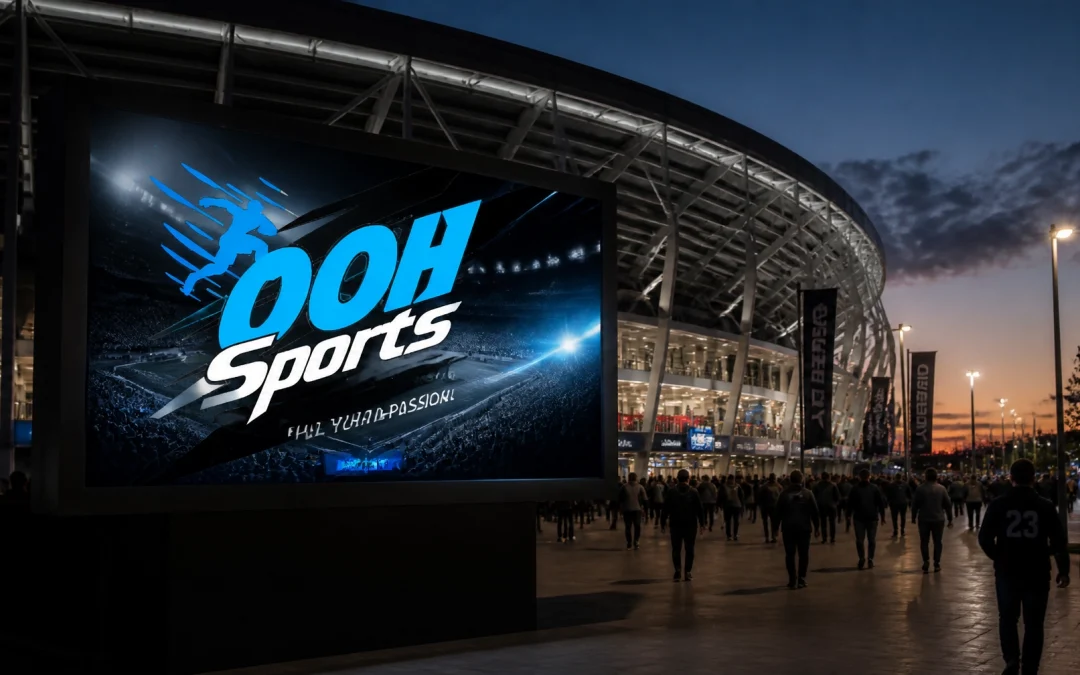
The landscape of sports marketing is undergoing a significant transformation as digital out of home (DOOH) advertising moves beyond the confines of the stadium walls. The expansion of the OOH Sports Network marks a pivotal shift in how brands engage with audiences, moving from static placements to a dynamic, perimeter-based strategy that follows the fan journey. By establishing a comprehensive digital presence within a ten mile radius of major sports venues, this network expansion provides media buyers with a specialized toolkit to capture attention during the most high-energy moments of a fan’s day.
Traditional sports advertising often focused solely on the in-stadium experience. While scoreboard ads and static banners have their place, they reach only those who have already entered the gates. The new OOH Sports Network expansion addresses this limitation by creating a "fan catchment zone" that begins long before the first whistle blows. This approach recognizes that the fan experience is a multi-hour journey involving travel, pre-game socializing, and post-game celebrations.
Objective & Strategy
The primary objective of the OOH Sports Network expansion is to provide a seamless, high-frequency advertising environment that surrounds the country's most iconic sports arenas. The strategy is built on the principle of increasing ad density as proximity to the venue decreases. By flooding the immediate ten mile perimeter with a mix of large-format digital billboards and street furniture, the network ensures that brand messaging becomes an unavoidable part of the game-day atmosphere.
Targeting media buyers, brand managers, and chief marketing officers, the strategy emphasizes precision and impact. The goal is to move away from broad, city-wide buys that result in wasted impressions and instead focus resources where the most engaged consumers are physically located. This localized saturation strategy is designed to deliver high incremental reach, often outperforming traditional digital channels in terms of cost-per-thousand (CPM) value and audience recall.

Network Expansion Mechanics
The core of this expansion is the sophisticated ten mile perimeter model. This geographic boundary acts as a filter, allowing advertisers to trigger content specifically for those entering the influence zone of a professional or collegiate sports event. The network integration includes access to every category of digital video advertising board, ranging from towering highway displays to eye-level kiosks at street level.
The mechanics of the network are designed to mirror the arrival flow of fans. At the outer edge of the ten mile ring, large-format digital billboards establish brand awareness and build "hype" as fans begin their commute toward the stadium. As the distance to the arena closes, the frequency of displays increases. Within the final two miles, the network utilizes street furniture and urban panels to deliver high-touch messaging, such as "last-mile" promotional offers, food and beverage highlights, or retail directions.
This density model is particularly effective for categories such as sports betting, quick-service restaurants, and consumer packaged goods. These brands can leverage the physical proximity to the venue to drive immediate actions, such as app downloads or nearby retail visits. The ability to own the entire route that a fan travels creates a powerful brand echo effect that traditional, scattered OOH placements cannot replicate.
Strategy: The Fan Journey Integration
Successful sports marketing requires an understanding of the psychological state of the fan. During the hours leading up to a game, fans are in a state of heightened receptivity. They are actively seeking information about the event, looking for places to congregate, and interacting with their mobile devices. The OOH Sports Network expansion capitalizes on this by positioning digital screens as informative and contextual companions.
The integration of real-time data allows the network to stay relevant throughout the day. Creative assets can be updated to show countdowns to kick-off, weather updates, or live score updates during the game. This level of utility ensures that the advertising is viewed as part of the service provided to the fan rather than an intrusion. By aligning brand messaging with the utility of the game-day experience, the network fosters a more positive brand association.

Technology Partners and Programmatic Integration
The effectiveness of the expanded network is bolstered by its compatibility with leading technology platforms. Programmatic digital out of home (pDOOH) is a cornerstone of the expansion, allowing for automated, data-driven ad buying. By collaborating with specialized platforms such as the StackAdapt DSP, media planners can integrate their OOH spend into a broader omnichannel campaign.
Technology integration also facilitates advanced targeting based on real-time triggers. For example, a campaign can be set to activate only when certain conditions are met, such as a specific team winning, a change in weather, or a particular time of day. This flexibility allows brands to remain nimble and respond to the unpredictable nature of live sports. The use of Sportrons technology further enhances the visual impact of these campaigns, delivering high-definition video content that captures the attention of passersby with the same intensity as a broadcast television spot.
Measurement and Attribution
A critical component of the OOH Sports Network expansion is the commitment to measurable results. In the past, OOH was often criticized for its lack of precise attribution. However, the modern digital network utilizes device ID data and geolocation technology to track the effectiveness of campaigns with high accuracy.
By identifying the mobile device IDs exposed to the digital boards within the ten mile perimeter, brands can perform retargeting on other digital channels. This creates a bridge between the physical and digital worlds, allowing for a comprehensive view of the consumer journey. Brand lift studies are frequently conducted to measure changes in brand awareness, purchase consideration, and brand favorability following a campaign.

Results: Data-Driven Success Stories
The impact of the OOH Sports Network expansion is best illustrated through the success of recent campaigns. Data from various category leaders demonstrates that a targeted, perimeter-based approach consistently yields superior returns compared to traditional methods.
- White Claw Campaign: A programmatic DOOH campaign designed to launch a new product saw a 74% lift in purchase consideration. This was achieved by saturating high-traffic areas where target demographics were known to congregate before sporting events.
- Mike's Hard Iced Tea: In an effort to shift brand perception, AB InBev utilized the network to deliver a contextually relevant campaign that resulted in a 119% lift in positive brand image.
- Sea-Doo Initiative: Sea-Doo’s first major foray into digital OOH led to a 144% increase in purchase consideration. The campaign successfully identified and targeted recreational fans in proximity to key water-sport markets and arenas.
- Economic Efficiency: General industry data indicates that DOOH delivers approximately 7.5 times greater reach and 10 times better CPM value than several other competing digital channels in major U.S. markets.
These case studies highlight the network's ability to move the needle on key performance indicators (KPIs) that matter to CMOs. Whether the goal is immediate sales or long-term brand equity, the ten mile perimeter model provides the necessary density and frequency to influence consumer behavior.
Conclusion
The expansion of the OOH Sports Network represents more than just an increase in screen count. It is a strategic evolution that acknowledges the power of location, context, and the unique energy of sports fans. By providing media buyers with unprecedented access to digital boards within a ten mile radius of major stadiums, OOH Sports is redefining the boundaries of sports marketing.
For brands looking to cut through the noise of a crowded digital landscape, the "fan perimeter" offers a high-impact solution that reaches consumers in the real world. As the industry moves toward 2030, where sports advertising is projected to hit $50 billion, the ability to own the fan journey from the driveway to the dugout will be the defining factor of a successful campaign.
