
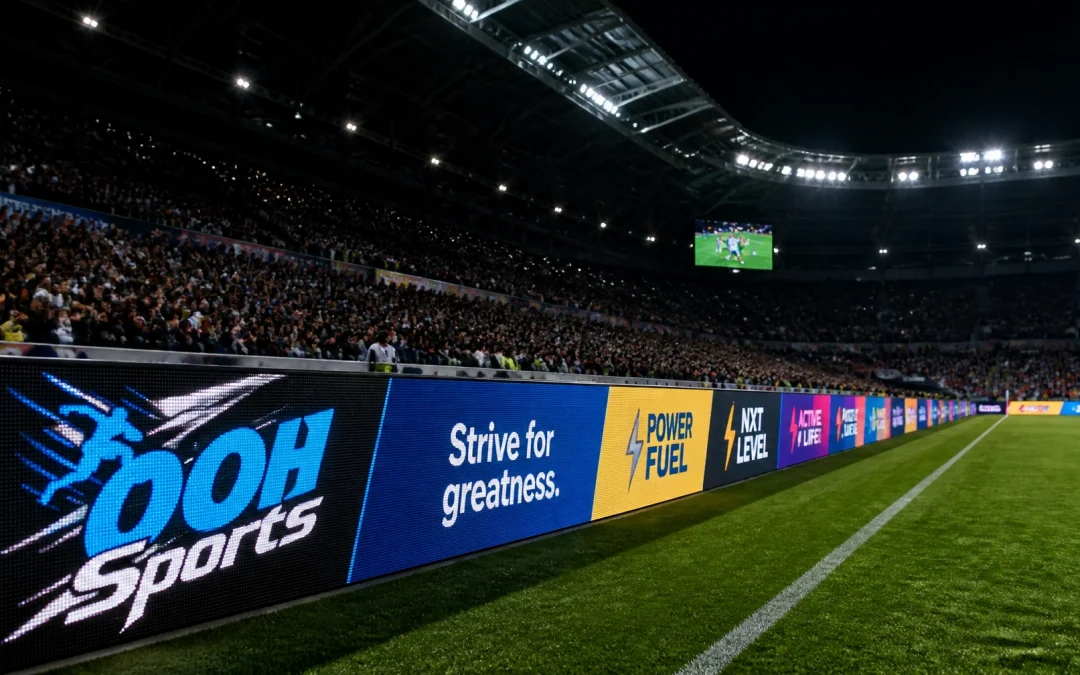
The modern sports arena has evolved into more than just a place to watch a game. It is a high-energy ecosystem where emotion, technology, and community converge. For creative directors and brand managers, this environment offers a unique canvas to build lasting connections with a highly engaged audience. Traditional advertising often struggles to cut through the noise of daily life, but stadium perimeter advertising reaches fans when they are at their most attentive and emotionally invested.
By leveraging Digital Out of Home (DOOH) technology, brands can transcend the limitations of static signage. The following strategies outline how to utilize the power of stadium perimeter advertising to create unforgettable fan experiences and drive measurable results.
1. The 10-Mile Halo: Mastering Hyper-Local Perimeter Targeting
The impact of a sports event extends far beyond the physical walls of the stadium. A primary strategy for successful fan engagement involves capturing the attention of the surrounding community. Modern sports marketing networks allow brands to dominate the digital landscape within a 10-mile radius of the venue. This perimeter serves as a "halo" where fans are mentally preparing for the game or celebrating a victory.
Targeting this specific geography ensures that a brand message is the first and last thing a fan sees on game day. This approach includes digital billboards, transit displays, and street-level screens that lead directly to the stadium gates. By saturating this 10-mile zone, a brand creates a sense of ubiquity. When the same brand message appears on the internal stadium perimeter boards, the repetition reinforces brand recall and authority.
This hyper-local focus is particularly effective for driving foot traffic to nearby retail locations or bars. For example, a beverage brand might use the 10-mile perimeter to promote a pre-game happy hour at local venues, followed by a celebratory message on the field-side boards during the match.

2. Dynamic Creative: Reacting to the Pulse of the Game
In the world of sports, timing is everything. A static ad remains the same regardless of whether the home team is winning or losing. In contrast, dynamic creative allows brands to react to real-time events on the field. This capability turns a standard advertisement into a part of the game-day narrative.
Using programmatic DOOH, brands can trigger specific creative assets based on live game data. If a star player scores a goal, the perimeter boards can instantly switch to a congratulatory message. If the game goes into overtime, the messaging can shift to themes of endurance and excitement. This level of responsiveness makes the brand feel like a fellow fan rather than an outside observer.
Strategic use of dynamic creative includes:
- Real-time score updates integrated with brand logos.
- Countdown clocks for halftime or the end of the game.
- Weather-triggered creative, such as promoting hot coffee during a cold night game or refreshing beverages on a sunny afternoon.
- Player-specific milestones that celebrate individual achievements as they happen.
By aligning the brand message with the emotional highs and lows of the game, creative directors ensure that their message is seen at the moments of highest fan engagement.
3. The Mobile Bridge: QR Codes and Social Amplification
The stadium experience is no longer a single-screen event. Fans are constantly using their smartphones to record highlights, check stats, and share moments on social media. One of the most effective strategies for modern branding is to build a bridge between the large-scale perimeter boards and the personal mobile devices in the fans' hands.
Digital perimeter boards provide the perfect platform for large, high-contrast QR codes. These codes act as a direct portal to interactive brand experiences. Instead of hoping a fan remembers a URL, the brand provides an immediate call to action that can be completed from their seat.
Common applications of this "Mobile Bridge" strategy include:
- Instant-win contests that offer digital prizes or merchandise discounts.
- Direct links to download the official team or brand app.
- Access to exclusive behind-the-scenes video content or player interviews.
- User-generated content (UGC) prompts, where fans scan a code to upload a photo that might then appear on the stadium's big screen.
This interaction transforms the perimeter board from a passive display into an active engagement engine. It also provides brands with valuable first-party data, allowing them to continue the conversation long after the final whistle.

4. Audience Precision: Leveraging Device IDs and Retargeting
Data is the backbone of modern advertising, and sports marketing is no exception. While the visual impact of a perimeter board is broad, the underlying technology allows for surprising precision. By identifying the device IDs of fans who were present at the stadium during the game, brands can build highly specific audience segments.
This strategy moves beyond the game day itself. Once an audience has been "exposed" to the perimeter branding in the stadium, they can be retargeted with follow-up ads on their mobile devices or home computers. This omnichannel approach ensures that the high-impact awareness generated at the stadium is converted into lower-funnel actions, such as website visits or product purchases.
Key technical advantages of this strategy include:
- Attribution modeling: Determining if a fan who saw a stadium ad later visited a retail store or made an online purchase.
- Look-alike modeling: Using the data from stadium attendees to find similar potential customers in other markets.
- Frequency capping: Ensuring that fans see the message enough times to remember it, without becoming over-exposed.
For a CMO, this means that every dollar spent on a stadium perimeter board works twice as hard by fueling a larger, data-driven marketing machine. You can learn more about these technical capabilities on our company about page.

5. Multi-Channel Synergy: Creating a Seamless Fan Journey
The final strategy involves looking at the fan experience as a continuous journey rather than a series of isolated moments. A truly unforgettable brand experience is one that feels seamless from the moment the fan leaves their house to the moment they return.
Perimeter advertising should not exist in a vacuum. It should be synchronized with other media assets within the Sports Media Inc. family, including concourse screens, digital displays in luxury suites, and even the main stadium video board.
Consider a coordinated "brand takeover" moment. During a critical timeout, every digital screen in the building can synchronize to display a unified brand message. This creates an immersive environment that is impossible to ignore. This level of synergy ensures that the brand message is reinforced at every touchpoint, from the entrance gates to the perimeter of the field.
To maximize this synergy, marketing teams should:
- Use consistent visual themes across all digital assets to build brand recognition.
- Coordinate messaging so that each screen tells a different part of the brand story.
- Work with technology partners to ensure that timing is perfectly synchronized across the venue's hardware.
By planning for the entire fan journey, brands can move from being an advertiser to being an integral part of the stadium experience itself. For more insights on how to implement these tactics, explore our latest case studies.

Conclusion: The Future of Stadium Branding
Creating unforgettable fan experiences requires a blend of creative vision and technological precision. Stadium perimeter advertising is no longer just about placing a logo near the field. It is about understanding the fan journey, reacting to the excitement of the game, and using data to build long-term relationships.
By focusing on hyper-local targeting, dynamic creative, mobile integration, data-driven retargeting, and multi-channel synergy, brands can capture the heart of the sports audience. In an era where attention is the most valuable currency, the stadium remains one of the few places where fans are truly present and ready to engage.
For creative directors and CMOs, the opportunity is clear. The technology is ready, the audience is waiting, and the stadium is the stage. By implementing these five strategies, brands can ensure that their message is not just seen, but remembered long after the lights of the arena have dimmed.