
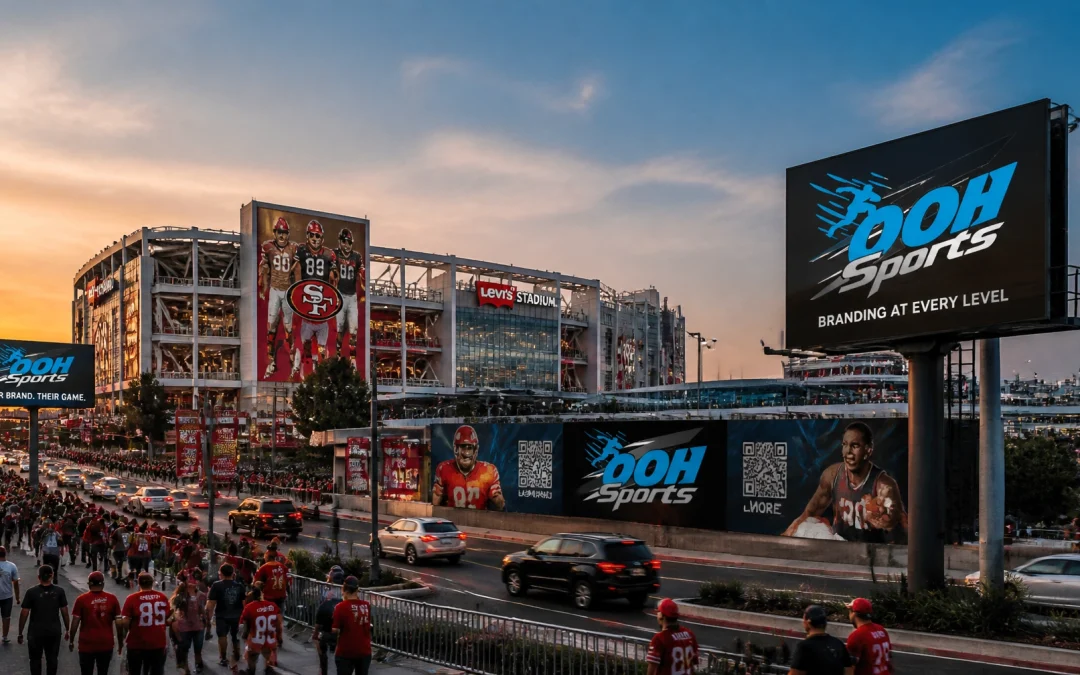
Super Bowl 2026 at Levi’s Stadium in Santa Clara represents a pinnacle moment for sports marketing. While the traditional 30-second television spot remains a massive investment, a shift in strategy is occurring. Modern brands are recognizing that the true battle for consumer attention happens on the ground, within the stadium, and throughout the surrounding 10-mile radius. With a legacy spanning 40 years, Sports Media Inc. and its division, OOH Sports, have refined the science of venue-wide dominance.
The following tips outline how to maximize impact by leveraging a "ground-up" approach that ensures a brand is not just seen, but experienced by every fan attending the Big Game.
Objective & Strategy
The primary objective of a Super Bowl venue-wide campaign is to create a "surround sound" branding effect. This strategy moves beyond a single touchpoint to establish a continuous brand presence from the moment a fan enters the Bay Area until they return home. By integrating physical ground tactics with high-tech digital out-of-home (DOOH) assets, advertisers can achieve a level of frequency and recall that broadcast alone cannot replicate.
A successful strategy for 2026 involves five key pillars: perimeter saturation, floor-to-ceiling branding, leveraging institutional expertise, real-time programmatic execution, and digital audience retargeting.
1. Dominate the 10-Mile Perimeter
Impact does not begin at the stadium gates; it begins miles away. For Super Bowl 2026, the strategy involves securing digital video advertising boards in every category within a 10-mile radius of Levi’s Stadium. This includes major transit hubs, highway billboards, and entertainment districts where fans congregate before and after the game.
By utilizing programmatic DOOH, brands can bid on inventory in real-time, ensuring their message is displayed when traffic is highest. This perimeter ring acts as a funnel, repeatedly exposing the brand to the 120,000+ fans and the millions of visitors in the region for the week-long festivities. High-visibility assets such as Sportrons provide the scale needed to command attention in these high-traffic environments.

2. Implement "Ground-Up" Branding
One of the most overlooked surfaces in sports marketing is the floor. Venue-wide coverage means utilizing every available square inch, from sidewalk decals to interior floor graphics. This "ground-up" approach captures the attention of fans as they navigate the venue, offering a unique and less cluttered environment for brand messaging.
Tactics include:
- Sidewalk Decals: Guiding fans from parking lots to entrance gates.
- Floor Graphics: Strategically placed in high-dwell areas like concession lines and restroom entrances.
- Escalator Wraps: Creating immersive brand tunnels within the stadium architecture.
Detailed execution of these physical tactics ensures that a brand becomes part of the venue's physical fabric. For more on this specific methodology, refer to the guide on owning the venue from the ground up.
3. Leverage 40 Years of Advertising Leadership
The complexities of stadium regulations, local ordinances, and the logistics of the Super Bowl require more than just a media buy; they require experience. Sports Media Inc. has spent four decades navigating the nuances of sports venue advertising. This history provides a distinct advantage in securing premier placements that are often unavailable to those without established relationships.
Expertise in this field allows for a more sophisticated navigation of "ambush marketing" restrictions and official sponsorship boundaries. By working with a team that has managed campaigns across every major sports league, advertisers can ensure their Super Bowl 2026 presence is both compliant and high-impact. This level of about 40 years of leadership translates to better placement, more reliable execution, and higher ROI.
4. Utilize Programmatic DOOH and Real-Time Data
The evolution of advertising technology has turned static billboards into dynamic communication tools. For Super Bowl 2026, the use of programmatic digital out-of-home (pDOOH) is essential. This technology allows brands to adjust messaging based on real-time triggers such as:
- Game Phases: Displaying congratulatory messages immediately after a big play.
- Weather Conditions: Swapping creative based on the Bay Area's micro-climates.
- Traffic Patterns: Increasing ad frequency on specific routes as fans exit the stadium.
Collaborating with specialized technology partners ensures that the campaign is optimized for performance. Real-time data allows for a level of agility that ensures the brand remains relevant throughout the entire event lifecycle.

5. Extend the Journey with Mobile Retargeting
The impact of venue-wide branding should not end when the fan leaves the stadium. By capturing device IDs of individuals exposed to the OOH assets, brands can retarget those same fans on their mobile devices. This creates a bridge between the physical and digital worlds.
The process involves:
- Exposure: A fan sees a digital billboard or floor graphic.
- Identification: Anonymized device IDs are collected within the geofenced perimeter.
- Retargeting: The fan receives a follow-up digital ad on their social media or mobile apps later that day.
This omnichannel approach significantly boosts purchase consideration. Data from previous large-scale sports campaigns indicates that this strategy can lead to a substantial increase in brand lift, often exceeding 100% in purchase intent when compared to OOH exposure alone.
Technology & Partners
The successful execution of a venue-wide takeover for Super Bowl 2026 relies on a robust ecosystem of technology and logistics partners. OOH Sports utilizes advanced Demand-Side Platforms (DSPs) to manage inventory across the 10-mile radius. This programmatic approach allows for precision targeting that traditional buys cannot offer. By integrating various data streams, the campaign becomes an automated, high-efficiency engine for brand growth.
https://www.youtube.com/watch?v=l6J-0zileKE
Results and Expected Impact
Measuring the success of a venue-wide campaign requires a focus on both physical reach and digital attribution. Based on historical data from similar high-profile sporting events, brands can expect measurable shifts in several key metrics:
- Brand Image Lift: Campaigns utilizing a multi-layered DOOH strategy have seen up to a 119% lift in positive brand image, as evidenced by recent AB InBev case studies.
- Purchase Consideration: The integration of venue branding and mobile retargeting has been shown to increase purchase consideration by as much as 144% in specific product categories like outdoor recreation and beverages.
- Competitive Share of Voice: By dominating the 10-mile perimeter, a brand effectively crowds out competitors, ensuring that its message is the dominant narrative for the duration of the Super Bowl week.
In conclusion, Super Bowl 2026 offers an unprecedented opportunity for brands to connect with a massive audience. By implementing these five venue-wide branding tips: ranging from ground-level decals to 10-mile perimeter saturation: advertisers can transcend the limitations of traditional media and build a lasting connection with the hearts of fans across America.
For more insights on the future of sports advertising, visit the OOH Sports blog or explore the comparison between programmatic and traditional stadium ads.