
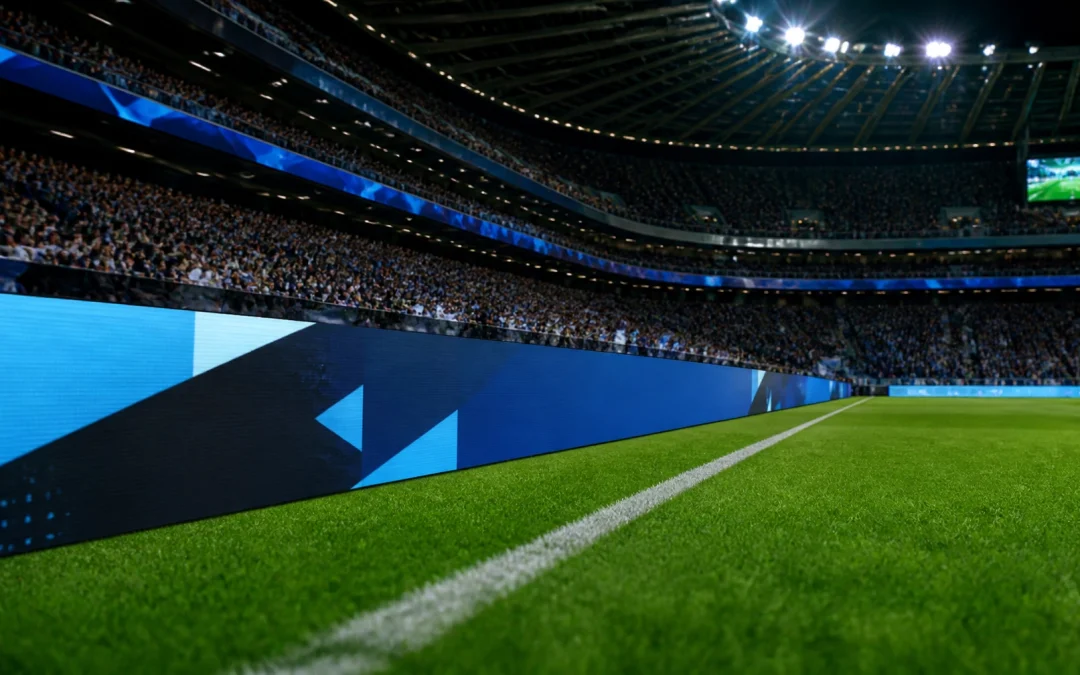
The roar of the crowd, the tension of a tie game, and the collective gasp during a near miss create an emotional environment unlike any other. For brands, this isn't just a sporting event. It is a high-attention, high-emotion arena where consumer loyalty can be forged in real time. Stadium perimeter advertising has evolved from static signs into a sophisticated, digital-first strategy that captures fans both inside the venue and through global broadcasts.
This guide explores the mechanics of digital out-of-home (DOOH) sports marketing, focusing on how stadium perimeter ads serve as a cornerstone for modern branding. For creative directors and chief marketing officers, understanding this landscape is the key to moving beyond traditional "logo placement" toward genuine fan engagement.
The Objective and Strategy of Stadium Perimeter Advertising
The primary objective of any stadium campaign is to achieve high-impact visibility that sticks. Unlike standard digital ads that a user can scroll past or skip, perimeter boards are integrated into the field of play. They exist within the fan's line of sight during the most exciting moments of the game.
Strategic placement around the perimeter ensures that a brand message is present during key broadcast angles, slow-motion replays, and social media highlights. This creates a multi-layered reach. A single ad on an LED board reaches the thousands of fans in the seats, but it also reaches millions of viewers streaming the game on mobile devices or watching on national television.
Successful strategies often focus on three pillars:
- Saturation: Maintaining a consistent presence throughout the event to build familiarity.
- Context: Tailoring the creative to the specific sport or the high-stakes nature of the match.
- Connectivity: Using the physical ad as a starting point for a digital journey that continues on the fan’s smartphone.
Technology and Programmatic Precision: The 10-Mile Network
Modern sports advertising is no longer limited to the walls of the stadium. Technology now allows brands to create a "digital halo" around a venue. Through programmatic digital out-of-home (pDOOH) platforms, advertisers can target every digital video board within a 10-mile radius of a sports arena.

This approach ensures that the brand follows the fan's journey. It starts with the digital billboards on the highway leading to the stadium, continues with screens in transit hubs and parking structures, and culminates on the perimeter boards inside the field. After the game, the message persists in local fan hubs, bars, and restaurants where spectators gather to celebrate or analyze the game.
Programmatic technology allows for incredible flexibility. Brands can trigger ads based on specific conditions, such as:
- Game Time: Running specific "happy hour" creatives in the hours leading up to kickoff.
- Audience Density: Increasing bid prices when sensors indicate the stadium area has reached peak capacity.
- Live Triggers: Changing the creative in real time based on the score or specific game events.
By leveraging these triggers, a campaign moves from being a static background element to a dynamic part of the fan experience.
Creative Tactics for High-Impact Messaging
For creative directors, the challenge is to design visuals that are bold enough to be seen from the nosebleed seats but clean enough to look professional on a 4K television broadcast. The move from static to digital LED boards has opened a new world of possibilities.

Movement is the most powerful tool in the creative arsenal. Subtle animations, such as a product sliding into the frame or a flickering neon effect, draw the eye without distracting from the game itself. However, simplicity remains vital. A perimeter board is a horizontal canvas, often seen at high speeds or from a distance. Text should be minimal, and logos should be high-contrast.
Best practices for creative execution include:
- Bold Typography: Using thick, sans-serif fonts that remain legible during fast-moving camera pans.
- Vibrant Color Palettes: Utilizing high-saturation colors that stand out against the green of a field or the hardwood of a court.
- Dynamic Content: Rotating messages throughout the match to avoid "banner blindness." For example, a brand might show a "pre-game energy" message in the first half and a "celebratory" message in the closing minutes.
Research suggests that dynamic, data-driven perimeter ads can deliver a 20% increase in brand recall compared with static imagery. This highlights the importance of moving beyond the traditional "set it and forget it" mindset of old-school sports sponsorships.
Quantifying the Impact: Data and Results
CMOs require more than just "brand vibes" to justify a marketing spend. They need hard data. The shift to digital has made stadium advertising more measurable than ever before. By using device IDs and location data, brands can track how fans who were exposed to a stadium ad behave after the game ends.
OOH Sports has seen significant success in these areas through various high-profile campaigns. For instance, AB InBev’s Mike’s Hard Iced Tea utilized a programmatic DOOH strategy that resulted in a 11.9% lift in positive brand image. This demonstrates that even established global brands can move the needle on consumer perception through targeted sports-adjacent placements.
Other measurable successes include:
- Purchase Consideration: White Claw's programmatic campaign drove a 7.4% lift in purchase consideration for a new product launch.
- Brand Preference: Sea-Doo’s first digital OOH campaign saw an impressive 14.4% increase in purchase consideration by targeting active, outdoor-minded fans in key regions.
These results are often validated through third-party brand lift studies. By comparing exposed audiences (those within the 10-mile radius during the event) with a control group of similar demographics who were not in the area, marketers can isolate the exact impact of the stadium advertising.
The Omnichannel Integration: Connecting Screens
The ultimate goal of a modern perimeter ad is to trigger a second-screen interaction. Fans are rarely focused solely on the game. They are constantly checking stats, posting to social media, and texting friends. An effective stadium campaign bridges the gap between the massive LED board and the five-inch smartphone screen.

When a brand synchronizes its perimeter boards with mobile retargeting, the results are amplified. A fan sees a high-impact ad on the field, and shortly after, they receive a display ad or a social media prompt on their phone. This "surround sound" marketing technique ensures that the brand remains top-of-mind even after the fan leaves their seat.
Recent studies show that campaigns integrating perimeter ads with mobile retargeting achieve a 15% higher conversion rate than signage alone. This is because the physical ad provides the credibility and "theatrical" scale, while the mobile ad provides the direct path to purchase or engagement.
Conclusion: A Strategic Necessity for 2026 and Beyond
Stadium perimeter advertising is no longer a luxury reserved for the world’s largest athletic brands. The rise of programmatic DOOH has democratized access to these premium spaces, allowing for smarter, more efficient buying.
By combining the emotional intensity of live sports with the data-driven precision of digital advertising, brands can create moments that are truly unforgettable. Whether it is through a 10-mile digital perimeter or a perfectly timed dynamic creative on an LED board, the opportunities to win over fans have never been greater. For those in charge of brand growth, the field is open. The only question is how to best take the shot.