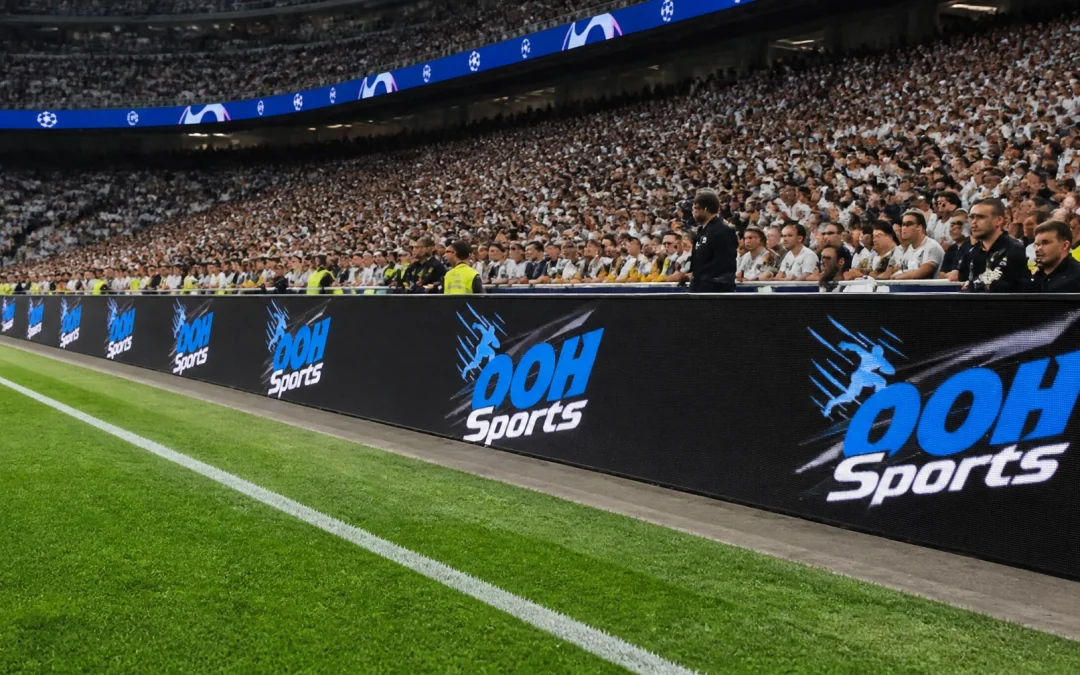
Professional sports venues represent the ground zero of fan passion. Within the walls of a stadium, attention is not merely captured. It is intensified by the high-stakes environment of live competition. For brand managers and creative directors, the challenge lies in transforming this temporary excitement into long-term brand advocacy.
Perimeter advertising has long been a staple of the sports world, yet the evolution of Digital Out-Of-Home (DOOH) technology has redefined its potential. By integrating in-stadium visuals with a wider 10-mile digital network, brands can now follow the fan journey from the moment they leave home until the final whistle and beyond. This approach does more than display a logo. It embeds a brand into the emotional fabric of the game day experience.
Objective & Strategy
The primary objective of a stadium-centric campaign is to leverage the unique psychological state of a sports fan. Research indicates that sports fans are six to eight times more engaged than the average television viewer or internet user. This heightened state of awareness provides a window for brands to establish a deep connection that traditional advertising often misses.
The strategy focuses on three core pillars:
- Captive Visibility: Utilizing LED perimeter boards that are impossible to skip or ignore during live play and replays.
- Trust Association: Tapping into the pre-existing loyalty fans feel toward their teams. When a brand appears within the stadium, it inherits a portion of that community trust.
- Extended Reach: Expanding the message through a 10-mile perimeter around the venue to ensure the brand remains top-of-mind during transit and post-game celebrations.
By aligning creative assets with the high-energy moments of a match, brands transition from being background noise to becoming a part of the event narrative.
The Power of In-Stadium Perimeter Advertising
Perimeter boards are the digital heartbeat of a sports arena. These high-impact LED displays surround the field of play, ensuring constant visibility for both the thousands of fans in attendance and the millions watching via broadcast and social media highlights.
Unlike standard billboards, perimeter advertising benefits from the "live game" effect. Every time a goal is scored or a critical play is made, the branding on the perimeter boards is captured in the photos and videos shared by fans and news outlets. This creates a secondary layer of organic reach that continues long after the event has concluded.
Strategically, these boards allow for dynamic content updates. Brands can tailor their messaging based on the current score, the time remaining in the game, or specific player milestones. This level of relevance ensures that the audience remains attentive rather than tuning out repetitive loops.

The 10-Mile Perimeter: Capturing the Fan Journey
The reach of OOH Sports extends far beyond the stadium seats. A critical component of modern sports marketing is the 10-mile perimeter strategy. This network covers every digital video advertising board in every category within a 10-mile radius of the sports venue.
This comprehensive geographic targeting allows brands to dominate the local environment during peak times. The fan journey typically follows a predictable pattern:
- Pre-Game: Fans travel toward the venue via major highways and public transit hubs. Digital billboards along these routes build anticipation with countdown clocks or "good luck" messages.
- Arrival: In the immediate vicinity of the stadium, DOOH screens in bars, restaurants, and retail spaces reinforce the brand presence.
- In-Game: For those without tickets who are watching in nearby venues, the 10-mile network keeps the brand synchronized with the in-stadium action.
- Post-Game: As fans depart, the messaging can shift to celebratory or consolatory tones, encouraging store visits or online engagement as the emotional intensity remains high.
This surround-sound approach ensures that a brand is not just a guest at the game, but a constant companion throughout the day.
Technology Partners and Programmatic Execution
The execution of a large-scale sports DOOH campaign requires a sophisticated technological framework. As part of the Sports Media Inc. family, the logistics of these campaigns are managed through advanced programmatic platforms.
Programmatic DOOH allows for the automated buying and placement of advertisements across a diverse network of screens. This technology enables:
- Real-Time Triggers: Creative can be swapped instantly based on external data, such as weather conditions or live game scores.
- Audience Targeting: Using mobile device IDs, the system can identify high-density areas of sports enthusiasts and prioritize ad delivery to those locations.
- Contextual Relevance: Ensuring that the right creative is shown on the right screen at the right time, whether it is a large highway bulletin or a smaller screen in a transit station.
By utilizing these tools, creative directors can ensure their vision is delivered with precision, minimizing waste and maximizing the impact of every impression.

Strategy: Interactive Engagement Tactics
Turning a crowd into advocates requires more than just passive viewing. It requires interaction. Modern stadium advertising frequently incorporates elements that bridge the gap between the physical and digital worlds.
One effective tactic is the integration of QR codes on concourse screens and digital boards. Fans are increasingly comfortable using their smartphones to access exclusive content or rewards. Industry data shows that interactive stadium activations can achieve engagement rates as high as 15% to 20%.
Specific engagement tactics include:
- Prediction Challenges: Encouraging fans to scan a code to predict the next scorer or the final score in exchange for a digital coupon.
- Exclusive Offers: Providing time-sensitive discounts that can only be redeemed at local retailers within the 10-mile radius.
- Social Integration: Featuring fan-generated content from social media on the stadium screens, rewarding advocacy with public recognition.
These tactics turn the fan from a spectator into an active participant in the brand’s story. When a fan interacts with a brand during a moment of peak emotion, the resulting memory is significantly more durable than a standard ad exposure.
Measuring Results and Brand Lift
Success in sports marketing is measured through rigorous data analysis. It is no longer enough to report total impressions. Brands now require clear evidence of how a campaign influenced consumer behavior and perception.
Recent campaigns within the OOH Sports network have demonstrated remarkable results using programmatic DOOH. For example, a campaign for White Claw saw a 74% lift in purchase consideration. Similarly, Mike’s Hard Iced Tea achieved a 119% lift in positive brand image by targeting the right audience in a high-engagement setting.
To quantify these successes, the following metrics are typically tracked:
- Brand Lift Studies: Measuring changes in awareness, favorability, and purchase intent among exposed versus unexposed audiences.
- Foot Traffic Attribution: Using anonymized location data to track how many people who saw an ad subsequently visited a retail location.
- Redemption Rates: Tracking the usage of game-day-specific digital coupons or QR code offers.
- Device ID Exposure: Analyzing the density of the target audience within the 10-mile perimeter to ensure the most efficient use of the budget.
These data points allow CMOs to see a clear return on investment and justify the expansion of sports-based advertising strategies.

Logistics and Execution Processes
Launching a perimeter-based campaign involves a series of logical steps to ensure seamless delivery. The process begins with identifying the key venues and sporting events that align with the brand’s target demographic.
Once the venues are selected, the creative team must develop assets that are optimized for high-resolution LED screens. This includes considering viewing distances, motion speed, and color contrast. The 10-mile radius network is then mapped out to identify the most influential digital screens along the fan journey.
The final stage is the deployment through programmatic channels. This allows for the synchronization of the message across all platforms. Whether a fan is looking at a perimeter board during the game or a digital screen in a nearby parking garage, the brand message remains consistent and powerful.
Conclusion: Building the Brand Advocate
The revolution in sports marketing is built on the understanding that fans are more than just a demographic. They are a community. By using perimeter advertising as the centerpiece of a wider 10-mile digital strategy, brands can enter that community in an authentic and impactful way.
Turning stadium crowds into brand advocates requires a blend of high-visibility technology, data-driven targeting, and creative engagement. When a brand successfully navigates the fan journey, the results are measured not just in impressions, but in lasting loyalty and measurable sales growth. OOH Sports provides the network and the expertise to make this transition possible, ensuring that every game day is an opportunity for brand transformation.