
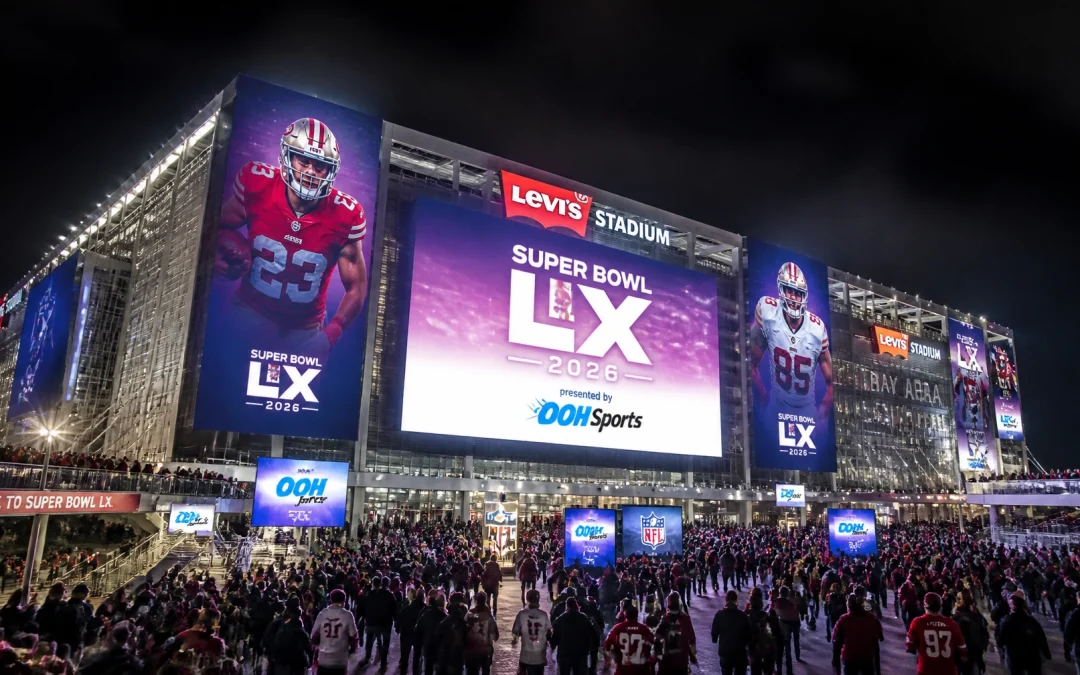
The landscape of sports marketing is undergoing a seismic shift as the industry prepares for Super Bowl 2026 at Levi's Stadium in Santa Clara. With 30-second television spots estimated to reach prices between 8 million and 10 million dollars, the pressure to maximize every marketing dollar has never been higher. While a single high-impact billboard once served as the gold standard for outdoor visibility, the modern era demands a more integrated approach. Venue-wide coverage has emerged as the most effective strategy for brands looking to dominate the environment and ensure their message resonates with fans long after the final whistle.
Success in the current market requires more than just a presence; it requires a takeover. The strategy focuses on saturating the fan journey from the moment they enter the 10-mile perimeter of the stadium until they take their seats. This comprehensive method leverages 40 years of advertising leadership to transform a simple advertisement into an immersive brand experience.
Strategy: 40 Years of Leadership in Sports Media
The evolution of sports advertising is rooted in decades of experience and veteran precision. Over the last 40 years, the approach to out-of-home (OOH) media has shifted from static, isolated placements to dynamic, interconnected networks. This leadership is defined by an understanding of how fans interact with their surroundings during high-stakes events like the Super Bowl.
The shift toward venue-wide coverage is a response to the "one campaign, many screens" trend seen in 2026 marketing data. Brands are no longer looking for a single moment of attention. Instead, they are pursuing a narrative that follows the consumer through various touchpoints. By utilizing a diverse array of assets, including the floor, the walls, and the digital screens, a brand can establish a sense of authority that a single billboard cannot match.
Objective and Strategy: Dominating the Fan Journey
The primary objective of a venue-wide campaign is to own the environment. When a fan walks into a stadium, they are bombarded with stimuli. A single billboard, no matter how large, can easily be lost in the noise of a Super Bowl crowd. In contrast, a venue-wide strategy creates a "surround sound" effect for the eyes.
Breaking Down the 10-Mile Perimeter
The strategy begins long before the fan reaches the stadium gates. Modern OOH sports marketing utilizes a perimeter-based approach, targeting all digital video advertising boards within a 10-mile radius of the venue. This ensures that media buyers and planners can reach fans during their commute, at their hotels, and in the local fan zones. By the time a spectator reaches Levi's Stadium, the brand has already established multiple points of contact.
The Problem with Single-Unit Buys
While a single billboard in a high-traffic corridor is useful for targeted, tactical messages, it lacks the transformational power needed for a Super Bowl-scale event. It is a one-dimensional tactic in a multi-dimensional market. A single unit does not reinforce a 10 million dollar TV buy. It does not create the "brand owns the city" perception that major sponsors like AB InBev or leading AI platforms strive for during the big game.

Execution Tactics: From Floors to Jumbotrons
Execution is where the strategy becomes reality. A successful campaign uses every available surface to communicate the brand message. This involves a mix of digital innovation and traditional, high-touch platforms.
Floors and Concourses
One of the most overlooked areas in sports marketing is the very ground the fans walk on. Branded floor graphics in stadium concourses provide a unique opportunity for high-frequency exposure. As fans navigate the stadium to find their seats or visit concessions, floor advertisements act as a constant visual guide. This "feet-to-eyes" approach ensures that the brand remains part of the physical environment.
The Sporttron Digital Network
Digital integration is managed through proprietary systems like the Sporttron digital network. This technology provides access to ribbon boards and jumbotrons across more than 780 venues nationwide. During the Super Bowl, these boards are the focal point of fan attention during breaks in the action. By syncing the creative across these internal screens, the brand creates a unified visual identity that reinforces the national television broadcast.

Concession Platforms and Tangible Experiences
Beyond the screens, the strategy incorporates "high-touch" platforms that turn a brand into a tangible part of the fan experience. This includes advertising on concession stands and even cup holders. These placements are highly effective because they interact with the fan during moments of relaxation and enjoyment. A branded cup holder for charity, for example, provides a positive association that extends beyond a mere visual impression. It becomes a functional part of the fan's day.
Technology and Data: Proving the ROI
In the data-driven world of 2026, marketing decisions must be backed by measurable results. The effectiveness of venue-wide coverage is tracked using predictive modeling and fan sentiment analysis. This allows brands to see the direct impact of their OOH spend on brand lift and purchase consideration.
Recent studies have shown significant results from this level of integration:
- Brand Awareness: Integrated campaigns that combine TV and venue-wide OOH see a marked increase in recall compared to TV-only campaigns.
- Purchase Consideration: Brands like White Claw and AB InBev have reported double-digit percentage increases in purchase consideration when utilizing programmatic DOOH near major sports events.
- Sentiment: Real-time sentiment tracking during the Super Bowl helps agencies adjust messaging for future campaigns based on how fans react to on-site activations.

The Role of NIL and Influencer Integration
Another key tactic in the 2026 playbook is the use of Name, Image, and Likeness (NIL) platforms. By leveraging thousands of authentic voices from student-athletes, brands can bridge the gap between traditional OOH advertising and the culture of the next generation. These athletes often share content featuring the very OOH ads seen at the venues, creating a loop of organic and paid media that amplifies the reach of the campaign.
Case Study Perspective: Why Integration Wins
When looking at the results of previous high-profile sports campaigns, the data consistently favors the integrated model. For instance, campaigns that utilize both perimeter boards and in-stadium digital assets report a much higher density of "device IDs exposed" than those relying on a single major billboard. This allows for more effective retargeting after the event, as the audience has been primed by multiple exposures.
For a detailed look at how these strategies come together, view the following analysis of sports marketing leadership:
https://www.youtube.com/watch?v=l6J-0zileKE
Results: The Value of Venue-Wide Dominance
The results of a venue-wide strategy speak for themselves. While a single billboard might achieve high reach, venue-wide coverage achieves high impact and frequency. By transforming the entire stadium and its 10-mile surrounding area into a branded ecosystem, a company ensures that its Super Bowl investment is fully realized.
The expertise required to execute this level of marketing is the product of 40 years of industry leadership. It involves a deep understanding of logistics, from the placement of floor graphics to the timing of jumbotron triggers. For brands aiming to make a lasting impression at Super Bowl 2026, the choice is clear: don't just buy a billboard, own the arena.

To explore more about high-impact sports marketing and digital out-of-home strategies, visit the OOH Sports marketing page or read through the latest case studies. Whether it is a local stadium or a national championship, the goal remains the same: creating a connection that goes beyond the whistle.