
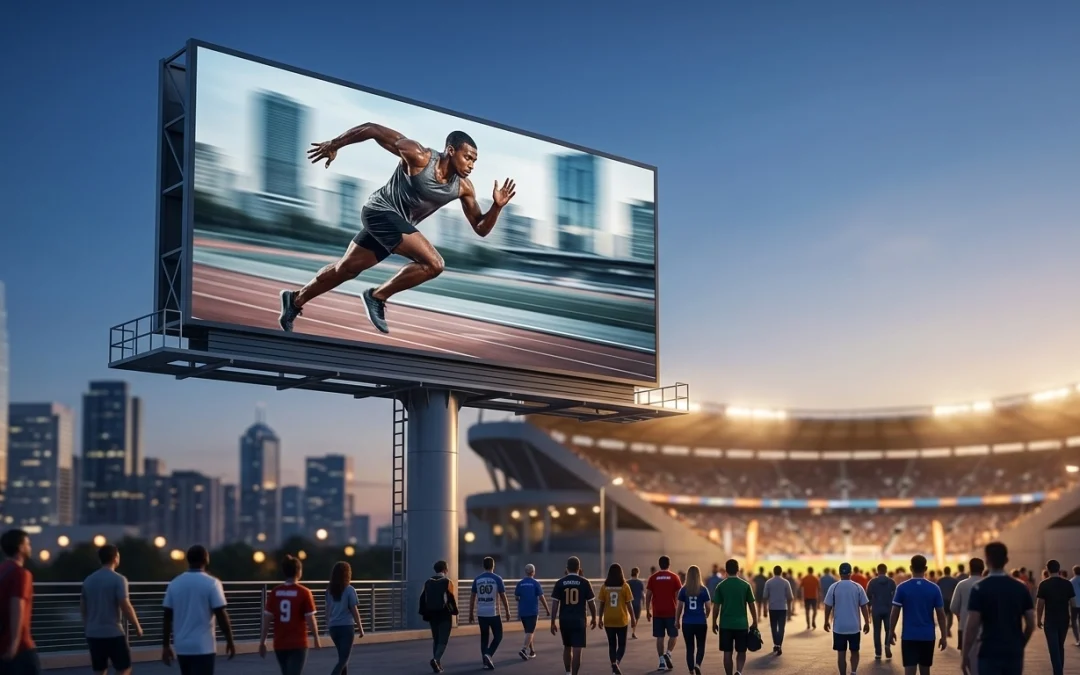
The landscape of sports marketing is undergoing a seismic shift. As traditional advertising methods face increasing fragmentation, programmatic digital out-of-home (pDOOH) has emerged as a cornerstone for brands looking to capture the attention of fans where they are most engaged. This guide explores the mechanics, strategies, and measurable outcomes of programmatic DOOH within the sports ecosystem.
The Evolution of Sports Advertising
Historically, out-of-home advertising in the sports world was defined by static billboards and long-term contracts. A brand would purchase a specific location for several months, regardless of the games played or the audience present. Programmatic DOOH has dismantled this model. It allows for the automated buying and selling of digital ad space in real time, enabling brands to purchase "moments" rather than just locations.
By 2026, programmatic DOOH ad spending is projected to exceed $1.3 billion. This growth is driven by the demand for flexibility, precision, and data-driven decision-making. For sports brands, this means the ability to activate campaigns exactly when the emotional intensity of a game is at its peak.
Objective & Strategy: The 10-Mile Perimeter
A core strategic pillar for effective sports DOOH is the "perimeter approach." This involves saturating the digital landscape within a 10-mile radius of a sports venue. This specific geographic targeting ensures that a brand stays top-of-mind as fans transition through their journey from transit hubs to the arena and eventually to post-game celebratory spots.
The Fan Journey Mapping
To maximize impact, a campaign must account for the various touchpoints in a fan’s day:
- Pre-Game: Digital screens in transit hubs and on major highways capture fans during their commute.
- Arrival: Large-format displays near the stadium entrance build brand authority.
- During Game: Screens in sports bars and nearby retail centers reach the "secondary audience" watching outside the stadium.
- Post-Game: Capturing the celebratory or exit traffic ensures the message resonates long after the final whistle.

Strategy: Buying Moments with Data Triggers
The true power of programmatic DOOH lies in its ability to respond to external data. Instead of a static image that remains unchanged, pDOOH creative can be triggered by specific conditions, making the advertisement contextually relevant.
Common triggers in sports marketing include:
- Game Start/End: Launching specific "hype" creative 30 minutes before kickoff.
- Score Updates: Displaying live scores or celebratory messages when the home team scores.
- Weather Conditions: Promoting cold-weather gear when the temperature drops below 40 degrees or hydration products during a heatwave.
- Traffic Density: Increasing bid prices for highway boards when traffic slows down, ensuring longer dwell times for the creative.
This level of agility ensures that marketing budgets are not wasted on irrelevant impressions. More information on these high-impact digital boards can be found on the Sportrons page.
Technology Partners: The Programmatic Engine
Executing a pDOOH campaign requires a sophisticated technological stack. The process involves several key players:
- Demand-Side Platform (DSP): The software used by advertisers to buy inventory and manage campaigns. Platforms like StackAdapt allow for the integration of DOOH into broader omnichannel strategies.
- Supply-Side Platform (SSP): The platform where media owners list their digital inventory.
- Ad Exchange: The marketplace where the real-time bidding occurs.
These technology partners allow sports brands to utilize the same audience targeting capabilities found in digital display or social media. By leveraging third-party data, brands can target specific segments such as "fantasy sports enthusiasts," "high-frequency gym-goers," or "luxury sports car owners" across the physical world.
Dynamic Creative: Engaging the Audience
In a programmatic environment, creative is no longer one-size-fits-all. Dynamic Creative Optimization (DCO) allows for the automatic assembly of different ad elements based on the viewer's context.
For example, a beverage brand might run a campaign where the creative changes based on the venue type. A screen in a fitness center might emphasize low-calorie benefits, while a screen in a sports bar highlights social enjoyment and live game specials. This level of customization significantly increases the relevance and effectiveness of the visual message.

Results: Quantifying Success in the Real World
One of the most significant advantages of programmatic DOOH is its measurability. Modern attribution models have moved beyond simple "estimated impressions" to track tangible business outcomes.
Measurable Outcomes and KPIs
- Brand Lift: Utilizing pre- and post-campaign surveys to measure increases in awareness and purchase consideration.
- Foot Traffic Attribution: Tracking exposed mobile devices that subsequently visit a retail location or stadium.
- Digital Conversions: Measuring the increase in website visits or app downloads following DOOH exposure.
According to industry data, 73% of consumers take a digital action after seeing a DOOH ad, such as searching for the brand or visiting its social media page. Case studies from OOH Sports demonstrate the magnitude of this impact:
- White Claw: A programmatic DOOH campaign drove a 74% lift in purchase consideration for their vodka launch.
- AB InBev (Mike’s Hard Iced Tea): This campaign saw a 119% lift in positive brand image.
- Sea-Doo: Their initial digital OOH effort resulted in a 144% increase in purchase consideration.
Strategic Integration with Mobile and CTV
Programmatic DOOH should not exist in a vacuum. It is most effective when integrated into an omnichannel approach. By capturing the device IDs of users exposed to a DOOH screen, brands can retarget those same individuals on their mobile phones or through Connected TV (CTV) ads. This "surround-sound" effect reinforces the message and moves the consumer more effectively through the sales funnel.

Implementation Checklist for Sports Brands
For those ready to scale their brand using pDOOH, the following steps provide a roadmap for execution:
- Define Primary KPIs: Determine if the goal is broad awareness, foot traffic to a specific location, or app installations.
- Identify High-Value Perimeters: Focus on the 10-mile radius around arenas and high-traffic fan hubs.
- Develop Dynamic Creative: Ensure visuals can adapt to live scores, weather, or time of day.
- Select Technology Partners: Choose a DSP that offers robust DOOH inventory and advanced attribution tools.
- Set Data Triggers: Program the campaign to activate during peak emotional moments, such as the hour before a championship game.
To learn more about the team behind these strategies, visit the About page. For a deeper look at past performance, explore the Case Study section.
Programmatic DOOH is more than just a screen in a stadium. it is a sophisticated, data-driven channel that allows sports brands to speak to fans in the moments that matter most. By combining the scale of traditional out-of-home with the precision of digital advertising, brands can achieve unprecedented levels of reach and relevance.