
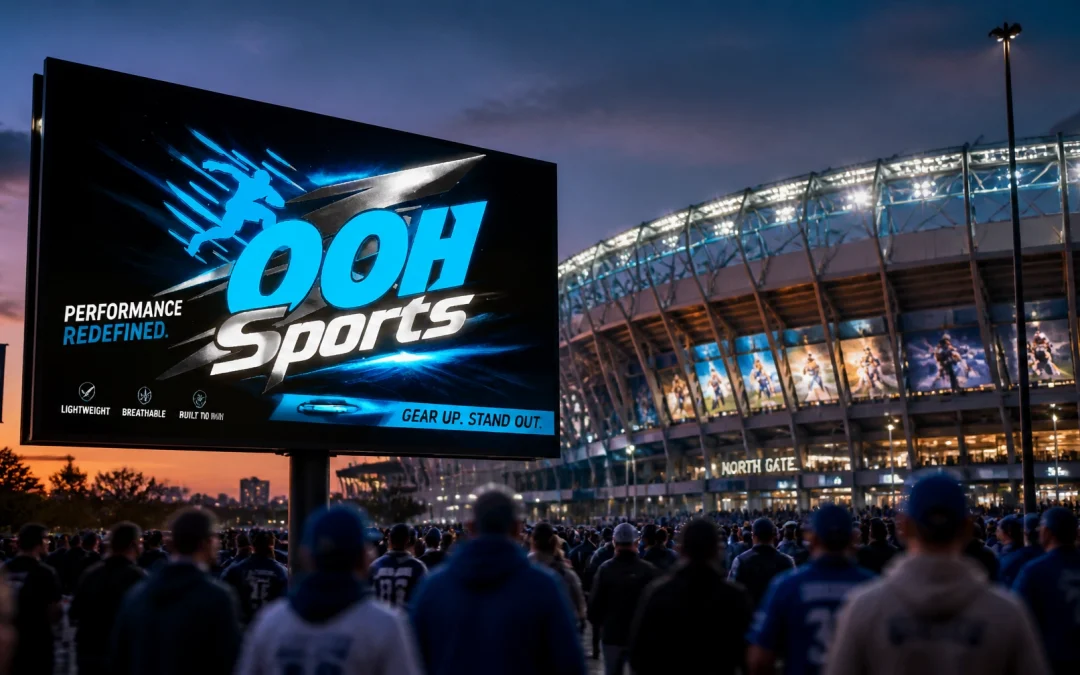
The landscape of sports marketing is undergoing a fundamental transformation. For decades, the industry relied on static placements and long lead times to reach enthusiasts during major events. However, the emergence of Digital Out-of-Home (DOOH) technology has introduced a level of precision, speed, and interactivity that was previously unattainable. By leveraging real-time data and automated buying processes, brands are now able to connect with fans in a way that is both contextually relevant and highly impactful.
Innovation in the sports marketing sector is no longer just about visibility. It is about capturing the emotional intensity of a live game and translating that energy into measurable brand performance. This evolution is driven by the ability to synchronize messaging with the live environment, ensuring that the right creative reaches the right audience at the moment of highest engagement.
Strategic Objective: The 10-Mile Perimeter Strategy
A primary advancement in modern sports advertising is the implementation of hyper-local targeting around athletic venues. Traditional OOH often cast a wide, unguided net. In contrast, the current strategic approach focuses on a systematic saturation of the 10-mile perimeter surrounding a sports arena. This radius captures fans during the "last mile" of their journey, a period characterized by heightened excitement and intent to purchase.

This perimeter strategy is designed to reach the target audience across various touchpoints throughout their match-day experience. By identifying all digital video advertising boards within this zone, media planners can create a "surround-sound" effect that maintains brand frequency.
Tactics for Perimeter Execution:
- Transit Hubs: Targeting digital screens in train stations and bus shelters to reach fans during their commute.
- Retail and Hospitality: Utilizing displays in sports bars, restaurants, and fan zones where audiences gather before and after events.
- Roadside Placements: Securing high-impact large-format digital billboards on major arteries leading toward the venue.
- Urban Kiosks: Engaging pedestrians in city centers and near stadium entrances via street-level digital totems.
The objective is to establish a dominant brand presence that follows the fan from the moment they leave their residence until they enter the stadium. This localized saturation ensures that the brand remains top-of-mind during peak emotional moments.
Programmatic Innovation: Automation and Media Buying Efficiency
The shift toward programmatic DOOH (pDOOH) has redefined the logistics of media buying. In the past, securing OOH space required manual negotiations and fixed, long-term contracts. Today, programmatic platforms allow brands to purchase screen time with the same flexibility and automation found in digital display or social media advertising.

Programmatic technology enables advertisers to bid on inventory in real time, adjusting budgets and creative assets instantaneously based on campaign performance or live event developments. This agility is particularly valuable in the volatile environment of sports, where momentum can shift in seconds.
Benefits of Programmatic Integration:
- Automated Auctions: Streamlining the procurement process through real-time bidding, reducing administrative overhead.
- Granular Targeting: Selecting specific screens based on audience demographics, movement patterns, and proximity to venues.
- Budget Flexibility: Enabling brands to scale spending up or down instantly, optimizing for high-value windows such as playoff games or championships.
- Unified Planning: Integrating DOOH into a broader omnichannel strategy, allowing for consistent frequency management across digital and physical environments.
By utilizing programmatic digital out-of-home, media buyers can move away from rigid schedules and toward a more responsive, data-driven model that maximizes the return on ad spend.
Technology and Dynamic Creative: Harnessing Real-Time Triggers
One of the most significant technological leaps in the industry is the use of dynamic creative optimization (DCO). This technology allows digital ads to update automatically based on external data feeds, ensuring the content remains fresh and relevant. In a sports context, this means that a billboard is no longer a static image but a live broadcast of brand-aligned information.

Real-time triggers enable brands to capitalize on the immediate reality of the game. If a team scores, the creative can change within seconds to a celebratory message. If a game is delayed due to weather, the messaging can shift to promote indoor activities or specific products.
Common Data-Driven Triggers Include:
- Live Scores and Outcomes: Displaying current match results or congratulatory messages immediately following a victory.
- Countdown Timers: Building anticipation by showing the time remaining until kick-off or the start of a major tournament.
- Weather Patterns: Adjusting creative based on temperature or precipitation (e.g., promoting hot beverages during cold games).
- Betting Odds: Integrating live lines and betting updates for sportsbooks to capture the interest of active bettors.
This level of contextual relevance transforms the advertisement from a passive display into a service for the fan. It demonstrates a brand’s active participation in the sports culture, fostering a deeper connection with the audience.
Omnichannel Integration: Extending the Fan Journey
Innovation in DOOH is not limited to the screen itself. It also involves the integration of physical placements with personal mobile devices. Through the use of anonymized location data and device IDs, advertisers can bridge the gap between an OOH impression and a digital conversion.

When a fan is exposed to a digital billboard within the stadium perimeter, their mobile device ID can be captured. This allows for subsequent retargeting via mobile ads, social media, or Connected TV (CTV). This multi-touch approach ensures that the brand interaction does not end when the fan walks past the screen.
The Retargeting Process:
- Exposure: A fan views a digital billboard near a sports venue.
- Identification: Location data identifies the presence of the audience in the proximity of the screen.
- Reinforcement: The fan receives a follow-up ad on their smartphone with a specific call to action, such as a discount code or app download link.
- Conversion: The combination of the high-impact OOH visual and the direct-to-device offer leads to a measurable purchase or sign-up.
This synergy between digital out-of-home and mobile advertising turns the physical world into a powerful lead-generation tool, providing a seamless experience for the consumer and a clear path to attribution for the advertiser.
Quantifiable Results: Data-Backed Performance
The ultimate measure of innovation is its impact on the bottom line. Recent case studies demonstrate that the combination of programmatic buying and sports-specific targeting yields significant lifts in brand metrics.
For instance, a campaign executed for White Claw to launch a new vodka product utilized programmatic DOOH to target high-traffic social hubs. The results indicated a 74 percent lift in purchase consideration, proving that the medium is effective at driving mid-funnel intent. Similarly, a campaign for Mike’s Hard Iced Tea saw a 119 percent lift in positive brand image by strategically placing ads in environments where fans were already in a relaxed, social mindset.
These results are measured through rigorous brand lift studies and attribution modeling, which compare exposed audiences against control groups. The data consistently shows that DOOH provides a unique combination of high reach and high relevance that traditional digital channels often struggle to replicate in isolation.
Conclusion
The shift toward digital OOH innovation is not a temporary trend but a permanent change in how brands interact with sports fans. By moving beyond the stadium walls and into the broader "everyday fan spaces," advertisers can maintain a continuous dialogue with their audience. The integration of 10-mile perimeter targeting, programmatic agility, and real-time dynamic creative offers a sophisticated toolkit for the modern media buyer.
As the industry continues to evolve, the brands that succeed will be those that embrace these technological advancements to deliver messages that are as dynamic and passionate as the sports themselves. Through precise execution and data-driven strategy, DOOH is officially changing the game for sports marketing.