
Fan engagement is often cited as the ultimate objective for sports marketers, yet many campaigns fail to convert passive observers into active brand participants. In an era where attention is the most valuable currency, reaching a fan is no longer enough. The challenge lies in creating a meaningful connection that persists beyond the final whistle.
Traditional advertising methods frequently struggle to break through the clutter of a live sporting event. When fans are immersed in the high-stakes environment of a stadium, their focus is narrow and their emotional state is heightened. Any marketing effort that fails to align with this specific psychology is likely to be ignored. To fix fan engagement, one must understand why it typically falters and how specialized strategies, such as digital out-of-home (DOOH) advertising and stadium perimeter targeting, can bridge the gap.
Strategy
The strategy employed by OOH Sports focuses on the integration of brand messaging into the physical and emotional journey of the sports fan. By utilizing a network of digital video advertising boards within a ten-mile perimeter of sports venues, the brand message remains consistent and omnipresent during the most critical windows of fan activity. This approach ensures that the brand is not merely an interruption but a part of the event ecosystem.
1. Treating Fans as a Generic Audience
One of the most common errors in sports marketing is the use of generic, "one-size-fits-all" creative. Fans are not a monolithic block. They are a "tribe" with specific loyalties, rituals, and emotional triggers. When a campaign uses the same creative for a sports stadium that it uses for a highway billboard or a shopping mall, it misses the opportunity to tap into tribal identity.
How to Fix It: Tailor creative content to the specific sport, team, or even the atmosphere of the venue. Brands that position themselves as "supporters" of the team rather than just vendors see much higher levels of trust and recall.
2. Confusing Reach with Engagement
Marketing teams often point to high impression counts or social media followers as proof of success. However, reach is a measure of potential, while engagement is a measure of action. A fan may see an ad (reach) but not care about it (engagement).
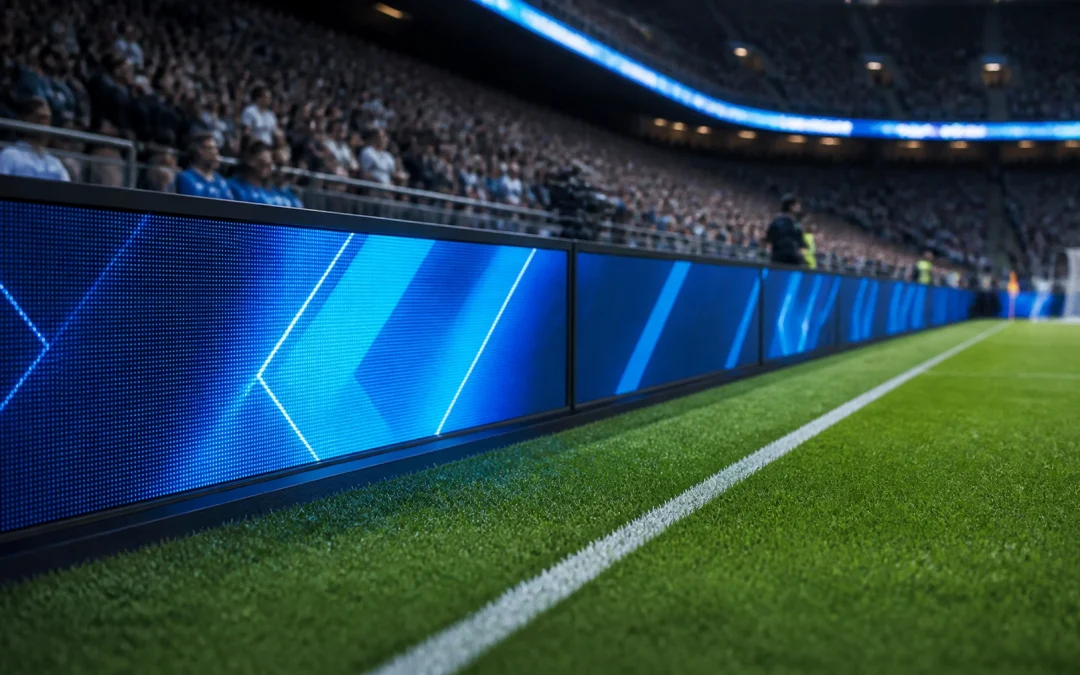
How to Fix It: Shift the focus toward interactive and unskippable formats. Stadium perimeter advertising is particularly effective because it exists where fans are already looking. Unlike a social media ad that can be scrolled past, a vibrant digital board at the edge of the field of play is unskippable and occupies the fan's primary field of vision.
3. One-Way Communication
Engagement is a two-way street. Many campaigns fail because they function as a broadcast, pushing information at the fan without providing a way for the fan to participate or respond.
How to Fix It: Use programmatic DOOH to create interactive loops. This can include real-time polls, social media integrations that display fan content on larger screens, or QR codes that lead to exclusive game-day offers.
4. Poor Timing and Lack of Real-Time Context
Timing is everything in sports. A brand message delivered during a timeout has a different impact than one delivered immediately after a game-winning goal. Most fan engagement strategies are pre-planned and static, meaning they cannot react to the live events unfolding on the field.
How to Fix It: Implement real-time triggers. Modern DOOH technology allows advertisers to change creative instantly based on game events. If a team scores, the advertising boards can immediately switch to a celebratory brand message, linking the brand to a peak emotional moment.

5. Over-Reliance on Saturated Digital Channels
While social media is a powerful tool, it is also incredibly crowded during live games. Fans often look at their phones during breaks, but they are competing with thousands of other distractions, notifications, and apps.
How to Fix It: Diversify the media mix by dominating the physical environment. By placing ads on the Sportrons and digital boards surrounding the stadium, a brand can capture attention when fans look away from their phones to watch the actual event.
6. Ignoring the "Last Mile" (The 10-Mile Perimeter)
Many brands focus exclusively on what happens inside the stadium, forgetting the fan's journey to and from the venue. The hours spent traveling, parking, and tailgating are prime windows for engagement that are often left untouched by sports-specific marketing.
How to Fix It: Utilize a perimeter-based strategy. OOH Sports provides access to every digital video advertising board in a ten-mile radius around major sports venues. This ensures the brand message accompanies the fan from the moment they enter the vicinity of the stadium until they leave.

7. Lack of High-Impact Frequency
Low frequency is the death of brand recall. If a fan only sees a brand once during a four-hour game experience, the chances of long-term retention are slim.
How to Fix It: Create a "surround sound" effect with multiple touchpoints. Seeing a brand on a digital billboard on the way to the game, then on the perimeter boards during the game, and again on a digital screen while exiting creates the frequency necessary for brand "stickiness."
8. Failing to Leverage Emotional Peaks
The most effective marketing happens when the audience is in a high-arousal emotional state. In a stadium, these peaks are frequent but fleeting. Most brands miss these windows because their ad rotations are not synced with the game's momentum.
How to Fix It: Coordinate with the "halo effect" of the team. Brands that appear during the most exciting parts of the game are perceived as more prestigious and relevant. This premium positioning is a core benefit of perimeter advertising.
9. Inconsistent Omnichannel Presence
A fan engagement campaign that exists only in the stadium but isn't reflected in the brand's other digital channels feels disjointed. Consistency is key to building a narrative that the fan can follow.
How to Fix It: Align DOOH with mobile retargeting. Using device IDs exposed to the perimeter ads, brands can retarget those same fans with follow-up offers on their mobile devices later in the week, reinforcing the message.
10. Lack of Attribution and Data
For a long time, out-of-home advertising was viewed as a "top-of-funnel" awareness play that was difficult to measure. Without data, marketers cannot optimize their strategies or prove return on investment (ROI).
How to Fix It: Modern DOOH platforms integrate with sophisticated analytics. By tracking lift in purchase consideration or brand preference, marketers can see the tangible results of their stadium-side efforts.

Objective & Strategy
The primary objective of a perimeter-based DOOH campaign is to establish brand dominance within a specific geographic and emotional territory. The strategy involves deploying high-resolution video content across a network of screens, synchronized with the sports calendar. This ensures that the brand is present at every major event, from regular-season games to championship playoffs, without the need for manual, one-off negotiations for every venue.
Technology Partners & Execution
Execution of these campaigns is made possible through partnerships with specialized platforms like StackAdapt, which drive programmatic DOOH adoption. This technology allows for the automated buying and placement of ads, ensuring they appear at the right time and in the right place. The process is streamlined, data-driven, and capable of scaling across multiple cities and sports categories simultaneously.
Results
Data from recent campaigns illustrates the power of this focused approach. When White Claw launched its vodka brand using a programmatic DOOH campaign, it saw a 74% lift in purchase consideration. Similarly, AB InBev's Mike’s Hard Iced Tea experienced a 119% lift in positive brand image through a targeted DOOH strategy. Sea-Doo, in its first digital OOH campaign, reported a 144% increase in purchase consideration. These figures demonstrate that when engagement is handled with precision and technological fluency, the impact on the bottom line is substantial.
For further reading on successful campaign execution, the OOH Sports case study section provides detailed breakdowns of how brands have successfully navigated the sports marketing landscape.
Conclusion
Fixing fan engagement requires a departure from traditional, broad-stroke advertising. It demands a strategy that respects the fan's journey, leverages the emotional intensity of the game, and uses technology to stay relevant in real-time. By focusing on the "last mile" and the immediate stadium environment, brands can move beyond simple impressions and toward genuine, measurable engagement.