
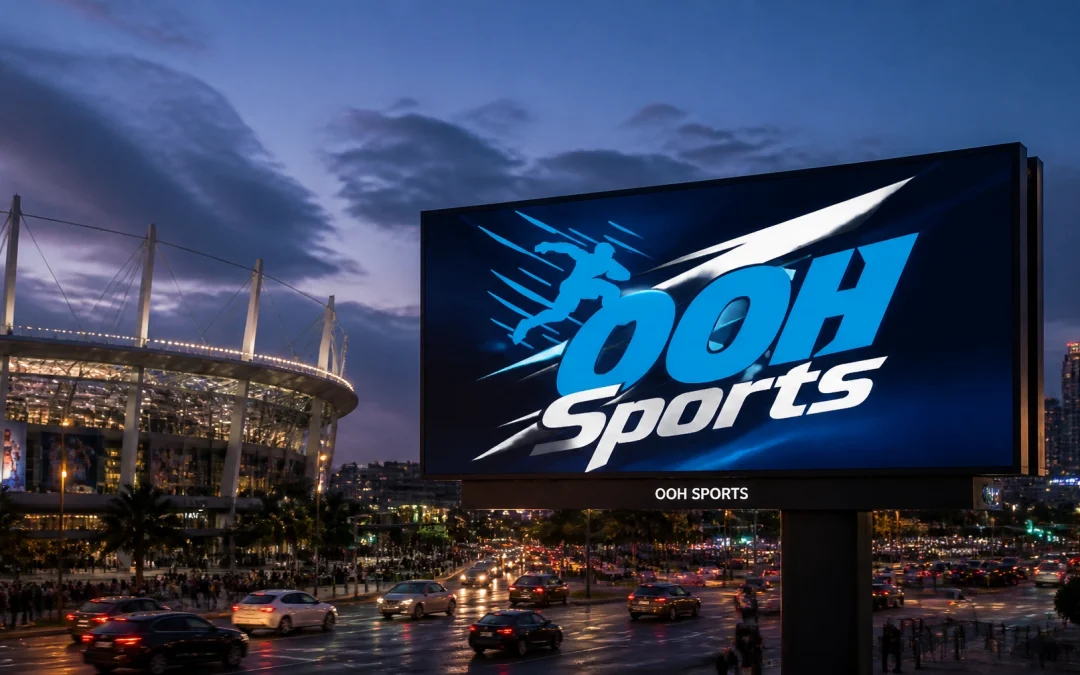
The landscape of sports marketing is undergoing a significant transformation. As traditional media channels face increasing fragmentation, the OOH Sports network, a specialized division of Sports Media Inc., has announced a major expansion designed to redefine how brands engage with the most passionate audiences in the country. This evolution marks a shift toward a more accessible, data-driven, and expansive digital out-of-home (DOOH) ecosystem.
By scaling its infrastructure to over 25,000 digital screens and implementing advanced geofencing around every major sports venue in the United States, OOH Sports is providing media buyers and planners with an unprecedented level of precision. This guide explores the strategic mechanics, technology, and measurable impact of this expanded network, offering a roadmap for brands looking to dominate the sports media space.
Objective and Strategy
The primary objective of the OOH Sports network expansion is the democratization of sports media. Historically, high-impact sports advertising was reserved for brands capable of securing multi-year stadium sponsorships or expensive broadcast spots. The current strategy removes these barriers by leveraging programmatic technology to offer flexible, audience-based buying.
The core of this strategy revolves around a 10-mile radius perimeter established around major sports arenas and stadiums. Instead of limiting exposure to the interior of a venue, the network captures fans throughout their entire journey. This includes the transit routes to the game, the hospitality zones where fans gather pre-game, and the retail environments where they make game-day purchases. By saturating this 10-mile "fan zone," the network ensures that a brand becomes synonymous with the event itself, regardless of official sponsorship status.
The Network Expansion: Reach and Scale
OOH Sports has increased its inventory to include more than 25,000 digital screens strategically located in high-traffic areas. This scale allows for national coverage that can be tailored down to specific zip codes or individual venues. The inventory is not limited to traditional billboards. It encompasses a diverse mix of environments:
- Roadside Digital Billboards: High-impact placements on major highways and arteries leading to sports hubs.
- Street-Level Kiosks and Transit Shelters: High-dwell time locations in urban centers and near public transportation hubs.
- Hospitality and Social Hubs: Digital screens within bars, restaurants, and hotels where fans congregate to watch games.
- Point-of-Purchase Locations: Screens in convenience stores and retail centers within the 10-mile venue perimeter.
This multi-touchpoint approach ensures that brand messaging is reinforced through frequency and context. The expansion allows media planners to execute campaigns that scale from single-market activations to nationwide takeovers with ease.

(Note: Referencing the OOH Sports logo for brand consistency in visual identity.)
Technology Partners and Programmatic Infrastructure
The shift to a fully programmatic DOOH (pDOOH) model is a cornerstone of the new OOH Sports infrastructure. By integrating with leading Demand-Side Platforms (DSPs) like StackAdapt, the network provides media buyers with a buying experience that mirrors digital display or social media advertising.
This technological framework enables several key capabilities:
- Real-Time Bidding and Automation: Buyers can bid on inventory in real time, allowing for more efficient budget allocation and the ability to pivot strategies based on live event outcomes.
- Geofencing and Triggered Content: Using venue-proximity data, campaigns can be triggered to activate only when fan density reaches a certain threshold or during specific game-day windows.
- Dynamic Creative Optimization: Creative assets can be programmed to update automatically based on live sports scores, weather conditions, or time of day. This ensures that the messaging remains relevant to the immediate context of the fan.
By utilizing these tools, brands can achieve a level of agility that was previously impossible in out-of-home advertising. For more information on the specific technology used, visit the OOH Sports technology section.
The Full Fan Journey: Strategic Screen Placement
The effectiveness of the OOH Sports network is rooted in its understanding of the fan journey. Exposure begins long before the first whistle and continues long after the final score.
In the awareness phase, roadside billboards and transit screens target fans during their commute. As the game approaches, the focus shifts to mid-funnel engagement in hospitality environments. In these settings, digital screens provide a secondary or tertiary focal point for fans who are already in a heightened state of emotional engagement. Finally, point-of-purchase screens in convenience stores target the "last mile" of the consumer journey, influencing immediate purchasing decisions for beverages, snacks, and team apparel.
This comprehensive coverage creates a "surround sound" effect. When a brand appears across multiple screens in multiple environments, it builds a sense of authority and presence that a single stadium sign cannot match.

(Digital screens in social environments allow for high dwell time and engagement.)
Campaign Execution and Logistics
Executing a campaign on the expanded OOH Sports network involves a streamlined, data-led process. Logistics are managed through centralized platforms that allow for rapid deployment across thousands of screens simultaneously.
The process typically follows these steps:
- Audience Mapping: Identifying the specific sports venues and demographic clusters that align with the brand's target market.
- Perimeter Setting: Defining the geofenced boundaries (usually the 10-mile radius) where the campaign will be active.
- Creative Deployment: Uploading dynamic assets that can respond to real-time triggers.
- Optimization: Monitoring performance data throughout the flight and adjusting bids or creative rotations to maximize impact.
This level of control is particularly beneficial for brands that are not official sponsors of an event. As seen in recent industry examples, such as the Nike campaign during the NYC Marathon, strategic DOOH placement can create a dominant brand presence that rivals official partnerships.
Results and Impact Data
The success of the OOH Sports network expansion is reflected in the measurable outcomes of recent campaigns. Data-driven results consistently demonstrate that programmatic DOOH in sports environments drives both brand lift and consumer action.
Recent performance metrics highlight the following:
- Purchase Consideration: Brands utilizing the programmatic sports network have seen up to a 74% lift in purchase consideration. This was notably observed in recent beverage launches where geofenced ads targeted fans in the vicinity of major stadiums.
- Brand Image: A campaign for a leading iced tea brand reported a 119% lift in positive brand image by aligning its messaging with the high-energy environment of live sports.
- Consumer Action: According to industry studies from the OAAA and Harris Poll, 76% of consumers take action after seeing a DOOH ad, with 74% of mobile users performing an action on their device immediately following exposure.
- Reach and Efficiency: Analysis comparing a month-long DOOH campaign in the top 25 U.S. markets to a single 30-second Super Bowl spot found that the DOOH campaign provided 7.5 times greater reach and 10 times better CPM.
These figures illustrate that the OOH Sports network is not just an awareness tool but a powerful driver of mid- and lower-funnel results. Detailed analysis of these outcomes can be found in the OOH Sports case study library.
Industry Perspective: The Multiplier Effect
Out-of-home advertising is increasingly recognized as a multiplier for other media channels. When paired with mobile, social, or broadcast advertising, OOH can amplify total campaign reach to over 90%.
The OOH Sports network expansion facilitates this by connecting DOOH exposure data to mobile device IDs. This allows brands to retarget fans on their mobile devices after they have been exposed to a digital billboard or transit ad. This closed-loop measurement system provides a clearer picture of the consumer's path to purchase and allows for more accurate attribution.
As the industry moves toward 2026 and beyond, the integration of physical and digital worlds will become the standard. OOH Sports is positioned at the forefront of this trend, offering a bridge between the visceral experience of live sports and the precision of digital marketing.
Conclusion
The expansion of the OOH Sports network represents a significant milestone for the advertising industry. By combining massive scale with granular targeting and programmatic flexibility, the network has created a new standard for sports marketing. Brands that leverage these tools can reach fans with more relevance, frequency, and impact than ever before.
For media buyers and planners, the message is clear. The era of static, inaccessible sports advertising is over. The future is digital, programmatic, and centered around the fan. To learn more about how to integrate OOH Sports into your next campaign, visit the about page or contact the team for a strategy consultation.