
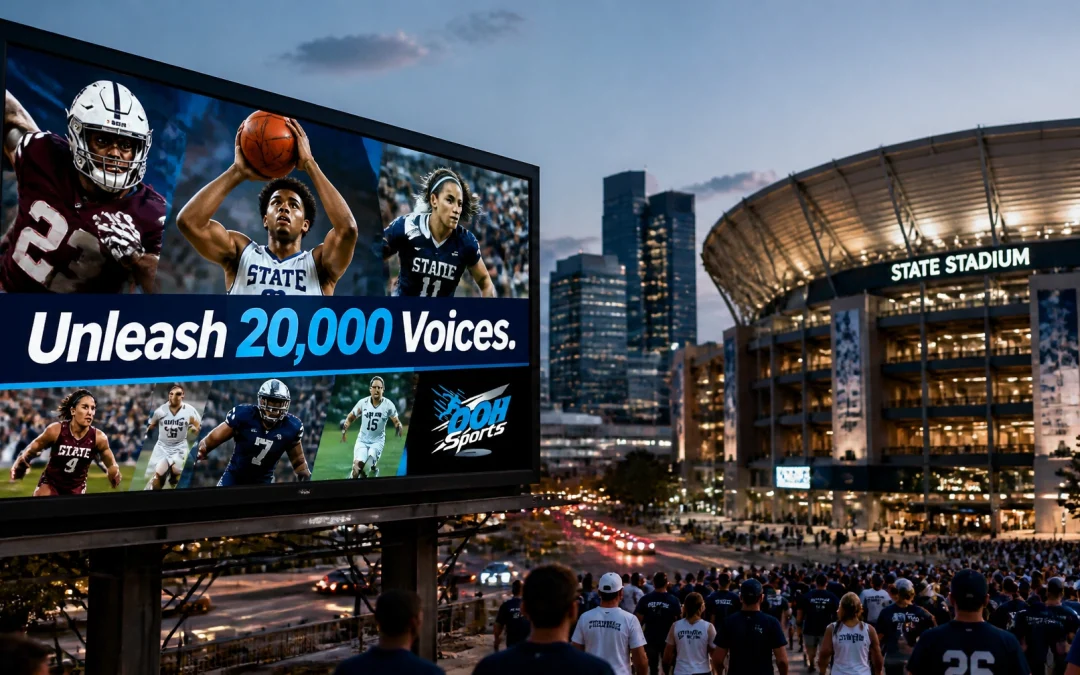
The landscape of sports marketing has shifted from high-budget, single-celebrity endorsements toward a more distributed, authentic model. As the Super Bowl remains the pinnacle of American advertising, the competition for attention is fiercer than ever. For media buyers and planners, the challenge is no longer just about buying a spot during the game; it is about owning the conversation surrounding it. The emergence of Name, Image, and Likeness (NIL) regulations has unlocked a powerful new asset: the collective voice of the student-athlete.
OOH Sports, a leader in the digital out of home (DOOH) sector and part of the Sports Media Inc. family, provides a framework to scale these voices. By leveraging a network of over 20,000 student-athletes, brands can move beyond traditional broadcasting to create a multi-layered, omnipresent campaign that resonates with fans on a personal level. This guide outlines the strategic and technical roadmap for scaling NIL voices during the high-stakes window of the Super Bowl.
Strategy: The Power of 20,000 Voices
In traditional advertising, a brand might select one or two high-profile ambassadors to carry a campaign. While this provides star power, it often lacks the broad-based cultural resonance needed to saturate a market. The NIL strategy focuses on "The Power of Many." By mobilizing a network of 20,000 student-athletes through platforms like MySportsMedia, a brand can generate thousands of unique, authentic touchpoints.
These athletes are not just influencers; they are the heart of sports culture in their respective communities. When a brand scales to 20,000 voices, it is not simply buying impressions. It is buying trust. Student-athletes have a unique connection with their peers, alumni, and local fans. This connection translates into higher engagement rates compared to traditional professional athlete endorsements.
The strategic objective for a Super Bowl campaign is to create a "surround sound" effect. As fans travel to the host city, attend watch parties, or browse social media during commercial breaks, they should encounter a consistent yet varied message from voices they recognize and trust.
https://www.youtube.com/watch?v=l6J-0zileKE
Technology: Programmatic DOOH and the 10-Mile Perimeter
Execution at this scale requires more than just social media posts. It requires a sophisticated integration of physical and digital media. OOH Sports utilizes programmatic DOOH technology to place brand messaging exactly where the fans are. A core tactic involves establishing a 10-mile perimeter around major sports venues, including the Super Bowl host stadium and key fan zones.

By using digital video advertising boards within this radius, brands can sync their NIL content with physical locations. For example, a student-athlete from a nearby university might appear on a digital billboard just blocks away from a popular fan activation site. This creates a seamless loop between the digital world (the athlete's social feed) and the physical world (the DOOH boards).
The technology behind this is highly precise. Programmatic buying allows media planners to adjust creative in real-time based on game events, weather, or crowd density. If a specific athlete’s content is trending on social media, that same creative can be pushed to the Sportrons and billboards within the targeted perimeter within minutes. This agility is what separates modern sports marketing from the static buys of the past.
Execution: The Quick-Start Roadmap
Scaling to 20,000 voices might seem daunting, but the process is streamlined through specialized NIL platforms and programmatic tools. Here is the tactical breakdown for a Super Bowl execution:
1. Identifying the Roster
The first step is filtering the 20,000+ available athletes to find those who align with the brand’s identity. Media planners look for:
- Geographic relevance: Athletes from the host city or from the hometowns of the competing teams.
- Sport alignment: While football players are the obvious choice, basketball and soccer athletes often have high cross-over appeal during the winter months.
- Engagement metrics: Focusing on athletes with high "save" and "share" rates rather than just raw follower counts.
2. Standardizing the Creative Brief
To manage 20,000 voices without losing brand consistency, the brief must be clear and actionable. The goal is to provide enough structure for brand safety while allowing enough freedom for the athlete’s natural voice to shine. This typically involves a "core hook" or tagline, followed by a request for User-Generated Content (UGC) that reflects the athlete's actual Super Bowl experience.
3. Synchronized Deployment
Timing is critical. The NIL content should begin rolling out during the two weeks leading up to the Big Game, peaking on the Thursday, Friday, and Saturday before Sunday's kickoff. Simultaneously, the OOH Sports advertising network triggers the DOOH boards within the 10-mile stadium perimeter to amplify the most successful athlete posts.

Results: Measuring the NIL Impact
The success of a massive NIL-driven campaign is measured through a combination of brand lift and tangible engagement. In recent years, campaigns leveraging this "distributed voice" model have seen significant performance increases. For instance, brands using programmatic DOOH to complement their social strategies have reported a notable lift in purchase consideration.
Data from previous case studies shows that the combination of athlete authenticity and high-impact physical advertising leads to:
- Increased Brand Recall: Fans are 2.5 times more likely to remember a brand when they see it on both a mobile device and a large-format digital billboard.
- Higher Sentiment Scores: Because the message comes from a relatable student-athlete rather than a faceless corporation, the positive brand image can see a lift of over 100 percent in specific demographics.
- Geographic Density: By saturating the 10-mile perimeter, brands "own" the host city, effectively outmaneuvering competitors who may have only purchased a single national TV spot.
Conclusion: The New Standard for the Big Game
The era of relying solely on a 30-second television spot is over. For the 2026 and 2027 seasons, the brands that win will be the ones that harness the collective power of thousands. By scaling 20,000 student-athlete voices through a centralized NIL platform and amplifying that message through OOH Sports’ precise DOOH network, media buyers can achieve a level of resonance and reach that was previously impossible.
This strategy is not just about being loud; it is about being relevant, authentic, and present where it matters most. As the industry moves toward more data-driven and person-to-person marketing, the 20,000-voice model stands as the new benchmark for Super Bowl success.
For those ready to plan their next campaign, exploring the marketing capabilities of OOH Sports and the MySportsMedia NIL platform is the first step toward scaling your brand's voice to new heights.