
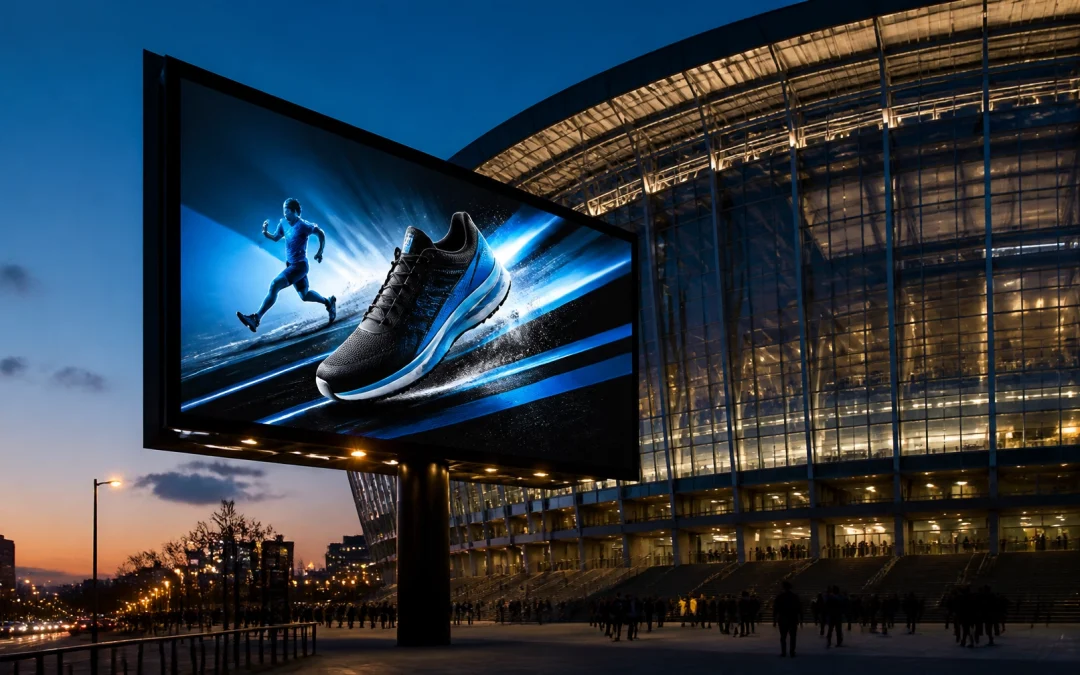
Digital Out-of-Home (DOOH) advertising has transitioned from a traditional awareness tool into a high-performance channel for sports marketing. As sports media consumption becomes increasingly fragmented across linear television, streaming, and social platforms, DOOH provides a physical anchor for brand messaging. It allows brands to occupy the spaces where fans live, travel, and congregate, creating a consistent presence throughout the fan journey.
The sports marketing landscape in the current media environment is defined by its ability to capitalize on live, unmissable moments. Unlike other forms of digital media, DOOH cannot be skipped, blocked, or ignored. When integrated into a larger omnichannel strategy, it serves as a powerful catalyst for brand recall and purchase intent.
Objective and Strategy
The primary objective of a DOOH sports campaign is typically to capture the attention of high-value audiences when they are in a heightened state of emotional engagement. Strategic deployment involves identifying the physical touchpoints most relevant to a specific fan demographic and layering data-driven triggers to ensure maximum relevance.
Strategic Pillar 1: Proximity and Context
Effective sports marketing requires more than just proximity to a stadium. It involves understanding the entire ecosystem of a sporting event. This includes:
- Transit Hubs: Targeting fans as they arrive at airports or use public transportation to reach the venue.
- Hospitality and Entertainment Districts: Engaging fans at sports bars and restaurants where they gather for pre-game or post-game celebrations.
- Retail Environments: Reaching consumers near sporting goods stores or grocery outlets where game-day purchases are made.
Strategic Pillar 2: Audience Fragmentation Recovery
As audiences move away from traditional television, DOOH recaptures lost reach. By placing digital assets in high-traffic urban areas and specialized venues like gyms, brands maintain visibility even when the game is not actively being broadcast on a primary screen.

Technology Partners and Logistics
The execution of a modern DOOH campaign relies on a sophisticated stack of technology partners and programmatic platforms. Programmatic DOOH (pDOOH) allows media buyers to purchase inventory in real-time, applying the same precision found in online display advertising to the physical world.
Programmatic Integration
Utilizing programmatic platforms enables marketers to automate the buying process based on specific triggers. This removes the logistical burden of manual bookings and allows for fluid budget reallocation based on performance or changing game schedules.
Dynamic Creative Optimization (DCO)
Dynamic Creative Optimization is a cornerstone of successful sports-themed DOOH. By integrating live data feeds, creative assets can update automatically to reflect:
- Real-time scores and play-by-play updates.
- Current weather conditions at the stadium.
- Live betting odds and fantasy sports statistics.
- Countdown clocks to kickoff or tip-off.
This level of automation ensures that the messaging remains relevant to the immediate context of the fan, increasing the likelihood of engagement.
Key Trends: Moving Beyond the Stadium
Current industry trends indicate a shift toward an "always-on" fan engagement model. Sports marketing is no longer limited to the duration of a single match. It is now a year-round ecosystem that encompasses lifestyle, fitness, and community involvement.
The Everyday Fan Space
Research suggests that targeting fans in their everyday environments, such as gyms and fitness centers, provides a high-dwell-time opportunity. Fans who are active participants in sports or wellness are highly receptive to brands that align with their lifestyle.

Multiscreen Synchronization
The modern sports fan is rarely focused on a single screen. Over 50 percent of fans utilize a second screen, such as a mobile phone, while watching live sports. DOOH acts as a physical trigger for these digital interactions. For instance, a DOOH ad featuring a QR code can drive immediate traffic to a mobile app for ticket sales, betting, or loyalty program sign-ups.
Community-Led Ecosystems
Brands are increasingly using DOOH to highlight community stories and user-generated content. By displaying fan-led initiatives or local club successes, brands foster a deeper sense of authenticity and regional relevance.
Campaign Mechanics and Execution
Executing a high-impact campaign requires a focus on logistical precision. One of the most effective tactics in the OOH Sports portfolio is the use of perimeter targeting.
Perimeter and Geofencing Tactics
By establishing a digital perimeter of up to 10 miles around major sports venues, brands can saturate the area where the highest concentration of fans exists. This strategy ensures that every fan entering the vicinity is exposed to the brand message multiple times before they reach their seat.
Event-Based Flighting
Flighting schedules should be tightly aligned with the phases of a sporting event:
- The Build-Up: Utilizing large-format billboards for 30 days prior to a tentpole event to generate awareness and anticipation.
- The Peak: Saturating transit hubs and venue-adjacent screens 48 hours before and during the event with high-frequency, dynamic messaging.
- The Afterglow: Following up with recap creative and "congratulations" messaging for 72 hours post-event to reinforce brand sentiment while emotional engagement is still high.

Measurement and Results
Data-driven measurement is essential for validating the effectiveness of DOOH in the sports vertical. Modern attribution models allow brands to track the movement from ad exposure to real-world action.
Brand Lift and Consideration
Recent case studies demonstrate the significant impact of programmatic DOOH on consumer behavior. For example, a campaign for White Claw's vodka launch utilized programmatic DOOH to achieve a 74 percent lift in purchase consideration. The strategy focused on reaching consumers in high-intent locations, demonstrating the power of contextual relevance.
Similarly, a campaign for Mike's Hard Iced Tea resulted in a 119 percent lift in positive brand image. These results are achieved by combining high-impact visuals with strategic placement in environments where fans are predisposed to positive brand associations.
Key Performance Indicators (KPIs)
When evaluating the success of a DOOH sports campaign, the following metrics are prioritized:
- Footfall Attribution: Measuring the increase in physical visits to a retail location or dealership following exposure to a DOOH ad.
- Brand Preference Rating: Assessing changes in how consumers perceive a brand relative to its competitors.
- Digital Conversions: Tracking the use of promo codes, app downloads, or website visits triggered by OOH assets.

Conclusion
The successful execution of DOOH sports marketing requires a blend of strategic placement, technological integration, and data-backed creative. By moving beyond the confines of the stadium and into the everyday spaces of the fan, brands can create a continuous narrative that resonates on a deeper level. The use of perimeter targeting, dynamic data feeds, and rigorous measurement ensures that every impression contributes to a measurable business outcome. As the sports media landscape continues to evolve, DOOH remains a vital component of any successful media plan.