
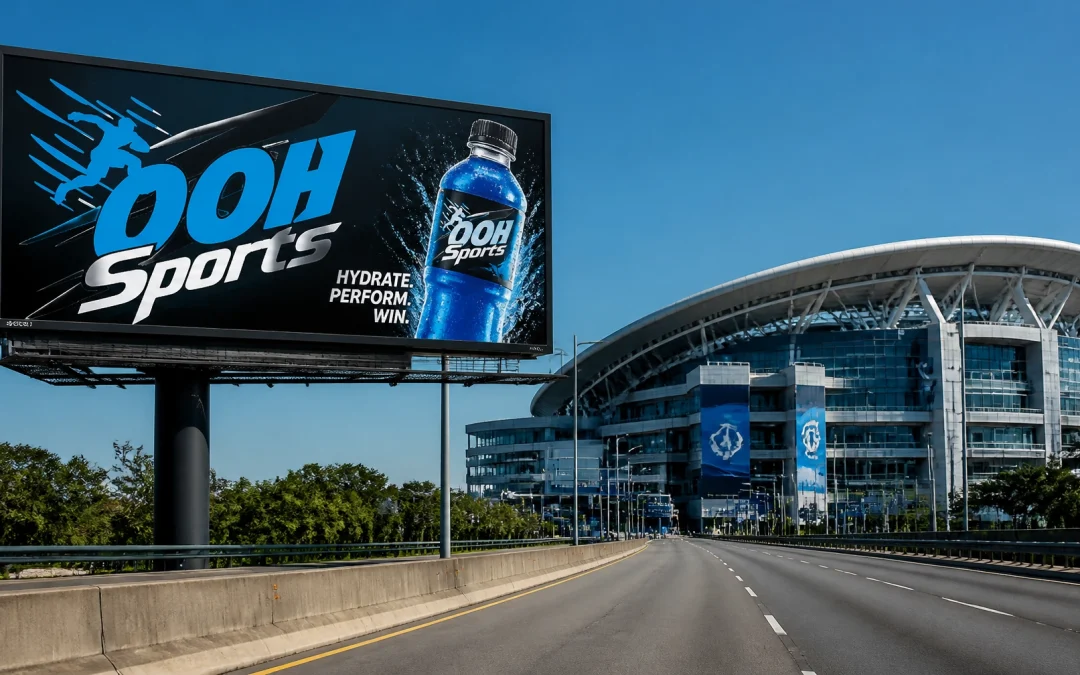
The landscape of sports marketing is undergoing a significant transformation. As traditional advertising channels face increasing fragmentation, the ability to reach a captive and passionate audience has become a primary objective for brands. The OOH Sports Network addresses this need by providing a specialized digital out of home (DOOH) ecosystem designed specifically for the sports fan journey. Through a strategic expansion that now includes over 25,000 digital screens, the network offers media buyers and planners a comprehensive solution for dominating the environment surrounding major sports venues.
This guide explores the mechanics of the network, the strategic logic of the 10-mile perimeter, and the technological integrations that allow for precise, programmatic execution. By understanding these components, brands can better leverage the power of sports-centric advertising to drive measurable lift in brand awareness and purchase consideration.
Strategy: Capturing the Fan Journey
The primary strategy of the OOH Sports Network is built around the concept of the fan journey. Unlike static in-stadium signage that only reaches fans once they are seated, this network is designed to engage fans from the moment they leave their homes until they return. This approach ensures repeated exposure and multiple touchpoints during a period of high emotional engagement.
The expansion of the network has focused on securing high-impact inventory across several key categories:
- The Approach: Large-format digital billboards and transit displays situated on major arterial roads and highways leading toward professional and collegiate arenas.
- The Hubs: Digital screens placed strategically within parking structures, transit hubs, and high-traffic pedestrian walkways where fans congregate before entering the venue.
- The Social Sphere: Video boards located in sports bars, restaurants, and social lounges where fans gather to watch away games or celebrate after a home win.
- The Retail Ring: Screens in shopping centers, convenience stores, and grocery outlets within the proximity of the venue, capturing consumers as they purchase game-day essentials.
This multi-layered placement ensures that a brand message is not just seen once, but rather becomes a consistent part of the atmosphere surrounding the sporting event.

Objective & Strategy: The 10-Mile Perimeter
The core of the network’s effectiveness lies in its geographical focus. The strategy centers on a 10-mile perimeter around sports stadiums and arenas. This radius is chosen based on traffic patterns and fan behavior data, which indicates that the majority of game-day activity: pre-game dining, retail purchasing, and transportation: occurs within this zone.
By saturating this 10-mile area, the network allows advertisers to "own" the market during specific game windows. The objective is to create a dominant brand presence that aligns with the excitement of the game without the limitations of traditional broadcast or static out of home media. This hyper-local focus enables brands to customize creative content based on the specific team playing, the local market, or even the current score of the game.
Technology Partners and Programmatic Integration
Success in modern OOH requires more than just physical screens; it requires sophisticated backend technology. The OOH Sports Network is fully integrated with major Demand-Side Platforms (DSPs), allowing it to function as a programmatic DOOH (pDOOH) solution. This integration provides several critical advantages for media buyers:
- Automated Buying: Agencies can purchase inventory through the same platforms they use for digital display or Connected TV (CTV), simplifying the workflow and allowing for unified campaign management.
- Impression-Based Delivery: Rather than buying a "loop" on a screen, advertisers can buy specific impressions, ensuring that budgets are spent efficiently.
- Trigger-Based Activation: Campaigns can be set to activate based on real-time data such as weather conditions, traffic levels, or live game events. For example, a beverage brand might increase its frequency on the Sportrons network immediately following a home team victory.
- Dynamic Creative Optimization (DCO): The technology allows for the seamless rotation of creative assets. A brand can display a "Good Luck" message before the game and switch to a celebratory or consoling message as the final whistle blows.
These technology partnerships ensure that the network is not just a collection of screens, but a data-driven advertising tool that provides the same level of control and precision as digital media.

Execution: Logistics and Targeting Precision
The execution of a campaign on the OOH Sports Network involves a detailed process of selection and optimization. Media planners can filter inventory by market, venue type (e.g., NFL, MLB, NBA), or specific points of interest within the 10-mile radius. This precision allows for highly relevant messaging.
The network utilizes location data and mobile device IDs to identify high-density fan areas. This does not involve tracking individual identities on the screen, but rather uses aggregated data to ensure that screens are activated when the target audience is most likely to be present. This methodology allows for:
- Contextual Relevance: Aligning the brand with the specific sport or team that the audience is currently engaged with.
- Audience Affinity: Reaching fans who have demonstrated a high interest in sports, as evidenced by their presence near major venues.
- Frequency Management: Controlling how often a fan is exposed to a message as they move from the highway to the parking lot and finally to a retail or social environment.
The ability to scale these campaigns across multiple cities while maintaining local relevance is a key feature of the network’s recent expansion.

Results: Quantifying Impact and Brand Lift
The success of the OOH Sports Network is documented through various case studies that utilize third-party measurement and brand lift studies. By leveraging mobile location data, the network can track the correlation between ad exposure and real-world actions, such as foot traffic to retail locations or visits to a brand's website.
Several notable campaigns demonstrate the effectiveness of this sports-centric approach:
- Alcoholic Beverage Category: A programmatic DOOH campaign for White Claw's vodka launch utilized the network to target fans during key consumption windows. The campaign resulted in a 74% lift in purchase consideration, demonstrating the power of reaching fans in a social and celebratory mindset. Read the full case study here.
- Ready-To-Drink (RTD) Category: Mike’s Hard Iced Tea executed a campaign that focused on positive brand association. By placing ads in high-traffic sports environments, the brand saw a 119% lift in positive brand image among exposed audiences. Detailed results are available here.
- Outdoor Recreation Category: Sea-Doo launched its first digital OOH campaign through the network, focusing on the lifestyle of sports enthusiasts. This strategic placement led to a 144% increase in purchase consideration, proving that the network is effective for high-consideration durable goods as well as consumer packaged goods. Explore the Sea-Doo campaign details.
These metrics illustrate that the combination of high-impact visuals and contextual relevance leads to significant shifts in consumer behavior. The use of attribution reporting allows brands to move beyond simple "vanity metrics" like total impressions and focus on actual business outcomes.

Conclusion: The Future of Sports-Centric OOH
The OOH Sports Network continues to grow, providing an essential bridge between brands and the massive, loyal audience of sports fans. By focusing on the 10-mile radius around arenas and integrating with programmatic buying platforms, the network has created a unique space in the advertising market.
For media buyers, the value proposition is clear. The network offers the scale of a national platform with the precision of a local campaign. It provides the excitement of sports marketing with the data-driven accountability of digital advertising. As the network expands its reach into more markets and categories, it remains a primary tool for any brand looking to succeed in the dynamic world of sports media.
The data suggests that when a brand message is delivered in the right context, at the right time, and to the right audience, the results are consistently impactful. The OOH Sports Network is designed to ensure that those three elements come together every game day.