
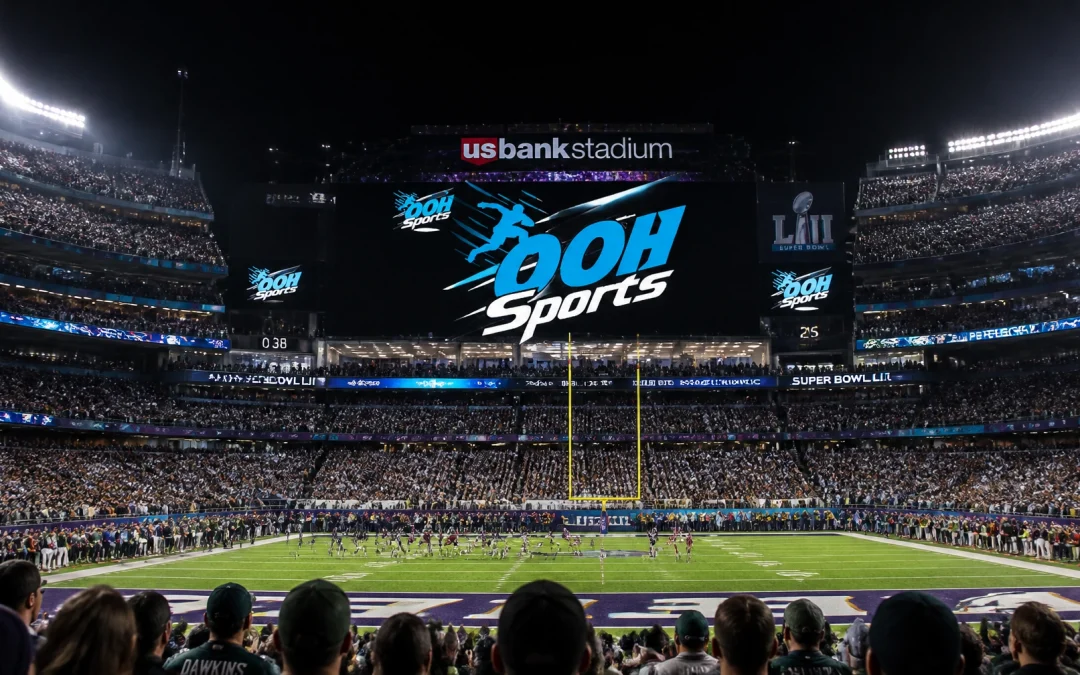
The landscape of sports marketing underwent a fundamental shift during the 2026 Super Bowl cycle. While traditional 30 second television spots remained a fixture, the most successful campaigns utilized a multi-dimensional approach that prioritized authenticity over generic celebrity endorsements. Central to this evolution is the rise of Name, Image, and Likeness (NIL) partnerships, which allow brands to connect with fans through the trusted voices of over 20,000 student-athletes.
For media buyers and brand managers, the Super Bowl is no longer just a single evening of high-priced commercials. It is a week-long cultural event that requires a strategic presence both inside the arena and across the digital ecosystem. OOH Sports, a leader in the digital out-of-home (DOOH) sector and a key division of the Sports Media Inc. family, has developed a comprehensive framework to help brands navigate this complex environment.
Objective and Strategy
The primary objective for any Super Bowl campaign is to maximize brand recall and drive consumer action within a highly competitive media environment. To achieve this, a strategy must focus on three core pillars: geographical proximity, audience relevance, and content authenticity.
Geographical proximity involves saturating the environment within a 10 mile radius of the sports venue. By utilizing digital video advertising boards, brands can maintain a constant presence in the daily lives of fans as they travel to and from the game, attend pre-game events, and explore the host city. This hyper-local approach ensures that the brand message is inescapable during the most critical windows of consumer attention.
Audience relevance is achieved by moving beyond broad demographics to target the specific sub-cultures that define modern sports fandom. This is where the NIL platform becomes essential. By partnering with student-athletes who have deeply engaged, digital-native followings, brands can bypass the noise of traditional advertising and deliver messages through a peer-to-peer model that resonates more effectively with Gen Z and millennial audiences.
Technology Partners and the Sporttron Network
Executing a campaign of this magnitude requires robust technological infrastructure. The OOH Sports Sporttron digital network provides access to ribbon boards, jumbotrons, and perimeter signage in over 780 venues nationwide. This network allows for programmatic buying, which offers the flexibility to update creative in real-time based on game events or changing audience sentiment.
The integration of programmatic DOOH ensures that media buyers can manage their inventory with the same precision as digital display ads. This technology enables:
- Dynamic creative optimization based on real-time data feeds.
- Precise scheduling to align with peak traffic and fan activity.
- Integration with mobile retargeting to bridge the gap between physical advertisements and personal devices.
- Scalability across multiple venues and categories to create a unified national narrative.
By leveraging these technology partners, brands can ensure their message is seen at every touchpoint, from the very floors customers walk on to the screens that dominate the stadium skyline.

The Power of 20,000 Authentic Voices
The most significant competitive advantage in the current market is the ability to tap into a network of over 20,000 student-athletes. These individuals are not merely spokespeople; they are creators who define culture for the next generation. The OOH Sports NIL platform facilitates these connections, allowing brands to curate a roster of athletes whose values and audience demographics align perfectly with their marketing goals.
Student-athletes bring a level of credibility that traditional celebrities often lack. Fans view their social media content as a window into a real life rather than a polished corporate message. This trust translates into higher engagement rates and a more profound impact on brand preference. During the 2026 Super Bowl, real-time content created by NIL athletes generated between three and four times more interactions than scheduled posts.
Execution and Logistics
Successful NIL integration requires careful logistical planning and a deep understanding of the sports ecosystem. The process begins with identifying the right athlete profiles using predictive modeling and fan sentiment analysis. Once the roster is selected, the campaign moves into a three-phase execution plan.
Pre-Game Momentum
Four to eight weeks before the Super Bowl, student-athletes begin seeding the brand narrative. This may include training videos, behind-the-scenes looks at their preparation, or teaser content that builds anticipation for the main Super Bowl asset. The goal is to create a sense of familiarity and excitement before the game even begins.
Game Day Activation
During the Super Bowl, the focus shifts to live engagement. Athletes may host watch parties, provide real-time reactions to the game, or participate in fan challenges. This content is often supported by physical OOH placements in the host city, creating a seamless omnichannel experience. For example, a fan might see a digital billboard featuring a specific student-athlete and then see a live story from that same athlete on their mobile device minutes later.
Post-Game Extension
The campaign does not end with the final whistle. Brands use their NIL roster to maintain momentum through reaction videos, play-by-play breakdowns, and post-game commentary. This strategy extends the life of a Super Bowl investment by weeks or even months, significantly improving the overall return on investment.
Sports Media Inc. Super Bowl 2026 Insights
The following video highlights the comprehensive approach taken by Sports Media Inc. and its out-of-home division to dominate the advertising landscape during the Super Bowl.
https://www.youtube.com/watch?v=l6J-0zileKE
Measurement and Results
Data-driven decision-making is at the heart of the OOH Sports methodology. Every campaign is measured using a combination of brand lift studies, device ID exposure tracking, and attribution modeling. The success of these strategies is evidenced by recent campaign data from across the Sports Media Inc. portfolio.
In a recent White Claw programmatic DOOH campaign, the brand saw a 74 percent lift in purchase consideration. Similarly, Anheuser-Busch InBev’s campaign for Mike’s Hard Iced Tea achieved a 119 percent lift in positive brand image through a targeted programmatic approach. These results highlight the efficacy of combining high-impact visual placements with sophisticated digital targeting.
For Super Bowl NIL campaigns, metrics focus on:
- Engagement Depth: The quality of comments, shares, and saves on athlete-led content.
- Audience Alignment: The precision with which the athlete’s followers match the brand’s target segment.
- Narrative Lift: The degree to which audiences reference the brand's key messages in user-generated content.
- ROI Verification: Using predictive modeling to correlate media spend with measurable sales or brand equity increases.

Strategy for Media Buyers
Media buyers and planners must recognize that the Super Bowl is a multi-platform marketplace. To succeed, they must integrate NIL voices into their broader creative strategy. This involves treating athletes as co-creators rather than scripted spokespeople. By providing brand objectives and clear guardrails while allowing for creative freedom, brands can ensure the final content remains authentic and effective.
Furthermore, the integration of high-touch concession platforms and tangible fan experiences, such as cup holders for charity, can further turn a brand message into a physical part of the fan’s journey. This holistic approach ensures that the brand is not just seen but felt.
Conclusion
The evolution of the Super Bowl into a digital-first, creator-led cultural event presents a massive opportunity for brands willing to embrace new strategies. By combining the massive reach of the Sporttron digital network with the authentic voices of 20,000 student-athletes, OOH Sports provides a pathway to dominate the arena.
Success in the 2026-2027 sports season will be defined by those who can bridge the gap between high-scale advertising and personal connection. As the sports ecosystem continues to shift, the reliance on data, authenticity, and innovative out-of-home solutions will remain the standard for excellence in marketing.
