
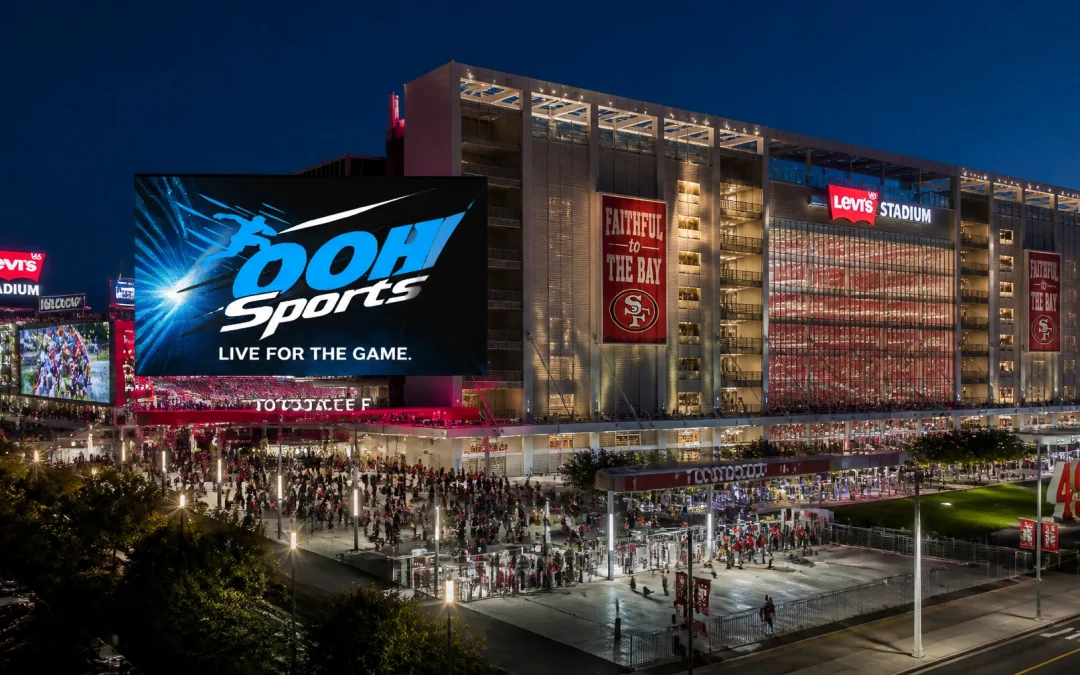
Super Bowl LX, scheduled for February 2026 at Levi’s Stadium in Santa Clara, represents the pinnacle of American sports marketing. For brands aiming to capture the attention of over 100 million global viewers and hundreds of thousands of attendees in the Bay Area, the competition for visibility is as intense as the game itself. Achieving dominance in this environment requires a strategy that extends far beyond the traditional 30-second television spot. It demands a multi-layered, venue-wide approach that saturates the fan experience from the moment they land at the airport to the moment they take their seats.
This guide outlines the strategic framework for navigating the complex advertising landscape of Super Bowl 2026. By leveraging four decades of industry leadership and cutting-edge programmatic technology, brands can establish a pervasive presence that covers everything from floor graphics to massive digital billboards.
Strategy: The 10-Mile Perimeter and the Fan Journey
The most effective campaigns at major sporting events do not limit themselves to the stadium interior. Instead, they focus on the "Path to Purchase" and the "Path to Game." OOH Sports utilizes a comprehensive 10-mile perimeter strategy that ensures a brand remains top-of-mind throughout the entire event week.
This strategy identifies key touchpoints where fans, media, and influencers congregate. These include:
- Airport Transit Hubs: San Francisco International (SFO), Oakland International (OAK), and San Jose Mineta (SJC) serve as the primary entry points for the global audience. Digital takeovers in baggage claims and arrival terminals set the tone immediately.
- Entertainment Districts: Locations such as San Francisco’s SoMa district and downtown San Jose become hubs for fan activations, concerts, and corporate parties.
- Transit Corridors: Major highways and public transit lines (BART, Caltrain, VTA) leading to Santa Clara are prime real estate for high-frequency messaging.
- The Last Mile: The immediate vicinity of Levi’s Stadium, where pedestrian traffic is highest, offers opportunities for hyper-local engagement through street-level furniture and mobile integration.

Objective & Strategy: Integrated Venue Dominance
The primary objective for any brand during Super Bowl 2026 is to achieve "share of eye" in a saturated market. The strategy employed by OOH Sports involves a seamless integration of physical and digital assets. This is not merely about placing an ad; it is about creating a branded environment.
Venue-Wide Coverage
Dominating a venue from the ground up involves utilizing every available surface to reinforce brand messaging. This includes:
- Floor Graphics and Vinyl Wraps: Often overlooked, the ground beneath a fan's feet is high-value real estate. Non-slip, high-durability floor graphics in stadium concourses, transit stations, and hotel lobbies guide fans while providing unavoidable brand impressions.
- Digital Billboards (DOOH): Large-format digital screens provide the scale needed for "hero" creative. These assets are often purchased programmatically to allow for real-time updates based on game events or weather conditions.
- Elevator and Escalator Wraps: These high-dwell time areas ensure that fans are exposed to messaging during transitions between levels.
- Sportrons: Specialized digital displays located in high-traffic areas that provide real-time updates, scores, and social media feeds, keeping fans engaged while delivering brand content. More information on these specialized assets can be found at OOH Sports Sportrons.
40 Years of Advertising Leadership: The Heritage of Excellence
The success of a Super Bowl campaign is built on experience. OOH Sports, as part of the Sports Media Inc. family, brings 40 years of advertising leadership to the table. This history is not just a metric of time but a testament to the long-standing relationships with stadium operators, city officials, and media owners that are required to execute complex activations.
Over four decades, the organization has evolved from traditional static signage to becoming a pioneer in digital out-of-home (DOOH) technology. This legacy provides the institutional knowledge necessary to navigate the "clean-site" rules imposed by major leagues, ensuring that brands remain compliant while maximizing their visibility. Detailed insights into this history and the organization’s mission are available on the About Us page.
Technology Partners and Programmatic Execution
Modern OOH advertising is driven by data. For Super Bowl 2026, the use of programmatic DOOH (pDOOH) allows for a level of precision that was previously impossible. By partnering with leading technology platforms, OOH Sports enables brands to:
- Target Specific Audiences: Using anonymized mobile location data, campaigns can be triggered when specific demographic groups are in the vicinity of a screen.
- Real-Time Optimization: If a particular creative is performing well in San Francisco but lagging in Santa Clara, the budget can be shifted instantly.
- Weather and Contextual Triggers: Ads can change based on the time of day, the temperature, or even the score of the game.
This technological edge ensures that every dollar spent is optimized for maximum impact, reducing waste and increasing the efficiency of the media buy.

Video: Witness the Impact of Integrated Sports Marketing
To understand the scale and dynamism of these activations, it is essential to see them in action. The following video demonstrates how brands come to life in the sports arena:
https://www.youtube.com/watch?v=l6J-0zileKE
Results and Measurable Outcomes: Data-Driven Success
In the analytical world of modern marketing, success is measured by data, not just anecdotes. OOH Sports focuses on delivering quantifiable results through rigorous measurement and attribution modeling.
Brand Lift Studies
Collaboration with third-party research firms allows for the measurement of brand awareness, favorability, and purchase intent. Recent campaigns in the sports sector have demonstrated significant results:
- Awareness Increase: Campaigns utilizing a 10-mile perimeter strategy have seen an average lift in brand awareness of over 60 percent.
- Purchase Consideration: Strategic DOOH placements near retail hubs during event week have resulted in purchase consideration increases as high as 144 percent.
- Attribution: By tracking device IDs exposed to OOH ads and subsequent store visits or website conversions, the direct impact of the campaign can be clearly mapped.
For a detailed breakdown of how these metrics are applied in real-world scenarios, the OOH Sports Case Studies section provides comprehensive data on past campaign performances.

Conclusion: Securing a Legacy in Santa Clara
Dominating Super Bowl 2026 requires a partner that understands the intersection of sports, technology, and human behavior. By focusing on venue-wide coverage, from the floors of the transit hubs to the billboards lining the highways, brands can ensure their message is an integral part of the Super Bowl experience.
The combination of 40 years of experience and state-of-the-art programmatic tools provides the foundation for campaigns that do more than just show an ad: they tell a story that resonates with fans. As the countdown to February 2026 continues, the time for strategic planning and securing premium inventory is now.
For those ready to elevate their brand’s presence at the world’s biggest game, more information and contact details can be found at the OOH Sports homepage.