
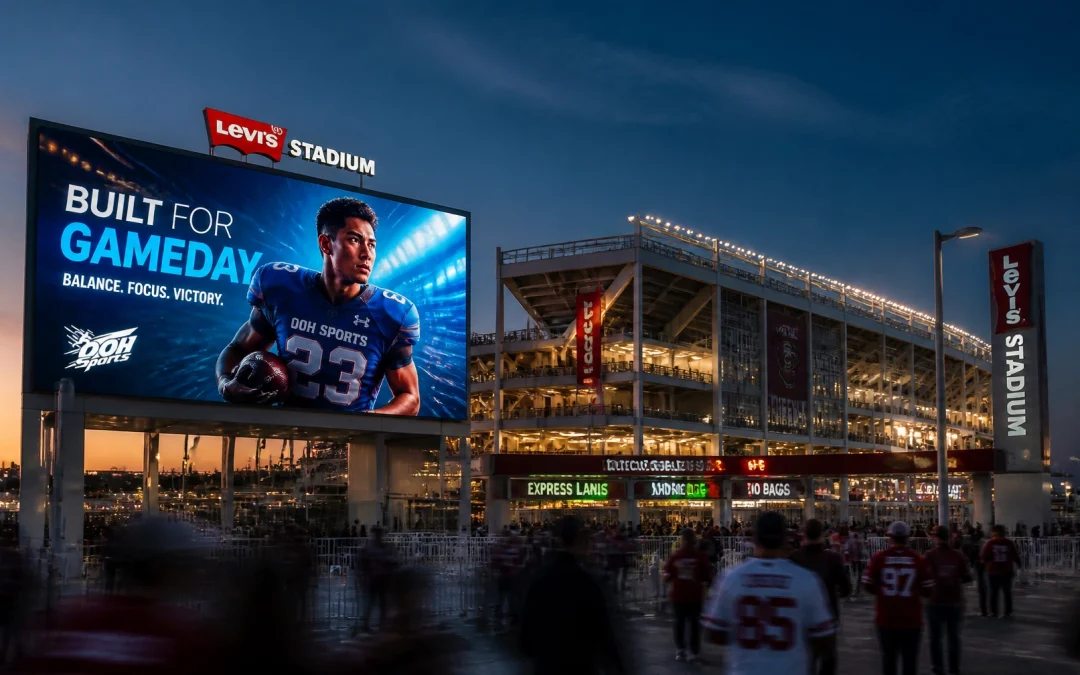
The landscape of sports marketing is undergoing a fundamental shift as Super Bowl LX approaches in 2026. While the traditional 30-second television spot remains a hallmark of the Big Game, the economics of reaching fans have evolved. With national broadcast slots reportedly reaching the $10 million mark, brands are increasingly seeking high-impact, scalable alternatives that offer both authenticity and measurable results. The convergence of Name, Image, and Likeness (NIL) rights with Digital Out-of-Home (DOOH) advertising has created a new playbook for media buyers and brand managers. This guide explores how to leverage a network of 20,000 student-athletes to dominate the Super Bowl conversation in the Bay Area and beyond.
Strategy: Beyond the Ten-Million-Dollar Minute
The strategy for Super Bowl LX in Santa Clara centers on building an ecosystem rather than a single moment. Advertisers are no longer restricted to a binary choice between massive national spends and total absence from the event. Instead, the focus has shifted toward localized, high-frequency touchpoints that surround the venue and engage fans where they live, travel, and celebrate.
By utilizing a decentralized network of student-athletes, brands can create a groundswell of authentic content that resonates with younger demographics, particularly Gen Z. When this digital influence is paired with physical presence through DOOH screens, the brand message becomes inescapable. This multi-channel approach ensures that the narrative begins weeks before kickoff and continues long after the final whistle.
Objective & Strategy: Integrating NIL and DOOH
The primary objective for many brands in 2026 is to achieve "official" levels of visibility without the "official" price tag of a primary NFL sponsorship. This is accomplished through a two-pronged strategy:
- Digital Saturation: Deploying creative across a massive network of digital video boards within a 10-mile perimeter of Levi’s Stadium and key Bay Area transit hubs.
- Social Amplification: Mobilizing thousands of student-athletes to serve as the "faces" of the campaign, sharing content that links directly to the physical OOH placements.
This integration allows a brand to claim a "home-field advantage" in Northern California. By featuring local athletes on digital billboards in San Jose and Santa Clara, the campaign gains immediate regional relevance. The strategy bypasses the clutter of national advertising by speaking directly to the community hosting the event.

The NIL Advantage: 20,000 Authentic Voices
The most significant differentiator for Super Bowl 2026 is the scale of the NIL platform. Accessing over 20,000 student-athletes provides a level of micro-targeting that was previously impossible. Rather than betting on a single professional superstar, brands can now activate a fleet of influencers who possess deep, trust-based connections with their specific fanbases.
Scalability and Segmentation
With a roster of 20,000 athletes, media planners can segment campaigns by:
- Geography: Targeting athletes from Northern California universities to reinforce the Bay Area presence.
- Sport: Aligning with athletes from various sports to reach diverse fan interests beyond just football.
- Demographics: Utilizing female athletes to reach the rapidly growing audience for women's sports, a key trend in recent marketing cycles.
Authenticity Over Production
Gen Z consumers often filter out traditional, high-gloss advertisements. NIL partnerships succeed because the content feels native to the athlete’s channel. When an athlete shares a behind-the-scenes look at a campaign featured on an OOH Sports billboard, it bridges the gap between the physical and digital worlds in a way that feels organic rather than forced.

Technology Partners: The Role of Programmatic DOOH
The execution of a campaign of this magnitude requires robust technology. Programmatic DOOH allows for real-time adjustments and precise targeting that traditional static billboards cannot match. Through partnerships with specialized platforms, OOH Sports provides access to every category of digital video advertising board.
Perimeter Targeting
A key tactic involves the "perimeter sweep." This focuses on all digital screens within a 10-mile radius of the stadium. During Super Bowl week, this area becomes the center of the sports universe. Programmatic buying enables brands to:
- Trigger ads based on local traffic patterns or game-day events.
- Sync billboard creative with live scores or athlete performances.
- Ensure maximum share of voice during peak fan movement hours.
For more information on the effectiveness of these tactics, recent studies on perimeter targeting and stadium advertising show a significant increase in ROI compared to traditional fixed signage.
Execution & Logistics: Navigating the Bay Area
The logistical execution for Super Bowl LX is complex, given the geography of Santa Clara and the surrounding Silicon Valley. The OOH Sports network simplifies this by consolidating access to fragmented inventory.
Localized Creative
Campaigns are most effective when they reflect the local culture. For 2026, this means utilizing creative that references Bay Area landmarks or local college rivalries. By deploying different versions of an ad across various screens, a brand can maintain a fresh and relevant presence throughout the week.
Multi-Channel Synchronization
The logistics involve more than just booking screens. It requires the synchronization of athlete posts with billboard appearances. When a fan sees a student-athlete on a digital screen while walking toward Levi’s Stadium and then sees that same athlete posting about the brand on Instagram or TikTok, the brand recall is significantly heightened. This "omnichannel" approach is quickly becoming the standard for successful sports marketing.

Results: Measuring the Impact of NIL + DOOH
Data is the foundation of any modern media buy. The success of an NIL-driven DOOH campaign is measured through several key metrics, including brand lift, purchase consideration, and social engagement.
Quantifiable Success
Past campaigns in the OOH Sports ecosystem have demonstrated the power of this model. For instance:
- A programmatic DOOH campaign for a major beverage brand saw a 74% lift in purchase consideration, as detailed in the White Claw case study.
- Another activation focused on tea products resulted in a 119% lift in positive brand image by leveraging high-visibility digital screens.
- Consumer research indicates that campaigns combining influencer content with OOH see a higher conversion rate than those using either channel in isolation.
By tracking device IDs exposed to the DOOH screens and cross-referencing them with digital actions, media buyers can attribute real-world value to their Super Bowl spend.
Video Overview: The Future of NIL Marketing
To better understand how the NIL platform operates and how it connects brands with thousands of athletes, view the following overview of the technology and strategy behind the network.
https://www.youtube.com/watch?v=l6J-0zileKE
Conclusion: Securing a Spot in the 2026 Spotlight
As the countdown to Super Bowl LX continues, the window for strategic planning is closing. The ability to activate 20,000 student-athletes and dominate the 10-mile perimeter around Santa Clara offers a competitive advantage that traditional media cannot replicate. By focusing on authenticity, programmatic precision, and regional relevance, brands can ensure their message is heard above the noise of the Big Game.
The future of sports marketing is not just about who has the biggest budget, but who has the smartest strategy. Integrating the voices of thousands of athletes with the physical reach of digital out-of-home media is the most effective way to succeed in 2026.