
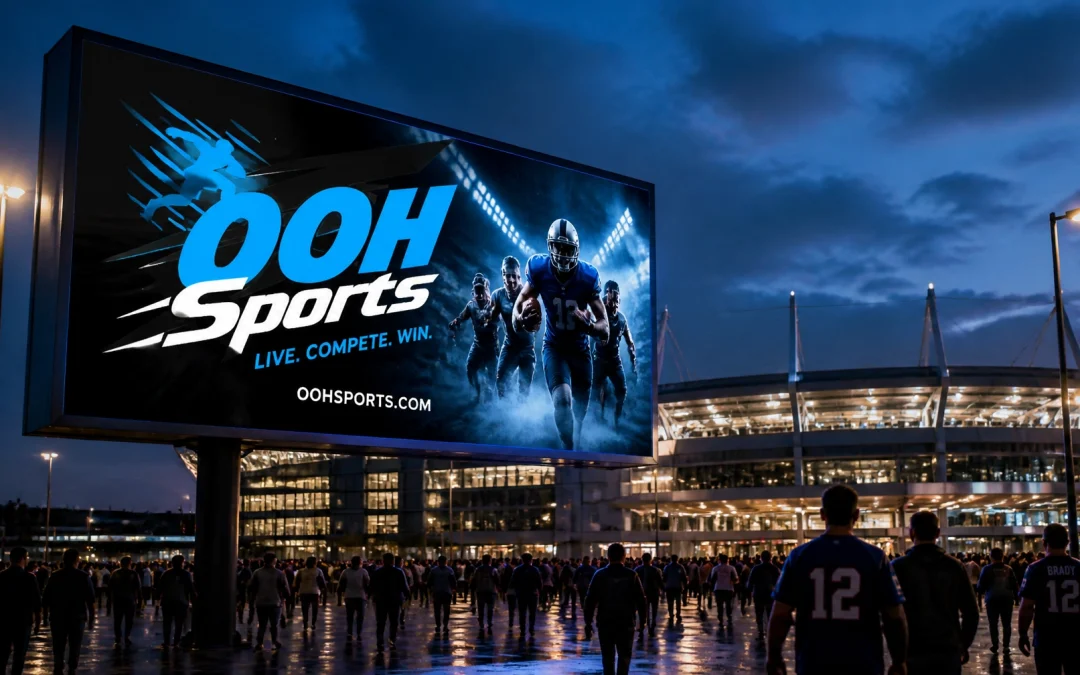
The landscape of out-of-home advertising is undergoing a rapid transformation. As digital infrastructure matures, the shift from traditional static billboards to dynamic, data-driven screens has reached a critical tipping point. Industry forecasts indicate that digital out-of-home (DOOH) is projected to reach approximately $23 billion in global spend by 2026, representing nearly 45% of all OOH investment.
For media buyers and brand managers, this evolution offers unprecedented opportunities to connect with audiences, particularly within the high-energy environment of professional sports. Success in this modern era requires a deep understanding of programmatic logistics, hyper-local targeting, and sophisticated measurement frameworks. This guide provides the strategic insights necessary to navigate the DOOH industry and maximize campaign impact.
The Programmatic Pivot: Speed and Precision
One of the most significant shifts in the industry is the adoption of programmatic digital out-of-home (pDOOH). Traditionally, OOH buying involved manual negotiations and long lead times. Today, pDOOH allows for automated buying and selling of ad space, bringing the agility of digital advertising to the physical world.
The transition to programmatic provides several key advantages for sports-focused campaigns:
- Flexibility in Flighting: Brands can activate or pause campaigns instantly based on real-time factors like game results, player milestones, or shifting weather conditions.
- Targeting by Logic: Instead of buying a screen for a week, planners can purchase specific hours when fan traffic is at its peak, such as the pre-game rush or the post-win celebration window.
- Creative Optimization: Multiple creative assets can be rotated or updated without the need for manual installation, ensuring messaging remains fresh and relevant to the evolving sports narrative.
While roughly 60% of marketers still utilize direct buys, the shift toward programmatic environments is accelerating because of the control and data integration it offers.

Hyper-Local Targeting: The 10-Mile Perimeter Strategy
In the world of sports marketing, location is the primary driver of relevance. The most effective campaigns focus on the areas where the "fan journey" occurs. This encompasses more than just the seats inside the arena; it includes the transit routes, bars, restaurants, and retail hubs surrounding the venue.
A specialized approach involves targeting a 10-mile perimeter around sports stadiums. This geographic focus ensures that the brand remains top-of-mind during the entire event experience. By saturating this radius, advertisers can reach a concentrated audience of highly engaged fans.
- Contextual Relevance: Advertising a sportswear brand or a sports betting app within sight of a stadium carries significantly more weight than a generic placement in a residential neighborhood.
- Reduced Waste: Hyper-local targeting minimizes ad spend on audiences who are not part of the active fan demographic for that specific event.
- Increased Frequency: As fans move through the 10-mile zone from transit to the stadium entrance, repeated exposure across different screen types builds strong brand recall.
Creative Innovation: Context That Connects
The technology behind digital screens has opened doors for creative executions that were previously impossible. The industry is moving away from static imagery toward dynamic content that reacts to the environment.
Effective creative strategies now utilize live data feeds to trigger specific messaging. For instance, a beverage brand might display a celebratory ad immediately after a home team victory or offer a discount code if a game goes into overtime. This "context without creepiness" approach leverages environmental triggers like time, place, and score, rather than invasive personal data.
Key tactics for high-impact creative include:
- Live Score Integration: Displaying real-time updates to capture the attention of passersby.
- Countdown Timers: Building anticipation in the hours leading up to a major kickoff or tip-off.
- Weather Triggers: Promoting specific products, such as cold drinks on hot game days or branded rain gear during inclement weather.

Advanced Measurement and Attribution
The most critical advancement in DOOH is the ability to move beyond "estimated impressions" toward concrete ROI metrics. Modern campaigns now utilize sophisticated tracking methodologies to prove efficacy.
A key partner in this process is often a specialized demand-side platform (DSP), such as StackAdapt, which helps drive programmatic adoption and provides detailed reporting. Measurement is no longer a guessing game; it is a data-driven science.
Recent campaign results demonstrate the power of measurable DOOH:
- Purchase Consideration: A programmatic campaign for White Claw Vodka drove a 74% lift in purchase consideration by targeting specific audience segments.
- Brand Image: AB InBev’s Mike’s Hard Iced Tea saw a 119% lift in positive brand image through a targeted DOOH execution.
- Strategic Growth: Sea-Doo experienced a 144% increase in purchase consideration during their first digital out-of-home campaign.
Measurement tactics focus on several core areas:
- Footfall Lift: Using device IDs to track fans who were exposed to a screen and subsequently visited a retail location or the stadium.
- Brand Lift Studies: Comparing awareness and consideration metrics between exposed and control groups.
- Online Attribution: Measuring increases in search volume or app installs in the geographic regions where the DOOH campaign was active.

Omnichannel Integration: The Digital Handshake
DOOH does not exist in a vacuum. Its greatest strength lies in its ability to act as a catalyst for other digital channels. When a fan sees a high-impact ad on a stadium-side billboard, they are statistically more likely to engage with that same brand on their mobile device.
Research shows that nearly half of consumers search for a brand on mobile after seeing a DOOH ad. To capitalize on this, planners are increasingly using omnichannel strategies:
- Retargeting: Identifying mobile devices exposed to a DOOH screen and following up with a display ad or social media offer.
- QR Code Engagement: Using unique, trackable codes on digital screens to drive immediate traffic to a landing page or app store.
- Coordinated Messaging: Ensuring that the creative seen on the street matches the creative seen on social media, reinforcing the brand identity through multiple touchpoints.

Conclusion: Securing the Competitive Edge
As the sports media landscape becomes more fragmented, DOOH offers a rare opportunity for brands to command undivided attention in a high-trust, brand-safe environment. By moving toward programmatic buying, focusing on the 10-mile venue perimeter, and utilizing dynamic, data-driven creative, marketers can cut through the noise of traditional advertising.
The industry is no longer just about being "seen." It is about being seen at the right time, in the right place, and with the right message, all backed by the data necessary to prove that the investment delivered real-world results. For those looking to excel in sports marketing, mastering these DOOH insights is not just an advantage. It is a necessity.