
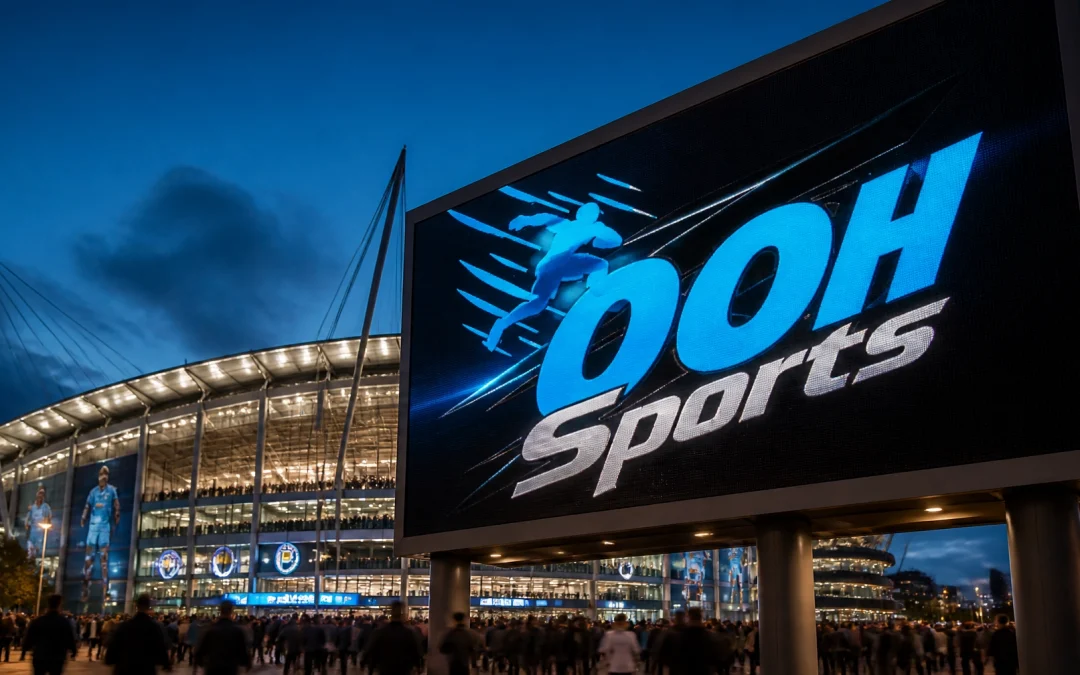
The landscape of sports marketing is undergoing a significant transformation as the OOH Sports network announces a major expansion of its digital footprint. With the deployment of over 25,000 digital screens across North America, the network now provides an unprecedented level of access to sports fans at every stage of their journey. This growth marks a shift in how brands engage with audiences, moving from static in-stadium signage to a dynamic, surround-sound media strategy that follows the fan from their front door to the arena and back again.
As part of the Sports Media Inc. family, OOH Sports has established a network that integrates high-impact digital out of home (DOOH) assets with sophisticated data-driven targeting. This expansion is designed to meet the growing demand from media buyers and brand managers for scalable, measurable, and contextually relevant advertising solutions in the sports vertical.
Objective and Strategy
The primary objective of the OOH Sports network expansion is to bridge the gap between physical advertising and digital performance. By saturating the environments where fans congregate, the network creates a continuous brand presence. The strategy relies on three core pillars:
- Ubiquity and Scale: Providing coverage in major and mid-sized markets across the United States.
- Contextual Relevance: Leveraging real-time sports data to deliver messages that resonate with the immediate environment and emotional state of the fan.
- Data Integration: Using device ID capture and geofencing to transform traditional impressions into actionable digital data.
This strategic approach addresses the challenge of digital fatigue by placing advertisements in high-energy, physical environments where fans are naturally more receptive. Research from the Out of Home Advertising Association of America (OAAA) indicates that nearly 60 percent of U.S. adults recall seeing OOH ads for major sporting events, with 90 percent of those individuals taking a subsequent action.
Comprehensive Fan Journey Coverage
The expansion focuses on creating a "surround-sound" effect by placing digital assets in diverse locations. The network ensures that a brand’s message is visible throughout the entire fan lifecycle.

Pre-Game and Transit
The journey begins at transit hubs such as airports and train stations. Digital kiosks and large-format screens in these areas capture the attention of traveling fans and local residents alike. These touchpoints serve as the initial introduction to the campaign, establishing brand presence before the fan even arrives at the venue city.
The 10-Mile Perimeter
A defining feature of the OOH Sports strategy is the focus on the perimeter around sports venues. The network targets digital video boards in every category within a 10-mile radius of major stadiums and arenas. This includes:
- Digital billboards on major approach routes and highways.
- Street furniture and urban panels in high-traffic pedestrian areas.
- Digital screens in partner hotels where visiting fans stay.
Post-Game and Social Environments
The engagement does not end when the final whistle blows. The expansion includes a heavy presence in fan congregation points such as sports bars and restaurants. These environments provide a high-dwell-time setting where fans discuss game outcomes and engage with digital content.

Technology and Programmatic Capabilities
The OOH Sports network is fully integrated with leading programmatic platforms, allowing media buyers to execute campaigns with the same flexibility and precision as online display or social media. This technological foundation is supported by the Sporttron Digital Network, which facilitates real-time content delivery and optimization.
Programmatic DOOH (pDOOH)
Through partnerships with Demand Side Platforms (DSPs) like StackAdapt, advertisers can automate the buying process. This enables brands to:
- Trigger ads based on live game scores or player milestones.
- Adjust creative content instantly to reflect home team wins or local news.
- Optimize budget allocation toward the highest-performing screens and time slots.
Geofencing and Retargeting
The network utilizes geofencing technology to identify mobile devices exposed to OOH screens. By capturing anonymized device IDs, brands can retarget these same fans with follow-up ads on their smartphones or social media feeds. This creates a closed-loop system that moves the audience from physical awareness to digital conversion. For example, a fan who sees a jersey advertisement on a billboard near the stadium may later receive a promotional offer for that same jersey on their mobile device.
Measurable Results and Case Studies
The efficacy of the OOH Sports network expansion is supported by documented performance data. By shifting from a purely awareness-based model to a performance-driven approach, campaigns on the network have seen significant lifts in key brand metrics.
A recent case study involving White Claw demonstrated the power of programmatic DOOH in the sports vertical. The campaign achieved a 74 percent lift in purchase consideration by targeting specific audience segments during peak engagement times. Similarly, other brands have reported:
- A 119 percent lift in positive brand image for beverage campaigns using pDOOH.
- A 144 percent increase in purchase consideration for recreational vehicle brands through targeted digital exposure.
These results highlight the network's ability to drive not just eyeballs, but actual consumer behavior. The use of brand lift studies and foot traffic attribution provides media planners with the hard data necessary to justify large-scale OOH investments.

Strategic Value for Media Buyers
For media buyers and planners, the expanded OOH Sports network offers a streamlined solution for reaching the highly coveted sports demographic. Instead of managing fragmented buys across multiple regional vendors, planners can access a unified national network with localized execution capabilities.
The network is particularly valuable for brands that are not official sponsors of major sporting events. By utilizing the 10-mile perimeter strategy, brands can achieve "ambush marketing" effects, appearing as a major presence in the stadium's ecosystem without the premium costs associated with official league partnerships. This was exemplified in a recent campaign where a global athletic brand achieved dominant visibility during a major marathon despite not being the official sponsor.
Conclusion
The expansion of the OOH Sports network to 25,000+ digital screens represents a new era in sports advertising. By combining the massive scale of traditional out of home with the precision of modern adtech, the network provides a platform that is both high-impact and highly measurable. As the industry continues to move toward omnichannel strategies, the role of physical, digital-first assets in the sports environment will only increase in importance.
For brands looking to capture the attention of passionate fans, the OOH Sports network provides the tools to tell a compelling story across the entire fan journey. Through strategic placement, programmatic flexibility, and data-driven attribution, the network ensures that every impression contributes to a measurable business outcome. More information about the network's capabilities and historical performance can be found on the OOH Sports About page and their extensive library of case studies.