
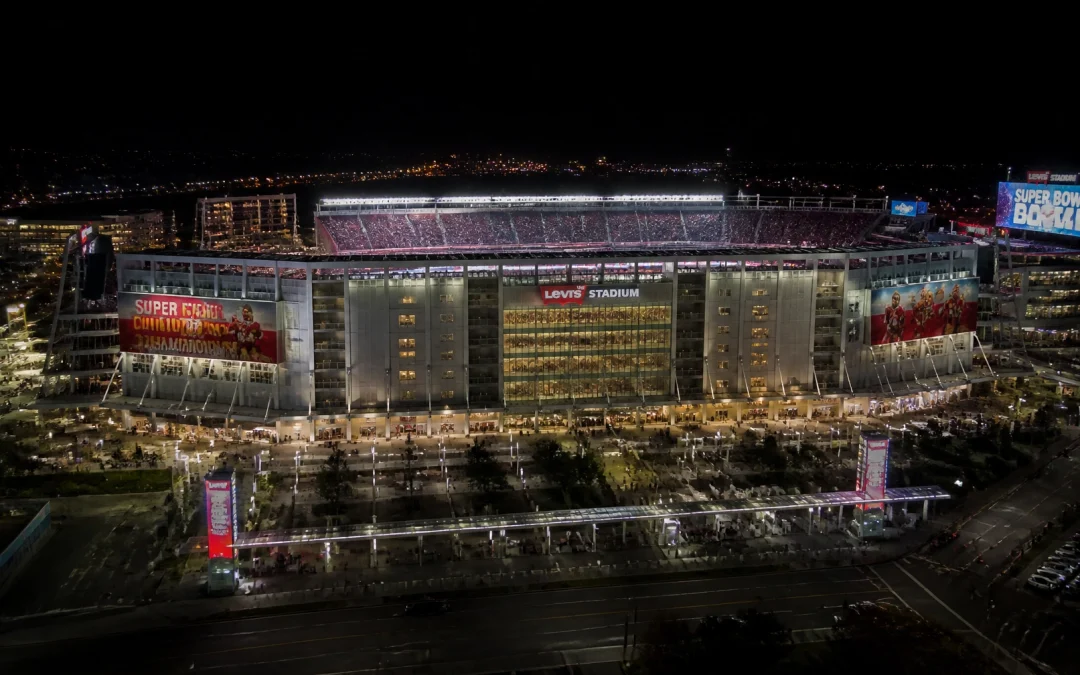
Super Bowl LX, held in 2026 at Levi’s Stadium in Santa Clara, marked a pivotal moment in the evolution of sports marketing. This event represented more than just a championship game. It served as a showcase for 40 years of advertising leadership and the full maturity of the Digital Out of Home (DOOH) Sports Network. In an era where consumer attention is fragmented across dozens of platforms, the ability to dominate every physical and digital inch of a major sports venue has become the ultimate benchmark for brand success.
For four decades, the Sports Media Inc. family has pioneered the techniques used to capture fan attention. The 2026 campaign cycle demonstrated how traditional OOH assets, such as billboards and posters, now work in perfect harmony with advanced digital displays and venue-specific placements. From the moment a fan leaves their home to the second they step onto the stadium floor, the advertising landscape is carefully choreographed to ensure maximum brand resonance.
Objective and Strategy
The primary objective for major brands during Super Bowl LX was to achieve 360-degree visibility. This required a strategy that extended beyond the expensive 30-second television spot. The goal was to create a surround-sound effect where the brand message followed the fan throughout their entire journey.
The strategic framework focused on several key areas:
- Venue Dominance: Utilizing "floors to billboards" coverage to ensure that every visual surface within the stadium complex served as a potential touchpoint.
- Perimeter Saturation: Deploying digital video advertising boards within a 10-mile radius of the stadium to reach fans, tourists, and residents who were part of the Super Bowl atmosphere but might not have been inside the gates.
- Hyper-Local Targeting: Using data to trigger specific ads based on local traffic patterns, weather conditions, and real-time game updates.
- Long-Term Narrative: Building a campaign arc that started weeks before kickoff, using OOH as the physical anchor for a multi-platform story.

The "Floors to Billboards" Methodology
Dominating a venue like Levi’s Stadium requires a granular approach to advertising logistics. The "floors to billboards" concept is not just a catchy phrase. It is a precise operational standard. By utilizing floor graphics, stair wraps, and concourse displays, brands can engage fans during "dwell time" , those moments when they are standing in line for concessions or moving between sections.
This physical presence is then mirrored by the massive digital billboards that line the highways and skylines surrounding Santa Clara. These high-impact displays provide the scale and "wow" factor that television cannot replicate. When a fan sees a brand on a 60-foot digital board and later walks over a high-gloss floor graphic of that same brand inside the stadium, the psychological impact of the campaign is doubled. This level of consistency is a hallmark of the 40 years of expertise provided by the OOH Sports team.
Technology Partners and Execution
The success of the 2026 Super Bowl campaigns relied heavily on sophisticated technology partners. The shift toward programmatic DOOH allowed media buyers and planners to purchase inventory with the same precision as digital web ads. Platforms like StackAdapt enabled brands to drive adoption of DOOH within broader omnichannel strategies.
Execution logistics included:
- Device ID Exposure: Tracking which fans were exposed to specific OOH assets to retarget them later on their mobile devices.
- Dynamic Creative Optimization (DCO): Changing ad copy in real-time to reflect game scores or trending social media topics.
- Inventory Access: Utilizing the DOOH Sports Network to gain exclusive access to premium digital boards in every category, ensuring no gaps in coverage.

Key Trends of Super Bowl LX
Several industry-wide trends defined the advertising landscape in 2026. AI-saturated messaging was the most significant shift, with AI platforms outspending traditional categories like beer and automotive. Brands like OpenAI and Google Gemini used OOH to frame AI as a helpful, human-centric tool rather than a complex technical concept.
Nostalgia also played a massive role. Media planners leaned heavily on 90s-themed creative to target the Millennial demographic, which now holds significant purchasing power. Brands like Levi’s and Budweiser used legacy imagery and "throwback" references to build an emotional bridge between the brand and the viewer. This trend was particularly effective in the physical space, where heritage-driven visuals felt more permanent and trustworthy than a fleeting social media post.
Measured Results and Impact
The effectiveness of these strategies is backed by rigorous data and brand lift studies. For example, similar programmatic DOOH campaigns have historically produced significant results:
- Purchase Consideration: A 74% lift was recorded for brands using targeted DOOH during major launches, as seen in recent White Claw campaigns.
- Brand Image: AB InBev reported a 119% lift in positive brand image through the strategic use of the DOOH Sports Network.
- Purchase Intent: Sea-Doo saw a 144% increase in purchase consideration during its first digital OOH campaign by focusing on high-traffic, relevant locations.
In the case of Super Bowl LX, brands that utilized the full "floors to billboards" spectrum reported higher engagement levels than those that relied solely on digital-only or TV-only placements. The physical presence created a "halo effect" that boosted the performance of all other media channels.

Strategy Summary for Future Campaigns
To replicate the success of the 2026 Super Bowl, brands must adopt a comprehensive view of the sports venue environment. The following checklist serves as a guide for future planning:
- Start Early: Begin OOH placements at least four weeks prior to the event to build frequency and familiarity.
- Own the Perimeter: Ensure that the 10-mile radius around the venue is saturated with digital video boards to capture the "un-ticketed" fan base.
- Integrate Floors: Do not overlook "low-level" inventory. Floor graphics and concourse wraps provide unique, close-up engagement.
- Leverage 40 Years of Expertise: Partner with established leaders who understand the unique logistics of sports arenas and can navigate the complexities of venue-wide branding.
For more information on how to execute a campaign of this magnitude, visit the OOH Sports About page or explore detailed case studies from past successes.
40 Years of Sports Advertising Leadership
The journey from the first Super Bowl ads to the high-tech displays of 2026 is a testament to the power of out-of-home advertising. As part of the Sports Media Inc. family, OOH Sports continues to lead the industry by bridging the gap between physical impact and digital precision. The "floors to billboards" approach ensures that no brand is left behind in the race for fan attention.
Watch the video below to see how this vision comes to life in the modern sports arena: