
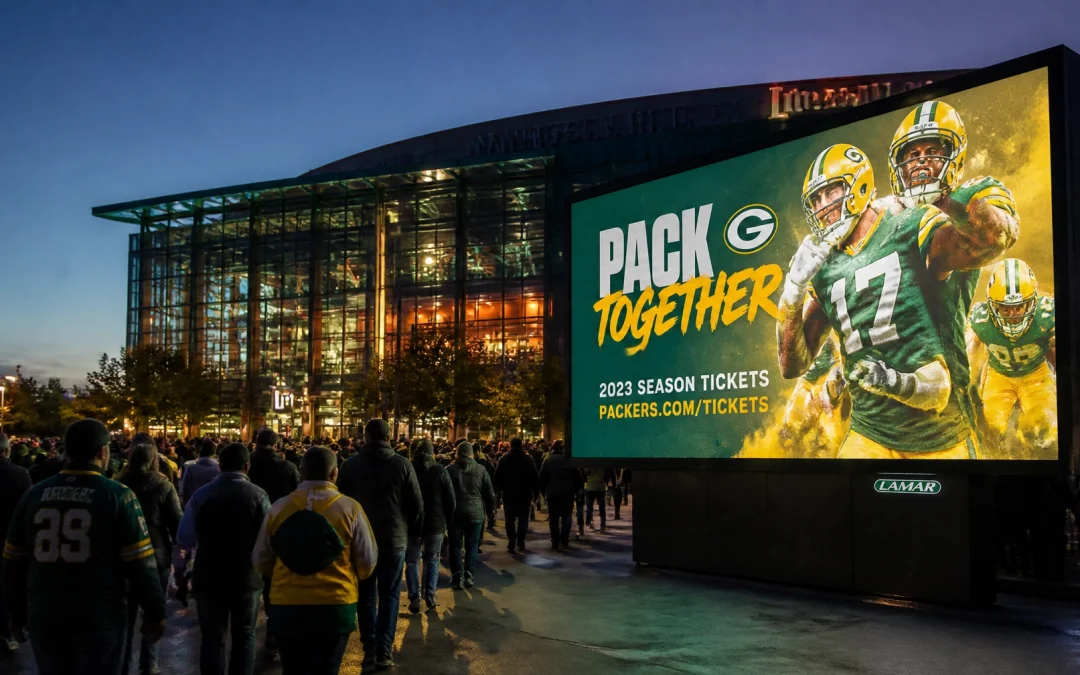
The landscape of sports marketing is undergoing a significant transformation. As stadium lights brighten and fans gather, the methods used to reach them are becoming more sophisticated, data-driven, and integrated. Digital out-of-home (DOOH) advertising has moved beyond static signage to become a dynamic, programmatic powerhouse. For media buyers and brand managers, staying ahead of these trends is essential for capturing attention in an increasingly crowded media environment. This guide explores the core strategies and technological shifts defining the industry today.
The Objective and Strategy of Modern Sports DOOH
The primary objective for modern sports DOOH is to bridge the gap between the physical excitement of a game and the digital precision of programmatic advertising. This involves a multi-layered strategy that targets fans not just at their seats, but throughout their entire journey. The strategy focuses on three critical pillars: mobility, context, and conversion.
By leveraging the perimeter up to 10 miles around sports venues, brands can engage fans during their commute, at local sports bars, and near retail hubs. This geographical precision ensures that every impression is relevant. The goal is to move beyond mere awareness and drive measurable actions, such as purchase consideration, app downloads, or retail visits.
Strategy: The Shift to Programmatic DOOH
Programmatic DOOH (pDOOH) has transitioned from an emerging technology to the industry standard. This automation allows for a level of flexibility previously unavailable in traditional out-of-home advertising.
Automated and Flexible Buying
Advertisers now utilize Demand-Side Platforms (DSPs) to buy stadium and near-venue screens with the same ease as CTV or display ads. This flexibility allows campaigns to be:
- Activated or paused instantly based on game schedules.
- Dayparted to align with pregame hype, halftime breaks, or postgame departures.
- Optimized in real time to focus budget on the highest-performing screens.
Trigger-Based Activation
One of the most impactful trends is the use of triggers. Campaigns are no longer restricted to fixed weekly rotations. Instead, they are programmed to activate when specific conditions are met. Common triggers include:
- Home team game days.
- High traffic density around stadium entrances.
- Fluctuations in live betting odds.
- Real-time game events like scoring plays or weather changes.

Technology Partners and Integration
Success in the current DOOH environment requires a robust ecosystem of technology partners. Collaboration between data providers, inventory owners, and DSPs is the foundation of effective execution. Platforms like StackAdapt have become instrumental in driving pDOOH adoption within omnichannel frameworks.
The integration of first-party and third-party data is a critical component. Marketers are increasingly bringing CRM data, purchase histories, and online behavior into their OOH planning. This allows for the creation of highly specific audience segments, such as season ticket holders or frequent merchandise purchasers. By matching these segments with anonymized mobile location data, brands can ensure their ads appear exactly when and where their target audience is most likely to be present.
Contextual Moment Marketing
In the world of sports, timing is everything. Contextual and situational messaging is the key to relevance. Digital screens now have the capability to update content dynamically based on the pulse of the game.
Live Data Feeds
Integrating live data feeds allows creative to stay synchronized with the action. When a team scores a goal or a game goes into overtime, the DOOH creative can react immediately. This synchronization creates a sense of shared experience between the brand and the fan.
Predictive Modeling
AI-driven models now analyze historical attendance, local weather, and transit patterns to predict the ideal windows for ad delivery. For example, a beverage brand might increase its presence on screens near concessions 15 minutes before halftime. Similarly, a ride-share service might prioritize roadside screens in the final minutes of a close game.

The Omnichannel Fan Journey
The modern fan is rarely focused on a single screen. They are multitasking between the stadium scoreboard, their mobile devices, and social media. DOOH is the physical anchor in this multiscreen journey.
Sequential Messaging
An effective omnichannel strategy uses DOOH to prime the audience. A fan might see a large-format display near the stadium entrance, which is then followed by a targeted mobile ad via geofencing. Later, that same fan might see a CTV ad that reinforces the same creative message. This repetition across different touchpoints significantly increases brand recall and purchase intent.
Retargeting and Attribution
The use of device IDs allows for sophisticated retargeting. When a fan is exposed to a DOOH ad near a sports venue, their device can be captured in an exposed audience pool. This allows the brand to serve follow-up messaging on other digital channels. Furthermore, this connectivity enables precise attribution. Marketers can now measure how many fans visited a retail location or installed an app after being exposed to a DOOH placement.

Results: Data-Driven Success Stories
The impact of these trends is best illustrated through measurable outcomes. Several major brands have successfully utilized these strategies to achieve significant lifts in key performance indicators.
Case Study: Purchase Consideration and Brand Lift
- White Claw: By deploying a programmatic DOOH campaign to launch a new vodka product, the brand achieved a 74 percent lift in purchase consideration. Detailed logistics involved targeting high-intent locations and utilizing dynamic creative to maintain relevance. You can find more details on this in the White Claw case study.
- AB InBev: A campaign for Mike's Hard Iced Tea focused on improving brand image through pDOOH. The result was a 119 percent lift in positive brand image, achieved by aligning creative with specific fan environments and consumption moments. The AB InBev report outlines the full strategy.
- Sea-Doo: For its first digital OOH campaign, Sea-Doo targeted active, outdoor-oriented fans around relevant sports venues. This strategic placement resulted in a 144 percent increase in purchase consideration, proving the efficacy of DOOH for reaching niche audiences in physical spaces. Explore the Sea-Doo case study for further insights.
AI-Powered Optimization and Measurement
AI is now the engine behind every stage of a DOOH campaign. From planning to post-campaign analysis, machine learning algorithms ensure maximum efficiency.
Resource Allocation
AI analyzes vast amounts of mobility and dwell-time data to identify which specific gates, concourses, or bar clusters are generating the most engagement. Budgets are then automatically reallocated to these high-performing zones in real time. This ensures that media spend is never wasted on low-visibility or low-impact screens.
Precision Measurement
The measurement of DOOH has evolved far beyond simple impression counts. AI models now layer screen-level logs with real-time mobility data to refine audience reach estimates. This level of precision allows brands to understand not just how many people saw an ad, but who they were and how they reacted. This data-rich environment provides the accountability that media buyers and CMOs require.
Conclusion: Preparing for the Future
The trends in sports DOOH are clear: the future is programmatic, personalized, and profoundly integrated. Success requires a commitment to data and an understanding of the fan's physical and digital behavior. By leveraging modern technology partners and focusing on contextual, moment-based marketing, brands can create impactful connections that resonate long after the final whistle.
For more information on how to implement these strategies, visit our About page or explore our extensive Case Study library to see these trends in action.