
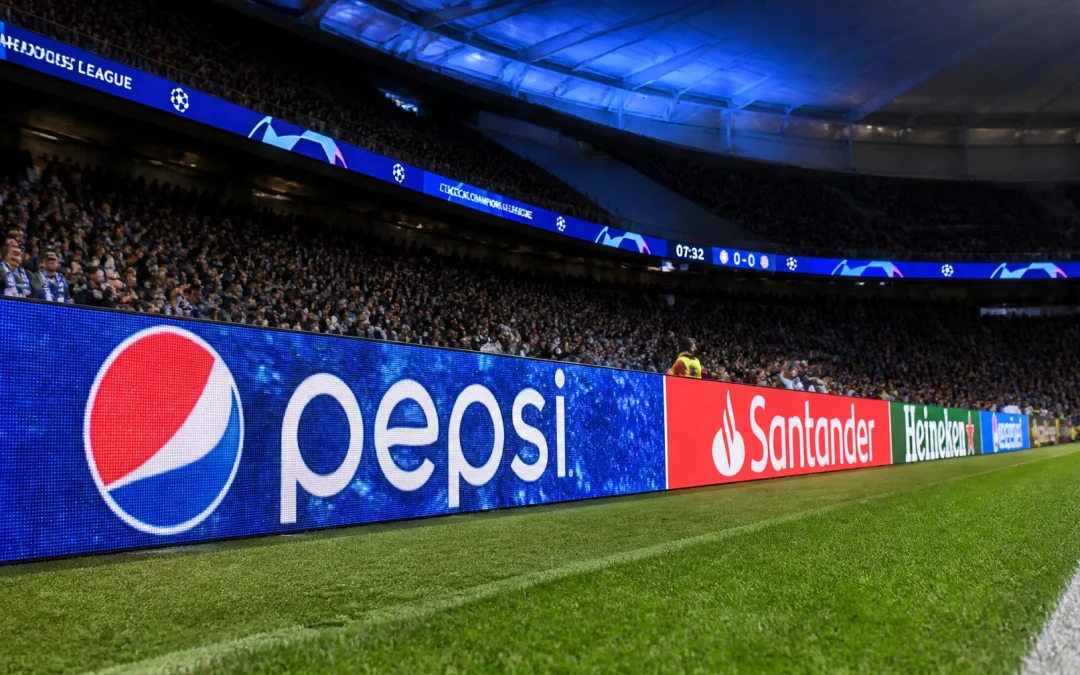
Fan engagement in the modern sports landscape is often misunderstood as a simple game of reach. For creative directors and Chief Marketing Officers, the challenge lies in transcending the noise of saturated digital channels to create meaningful brand connections. Traditional sports marketing strategies frequently fall into predictable traps that diminish return on investment and fail to capture the high-intent energy of a live game day.
By leveraging a digital out of home (DOOH) network that focuses on the stadium perimeter, brands can bypass these common pitfalls. The following analysis outlines seven critical mistakes currently hindering fan engagement and details how a strategic perimeter-based approach provides a necessary correction.
1. Confounding Reach with Genuine Engagement
A primary error in sports marketing is treating impressions and follower counts as synonymous with engagement. While millions may view a social media post, the level of active interaction is often negligible. In contrast, stadium perimeter advertising utilizes the physical environment to foster a sense of presence. Digital screens within a 10-mile radius of a venue capture fans when they are in a heightened emotional state, ensuring that the brand is not just seen but experienced as part of the event atmosphere.
2. Neglecting the 10-Mile "Hype Window"
Many campaigns focus exclusively on the inside of the arena or broad national buys. This ignores the critical 10-mile perimeter where fans congregate before and after events. This "hype window" represents a period of peak receptivity. Utilizing programmatic DOOH to target transit hubs, bars, and retail centers surrounding the venue ensures a brand remains top-of-mind during the entire fan journey, from the commute to the post-game celebration.

Image Prompt: A professional and clean infographic-style visualization of a city map centered on a major sports stadium. A translucent blue circle depicts a 10-mile radius around the venue. Small, glowing digital screen icons are placed strategically along transit routes and high-traffic areas within this radius, representing a programmatic DOOH network. The style is modern, analytical, and corporate.
3. Relying on "One-Size-Fits-All" Creative
Static, non-contextual creative is a significant deterrent to engagement. Fans today expect relevance. A mistake often seen is running the same creative in a sports context as is used for a general awareness campaign. Perimeter advertising allows for dynamic creative shifts. Campaigns can be optimized to reflect real-time game data, weather conditions, or local team sentiment. This level of personalization prevents brand fatigue and increases the likelihood of consumer action.
4. Building Relationships on Unowned Platforms
Heavy reliance on third-party social media platforms subjects a brand to shifting algorithms and a lack of data ownership. When engagement happens exclusively on social feeds, the brand loses the ability to control the environment. Digital out of home assets in the stadium perimeter provide a brand-safe, unblockable environment. Because these screens are physical fixtures in the world, they offer a level of permanence and authority that digital banners cannot match.
5. Ignoring the Off-Season Connection
A common strategic oversight is the cessation of fan engagement during the off-season. Data suggests that fans who engage year-round spend significantly more than those who only interact during the season. Perimeter ads can be maintained to sustain brand presence in the local market even when the stadium is dark. This continuity ensures that when the season resumes, the brand is already established in the fan’s daily routine.
6. Utilizing Anecdotal Judgment Over Data
Marketing decisions are too often based on subjective observations rather than hard data. In the realm of sports marketing, this manifests as choosing placements based on "prestige" rather than measurable traffic. Programmatic DOOH fixes this by providing data-backed placement strategies. Media planners can identify exactly which screens within the sports network generate the highest exposure to their specific target demographic, moving away from guesswork toward precision.
7. High-Friction Interaction Models
Forcing fans to leave their current environment to engage with a brand creates friction. Complex QR codes or multi-step digital contests often fail because they demand too much effort during a fast-paced game day. Perimeter advertising works through high-frequency visual recall. By appearing consistently across the 10-mile radius, the brand builds a subconscious preference. When the fan later encounters the product in a retail setting, the barrier to purchase is already lowered.
Strategy: The 10-Mile Perimeter Framework
The core strategy for OOH Sports involves the deployment of a comprehensive digital network that surrounds major sports venues. This approach moves beyond the limitations of traditional "in-stadium only" sponsorships.
Objective & Strategy
The objective is to dominate the visual landscape within a 10-mile radius of high-traffic sports arenas. The strategy focuses on the following pillars:
- Saturation: Ensuring brand visibility across multiple touchpoints (billboards, street furniture, transit hubs).
- Recency: Reaching fans in the hours immediately preceding and following an event.
- Contextualization: Aligning creative messaging with the specific sports culture of the local venue.
Technology Partners
To execute these campaigns with precision, OOH Sports utilizes advanced programmatic platforms. Collaborations with leaders in the space, such as StackAdapt, allow for sophisticated audience targeting and real-time bidding. This technology enables media buyers to pivot strategies instantly, ensuring budgets are allocated to the most effective screens at any given moment.

Image Prompt: A realistic, high-resolution photograph of a large digital billboard located in a bustling urban area near a major sports arena. The sun is setting, and the billboard is brightly illuminated, showcasing a crisp, professional advertisement for a premium beverage. Fans in team jerseys are visible walking past the screen, emphasizing the context of the 10-mile perimeter. The lighting is cinematic and the colors are natural.
Execution Mechanics: From Planning to Activation
The execution of a stadium perimeter campaign follows a logical, data-driven process designed to maximize impact.
- Targeting Definition: Media planners identify the specific sports venues and the 10-mile radius desired for the campaign.
- Screen Selection: Using historical traffic data and audience demographic tools, the most effective digital screens are selected from the Sportrons network.
- Creative Integration: Dynamic creative is uploaded, often featuring real-time triggers based on game scores or local events.
- Programmatic Launch: The campaign is activated via a Demand Side Platform (DSP), allowing for automated buying and optimization.
- Measurement: Exposure data is captured to facilitate post-campaign analysis and brand lift studies.
Results: Quantifiable Impact in Sports Marketing
The success of perimeter-focused DOOH is not merely theoretical; it is reflected in significant brand lift across multiple categories.
Case Study: Beverage Category Performance
Recent campaigns for major beverage brands illustrate the efficacy of this targeted approach:
- White Claw: A programmatic DOOH campaign focused on the launch of a new product drove a 74% lift in purchase consideration. By targeting high-traffic areas during key social windows, the brand achieved a significant increase in consumer intent. Read more about the White Claw campaign.
- AB InBev (Mike’s Hard Iced Tea): This campaign saw a 119% lift in positive brand image. The strategy utilized digital screens to create a consistent, refreshing brand presence across urban perimeters. Explore the AB InBev results.
Impact on Purchase Consideration
In the marine and outdoor recreation sector, Sea-Doo utilized its first digital OOH campaign to achieve a 144% increase in purchase consideration. This was accomplished by placing creative in locations where target demographics were most likely to be engaged in a "recreational" mindset, demonstrating that the principles of perimeter targeting extend beyond the stadium to any high-intent geographical zone. Review the Sea-Doo study.

Image Prompt: A high-resolution close-up of a digital kiosk screen in a modern sports plaza. The screen displays a professional, high-contrast advertisement for a beverage brand, showing a cold bottle with condensation. The background shows the architectural details of a sports stadium. The image is bright, sharp, and conveys a sense of premium placement.
Conclusion: Strategic Alignment for CMOs
For those responsible for brand growth, the move toward stadium perimeter advertising represents a shift from speculative marketing to strategic execution. By addressing the seven common mistakes of fan engagement, brands can ensure their messaging is not just part of the noise, but a meaningful component of the fan experience. The combination of programmatic technology and the physical reach of the OOH Sports network provides a robust framework for achieving measurable brand lift and long-term loyalty in the competitive world of sports media.