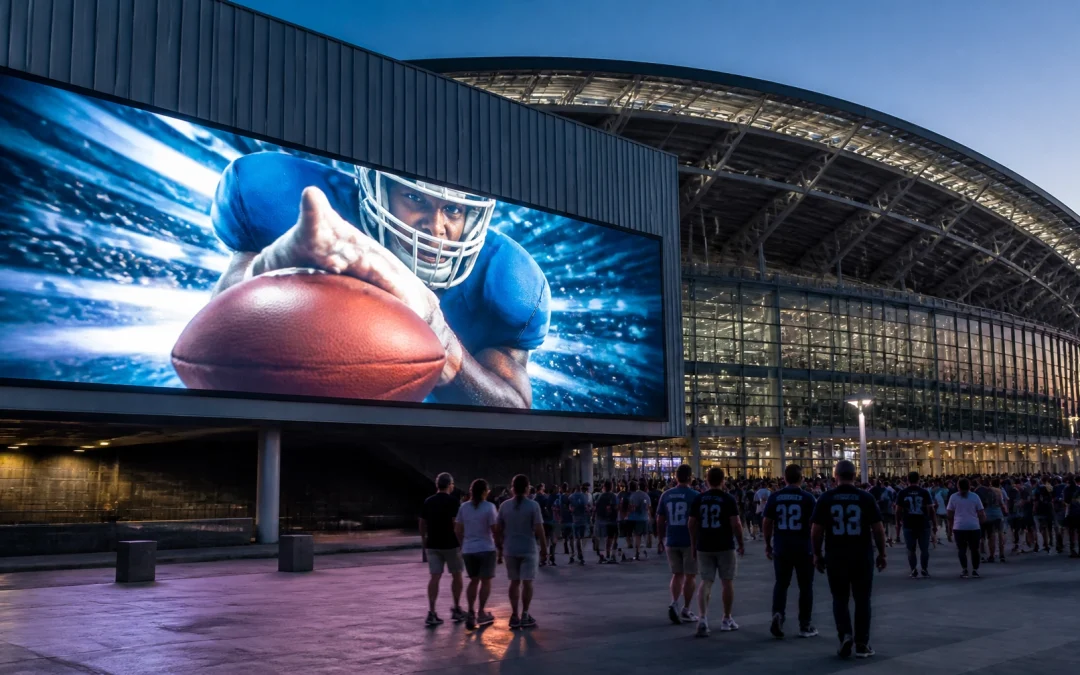
The landscape of sports marketing is undergoing a fundamental transformation. For decades, brands relied on static billboards and television spots to reach fans. However, the rise of Digital Out of Home (DOOH) technology has introduced a more sophisticated method for connecting with audiences. Sports DOOH innovation is no longer just about displaying an image on a screen. It is about creating a responsive, data-driven ecosystem that follows the fan journey from the moment they leave their home until they enter the arena.
This shift provides media buyers and brand managers with unprecedented control. By leveraging programmatic technology and hyper-local targeting, the modern sports network allows for a level of precision that was previously impossible in traditional outdoor advertising.
The Shift Toward Dynamic Fan Engagement
Traditional sports advertising often suffered from a lack of flexibility. A static banner placed near a stadium remained the same regardless of whether the home team won, the game was delayed, or the weather shifted. Innovation in the DOOH space has removed these limitations. Today, digital screens are capable of updating in real time, allowing brands to mirror the energy and excitement of a live sporting event.
This evolution is driven by the need for relevance. Fans are more likely to engage with content that reflects their current environment and emotional state. When a brand can synchronize its messaging with a game-winning goal or a halftime break, the impact on brand recall is significantly higher. The ability to pivot creative assets instantly ensures that every dollar spent is optimized for the current context.
Objective & Strategy: The 10-Mile Radius
One of the most effective strategies in modern sports marketing is the implementation of a perimeter-based targeting model. This approach involves activating digital video advertising boards within a 10-mile radius of sports venues. The objective is to surround the fan with consistent brand messaging throughout their entire game day experience.
The 10-mile perimeter strategy targets several key touchpoints:
- Transit Hubs: Capturing fans as they arrive via airports, train stations, or bus terminals.
- Commute Routes: Utilizing digital boards along major highways and city streets leading to the venue.
- Social Hotspots: Reaching fans at bars, restaurants, and fan zones where they gather before and after the event.
- The Venue Exterior: Maintaining a dominant presence right outside the stadium gates.
By blanketing this specific zone, a brand becomes an integral part of the sports atmosphere. This strategy ensures that the message is seen multiple times in different contexts, reinforcing brand authority and keeping the product top-of-mind during peak emotional moments.

Technology & Innovation: Programmatic Precision
The backbone of this innovation is programmatic DOOH (pDOOH). This technology allows media buyers to purchase screen inventory through automated platforms, similar to how they buy online display or video ads. Programmatic buying offers a level of agility that traditional direct buys cannot match.
Through pDOOH, brands can set specific triggers for their campaigns. For instance, a campaign can be programmed to increase frequency during specific hours when foot traffic is highest or to only activate when certain weather conditions are met. This ensures that the advertisement is only shown when it is most likely to be effective, reducing waste and improving return on investment (ROI).
Furthermore, the integration of Sportrons and other specialized digital assets allows for seamless delivery across a vast network of screens. Media planners can now manage complex multi-market campaigns from a single dashboard, adjusting budgets and creative assets in real time based on performance data.
Creative Execution: The Power of Real-Time Triggers
Innovation in sports DOOH is perhaps most visible in the creative execution. Dynamic Creative Optimization (DCO) enables ads to change their content automatically based on external data feeds. This is particularly powerful in the sports world, where the narrative of a game can change in seconds.
Examples of real-time triggers include:
- Live Score Updates: Displaying the current score alongside a brand message.
- Match Milestones: Activating specific creative when a goal is scored, a home run is hit, or a player breaks a record.
- Pre-Game Countdown: Building anticipation with a live clock counting down to kickoff.
- Post-Game Celebration: Tailoring the message to congratulate the winning team, creating a positive brand association with the victory.
This level of creative relevance transforms an advertisement into a valuable piece of information for the fan. It bridges the gap between the brand and the spectator, making the advertisement feel like a natural part of the sports experience rather than an interruption.

Logistics & Tactical Deployment
Executing a large-scale sports DOOH campaign requires meticulous planning and a deep understanding of audience movement. The logistics involve coordinating across multiple screen owners and technology partners to ensure a unified brand presence.
The process typically begins with identifying the target venues and the corresponding 10-mile perimeters. Media buyers then select the specific inventory that aligns with the fan journey. This might include large-format digital billboards for high-impact reach and smaller digital screens in transit hubs for high-frequency engagement.
Once the inventory is secured, the programmatic triggers are established. Technology partners facilitate the connection between live sports data APIs and the DOOH hardware. This setup ensures that the correct creative asset is pushed to the screens at the exact moment the trigger condition is met. The result is a highly synchronized campaign that operates autonomously, responding to the ebb and flow of the sporting event.
Measurable Results and Brand Impact
The most compelling reason for the shift toward sports DOOH innovation is the measurable impact on brand performance. Modern measurement techniques, such as brand lift studies and footfall attribution, provide clear evidence of campaign success. By tracking exposed device IDs, brands can determine how many people saw an ad and subsequently took action, such as visiting a retail location or making a purchase.
Several case studies highlight the effectiveness of this approach:
- White Claw: A programmatic DOOH campaign for a vodka launch resulted in a 74% lift in purchase consideration. This success was attributed to the high-frequency exposure around relevant social environments. More details on this campaign can be found in the White Claw case study.
- AB InBev (Mike’s Hard Iced Tea): This campaign saw a 119% lift in positive brand image by utilizing programmatic DOOH to reach fans in a celebratory context. The data-driven approach allowed for precise targeting during peak consumption times. The full results are documented in the AB InBev report.
- Sea-Doo: In its first digital OOH campaign, the brand achieved a 144% increase in purchase consideration. By targeting audiences near recreational and sports-heavy areas, Sea-Doo was able to reach a highly relevant consumer base. See the Sea-Doo analysis for more information.
These results demonstrate that sports DOOH is not just an awareness tool but a powerful driver of mid-to-lower funnel metrics.

Conclusion: The Future of the Sports Network
The integration of technology and outdoor advertising has created a new standard for sports marketing. As programmatic capabilities continue to advance and data becomes more granular, the ability to connect with fans will only improve. Brands that embrace these innovations can move beyond simple exposure and toward meaningful, real-time engagement.
The 10-mile perimeter strategy, combined with dynamic creative and programmatic precision, offers a blueprint for success in a crowded media landscape. By focusing on the fan journey and responding to the live environment, advertisers can ensure their message is not only seen but remembered.
For media buyers and brand managers, the goal is clear: utilize the digital out of home sports network to transcend traditional boundaries. The future of sports marketing is digital, dynamic, and focused on the heart of the action.