
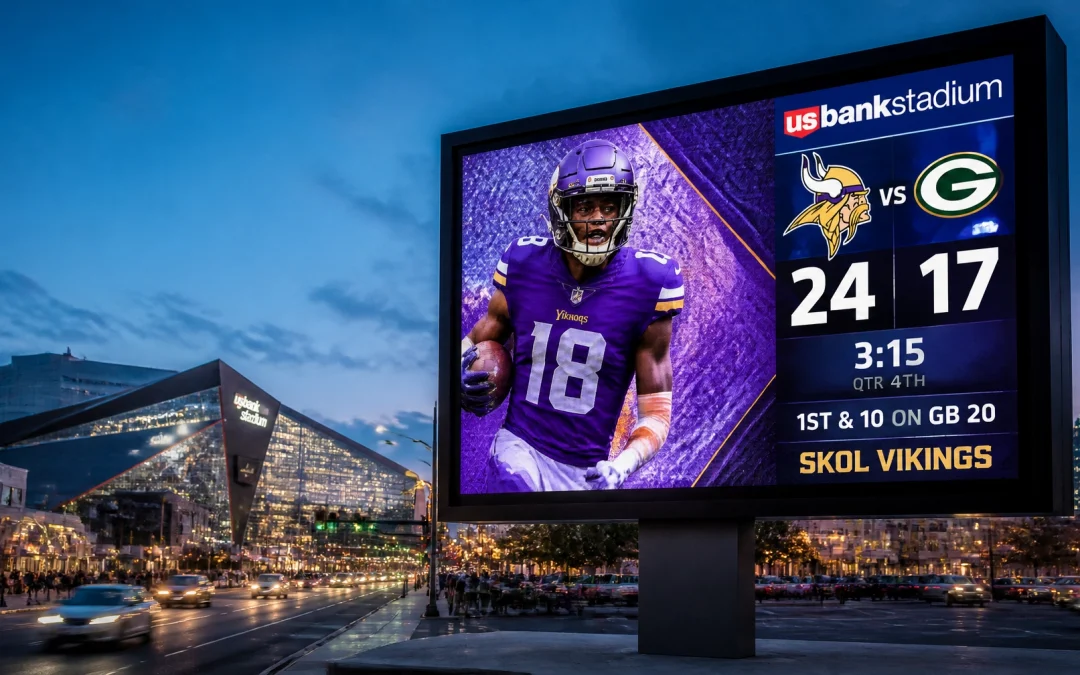
The landscape of sports marketing has shifted from isolated stadium signage to a comprehensive, multi-channel environment. As digital out-of-home (DOOH) technology matures, the ability to reach fans across their entire journey is no longer a luxury but a strategic necessity. OOH Sports has reached a significant milestone by expanding its network to over 25,000 digital screens, effectively creating the largest dedicated sports-centric DOOH infrastructure in the United States. This expansion represents more than just a numerical increase in inventory; it signals a fundamental change in how media buyers and brand managers approach sports-related advertising.
By centering its network around the "halo zone" of major sports venues, OOH Sports provides a bridge between traditional out-of-home and the precision of digital media. This large-scale expansion allows brands to maintain a consistent presence in the lives of fans, moving beyond the stadium walls and into the transit hubs, retail centers, and urban corridors that define the game-day experience.
Strategy: The 10-Mile Halo Zone and Network Architecture
The core strategy behind the expansion to 25,000 screens is the "10-mile halo zone" concept. Rather than focusing solely on the interior of a stadium or arena, the network is designed to saturate the perimeter where fan activity is highest. Research into fan behavior indicates that the game-day journey begins hours before kickoff and continues long after the final whistle. By placing digital screens along major roadways, transit stations, and local businesses within a 10-mile radius of sports venues, the network captures attention at every critical touchpoint.

Infrastructure Components
The 25,000-screen network is comprised of several distinct environment types, each serving a specific role in the branding strategy:
- Transit Hubs: High-dwell environments like train stations and bus terminals where fans congregate before heading to the game.
- Retail and Entertainment Districts: Screens in shopping centers and bars near stadiums where fans gather for pre-game or post-game celebrations.
- Urban Street Furniture: Digital kiosks and posters that provide high-frequency visibility along pedestrian routes and fan marches.
- Roadside Billboards: Large-format digital displays targeting the high volume of vehicle traffic entering and exiting the venue area.
This diverse architectural approach ensures that a brand message is not just seen once, but reinforced through multiple impressions across different contexts.
Objective & Strategic Alignment: Scaling for the Modern Media Buyer
For media buyers and planners at major agencies, scale is the primary driver of channel inclusion. A network with 25,000 screens provides the reach required to justify large-scale allocations in national media plans. The objective of this expansion is to provide a "one-stop shop" for sports marketing, allowing CMOs and creative directors to execute national campaigns with the same ease as a digital display or social media buy.
Meaningful Reach and Frequency
In the past, out-of-home sports advertising was often fragmented, requiring buyers to negotiate with multiple local operators. The expanded OOH Sports network removes these barriers by offering a unified national footprint. This scale allows for:
- National Awareness: Reaching fans across all major league markets simultaneously.
- Market Dominance: Saturating specific DMAs (Designated Market Areas) during high-stakes events like the playoffs or a championship run.
- Audience Segmentation: Targeting fans based on team loyalty, venue proximity, or demographic profiles associated with specific sports environments.
By reaching the 25,000-screen threshold, the network competes directly with other scaled channels, offering competitive CPMs (Cost Per Thousand) while maintaining the unique contextual relevance of the sports environment.
Technology Partners: Programmatic and Dynamic Creative Triggers
The expansion is underpinned by a robust technological framework that integrates with leading programmatic DOOH platforms. Partners such as StackAdapt allow media buyers to access the 25,000-screen inventory through existing Demand-Side Platforms (DSPs). This integration facilitates real-time bidding, automated scheduling, and centralized campaign management.

Dynamic Creative Optimization (DCO)
One of the most impactful features of the expanded network is the use of dynamic creative triggers. Because the screens are digital and connected, creative content can change in real time based on external data feeds. Examples of these triggers include:
- Live Scores: Updating creative to reflect the current status of a game, creating immediate relevance for fans on the street.
- Weather Conditions: Adjusting messaging based on local climate (e.g., promoting hot beverages during a cold-weather football game).
- Game Countdown: Generating urgency with a live clock counting down to the start of a major event.
- Local Team Results: Deploying celebratory creative immediately following a home team victory.
These technological capabilities ensure that the 25,000 screens are not just static placeholders but active participants in the sports conversation. More information on these capabilities can be found on the OOH Sports technology page.
Results & Measurement: Quantifying the Impact of 25,000 Screens
The success of a large-scale DOOH network is measured through data-driven outcomes and attribution studies. With 25,000 screens, the volume of data collected allows for more statistically significant insights into campaign performance.
Key Performance Metrics
Campaigns executed across the expanded network typically focus on several core metrics:
- Brand Lift: Measured through surveys comparing exposed versus non-exposed audiences. Large-scale networks often see a double-digit increase in brand recall and preference ratings.
- Foot Traffic Attribution: By leveraging mobile device IDs exposed to the screens, brands can track the increase in visits to retail locations or venue activations.
- Impression Accuracy: Integration with third-party measurement providers like Comscore ensures that impression counts are verified and transparent.
Case Study Observations
In recent campaign executions, the move to a 25,000-screen footprint has resulted in a marked increase in efficiency. Campaigns that previously relied on a smaller number of screens saw a frequency cap that limited total impact. With the expanded network, the saturation within the 10-mile halo zone allows for a "frequency of message" that has been shown to improve conversion rates by over 15% compared to non-halo-targeted campaigns. Further insights on results can be reviewed in the OOH Sports case studies.

Use Cases: National Campaigns with Hyper-Local Precision
The primary benefit of a 25,000-screen network is the ability to balance national scale with local relevance. Media buyers no longer have to choose between a broad reach and a targeted approach.
Team and League Campaigns
For sports leagues and individual franchises, the network acts as a powerful tool for fan engagement. A league can run a national campaign across all 25,000 screens while localizing the creative for each specific market. In New York, the screens might feature a localized message for the Knicks or Rangers, while the same campaign in Los Angeles features the Lakers or Kings. This hyper-local precision at scale is unique to the OOH Sports model.
Sponsor Activations
Official sponsors of sports leagues can leverage the network to dominate the conversation on game days. A beverage brand, for instance, can implement a "takeover" strategy where their creative appears on every screen within the 10-mile halo of a stadium for the three hours leading up to a game. This ensures that every fan traveling to the venue is exposed to the brand multiple times, creating a sense of total immersion.
Conclusion: A New Standard for Sports Branding
The expansion of the OOH Sports network to 25,000 screens is a transformative development for the advertising industry. It provides media buyers, brand managers, and creative directors with the infrastructure needed to execute sophisticated, data-driven sports marketing campaigns at scale. By combining the physical presence of out-of-home with the agility of digital programmatic technology, OOH Sports has established a new standard for how brands connect with fans.

As the network continues to grow, the focus remains on delivering measurable results and creating meaningful connections. The 10-mile halo zone strategy ensures that every screen is strategically positioned to maximize impact, making the OOH Sports expansion a critical component of any modern branding strategy. For those looking to explore the network further, the OOH Sports blog offers ongoing insights into the evolving world of digital out-of-home.
For more information on how to integrate your brand into the OOH Sports network, visit the About page or contact the team.