
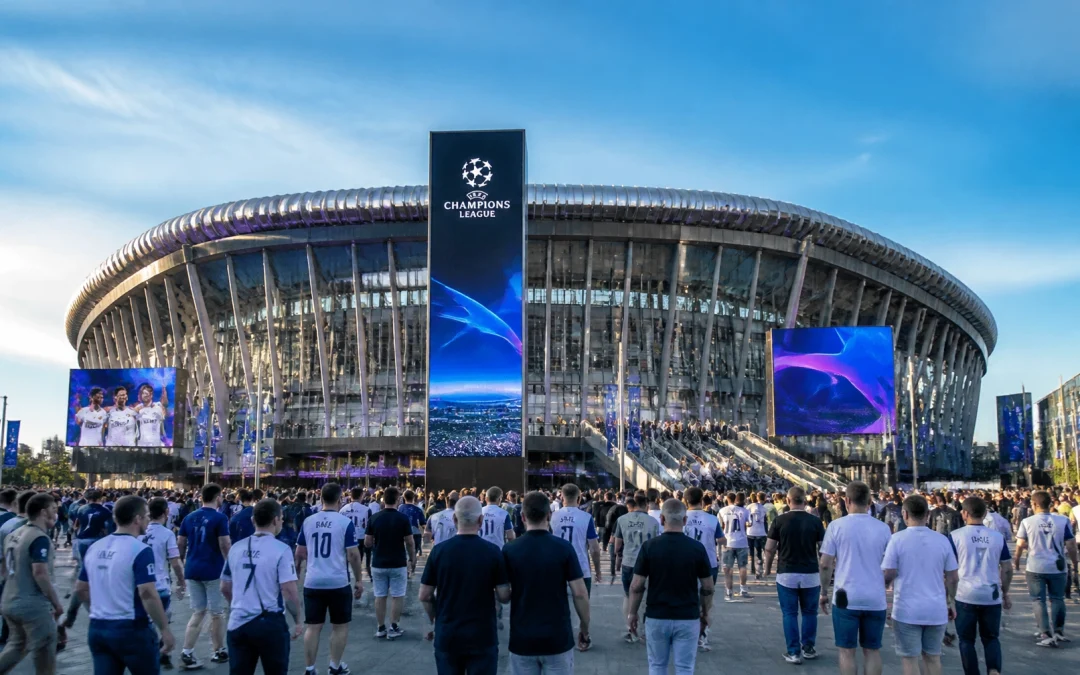
The landscape of sports marketing is undergoing a seismic shift. As the world prepares for the largest soccer tournament in history, the methods used to reach fans have evolved far beyond traditional television spots and static stadium banners. The real secret to modern brand dominance lies in real-time ad syncing. This technology allows brands to react to live game events as they happen, creating a seamless connection between the action on the pitch and the advertisements on the street.
While many media buyers are familiar with digital out-of-home (DOOH) advertising, few fully understand the technical infrastructure that allows a goal in the 80th minute to trigger a congratulatory brand message on a billboard ten miles away within seconds. This level of precision is no longer a luxury. It is the new standard for brands looking to capture the fragmented attention of millions of global fans.
Strategy: The Power of Programmatic Triggers
The foundation of real-time ad syncing is programmatic digital out-of-home (pDOOH). This strategy moves away from the old model of "buying a loop" where an ad plays every few minutes regardless of what is happening in the world. Instead, pDOOH uses data feeds to dictate when and where an ad appears.
By integrating live sports data APIs, campaigns can be set to activate only when specific conditions are met. For example, a sports apparel brand might choose to increase its bid and frequency during the 90 minutes leading up to a kickoff. Alternatively, a beverage brand might trigger specific creative visuals to appear during mandatory water breaks or at the final whistle of a major upset. This strategy ensures that media spend is concentrated during moments of peak emotional engagement.

Objective and Strategy: The 10-Mile Perimeter
The objective for most high-impact sports campaigns is to dominate the visual environment surrounding the venue. Expert planners focus on a 10-mile perimeter around sports arenas to reach fans at every stage of their journey. This includes transit hubs, highways leading to the stadium, and the entertainment districts where fans gather before and after the game.
The strategy involves a multi-layered approach to targeting.
- Geofencing: Creating a digital boundary around stadiums and fan zones.
- Audience Segmentation: Identifying fans who have recently visited sports venues or are actively searching for match-related content.
- Contextual Timing: Syncing ad delivery with local traffic patterns and match schedules to maximize impressions.
This approach ensures that a brand is not just a background image but a constant companion to the fan experience. By saturating the sports network scale, brands can achieve a frequency of exposure that is impossible to ignore.
Technology Partners: The Engine of Innovation
Executing a real-time syncing campaign requires a sophisticated stack of technology partners. This includes Demand-Side Platforms (DSPs) that specialize in DOOH, Supply-Side Platforms (SSPs) that aggregate inventory across thousands of screens, and Dynamic Creative Optimization (DCO) engines.
DCO is perhaps the most critical component for a tournament of this scale. It allows a single campaign to house hundreds of different creative variations. If the home team wins, the system automatically selects the "Winner" creative. If the game ends in a draw, a different message is deployed. This happens across the entire network simultaneously without the need for manual intervention.
Collaborating with specialized networks like OOH Sports provides access to a unified ecosystem. Instead of managing dozens of individual vendors, media buyers can use a single point of entry to reach screens in every category, from high-definition spectaculars to street-level kiosks. This streamlined approach is essential for maintaining the innovation required for modern sports marketing.

Results: Quantifying the Impact of Real-Time Engagement
The data surrounding real-time DOOH in sports is compelling. Research indicates that using live data in outdoor campaigns increases the brain’s response by 32 percent compared to static messaging. This is because the human brain is hardwired to pay more attention to information that is contextually relevant and timely.
Further studies show that the impact of these campaigns extends far beyond the moment of exposure.
- Follow-up Action: Approximately 90 percent of fans report taking some form of action after seeing a sports-related OOH ad, such as searching for a product or making a purchase.
- Brand Preference: Campaigns that leverage real-time triggers see a significant lift in brand favorability ratings, as fans associate the brand with the positive emotions of the match.
- Engagement Levels: Interactive or multisensory DOOH installations have been shown to generate three to four times higher engagement than standard digital displays.
By using advanced media planning updates, brands can track these results through device ID exposure and brand lift studies. This provides a clear picture of the return on investment that was previously difficult to measure in the outdoor space.
Innovation: Virtual Overlays and The New Ad Inventory
One of the most advanced "secrets" of the upcoming soccer tech is the use of virtual in-stadium advertising. Through the use of AI and real-time camera tracking, broadcasters can now overlay different advertisements on the physical LED boards inside the stadium.
This means that a viewer in Chicago might see an ad for a local insurance company on the pitch-side boards, while a viewer in London sees an ad for a global airline on the exact same board. This technology allows for extreme localization at a global scale.
Additionally, the introduction of mandatory three-minute water breaks provides a new, predictable window for ad syncing. As the players head to the sidelines, programmatic systems can trigger a "refreshment" campaign across all digital screens in the surrounding 10-mile radius, capturing the attention of fans who are also taking a break from the action.

Logistics: Execution and Delivery
Successfully launching a real-time syncing campaign requires meticulous planning. The process begins with the integration of the brand’s creative assets into a DCO platform. Each asset is tagged with specific triggers, such as "Goal Scored," "Halftime," or "Final Whistle."
The logistics then move to the network level.
- Inventory Selection: Media planners identify the high-traffic screens within the 10-mile stadium zones.
- Bid Logic: Rules are set within the DSP to increase bids when the game is in progress or when local foot traffic peaks.
- Synchronization Check: Technical teams ensure that the latency between the live game data feed and the screen display is minimized, usually to under five seconds.
This level of operational precision is what separates a standard outdoor buy from a truly revolutionary sports marketing campaign. It ensures that the brand message is always in sync with the fan's emotional state.
Conclusion: The Future of the Fan Experience
The technology powering the next generation of sports marketing is no longer just about visibility. It is about relevance. Real-time ad syncing, powered by pDOOH and live data, allows brands to become part of the story of the game.
For media buyers and brand managers, the opportunity is clear. By leveraging the 10-mile perimeter around stadiums and utilizing the latest in programmatic triggers, brands can achieve a level of impact that was once thought impossible. The secrets of real-time syncing are out. The only question remains which brands will be fast enough to use them.