
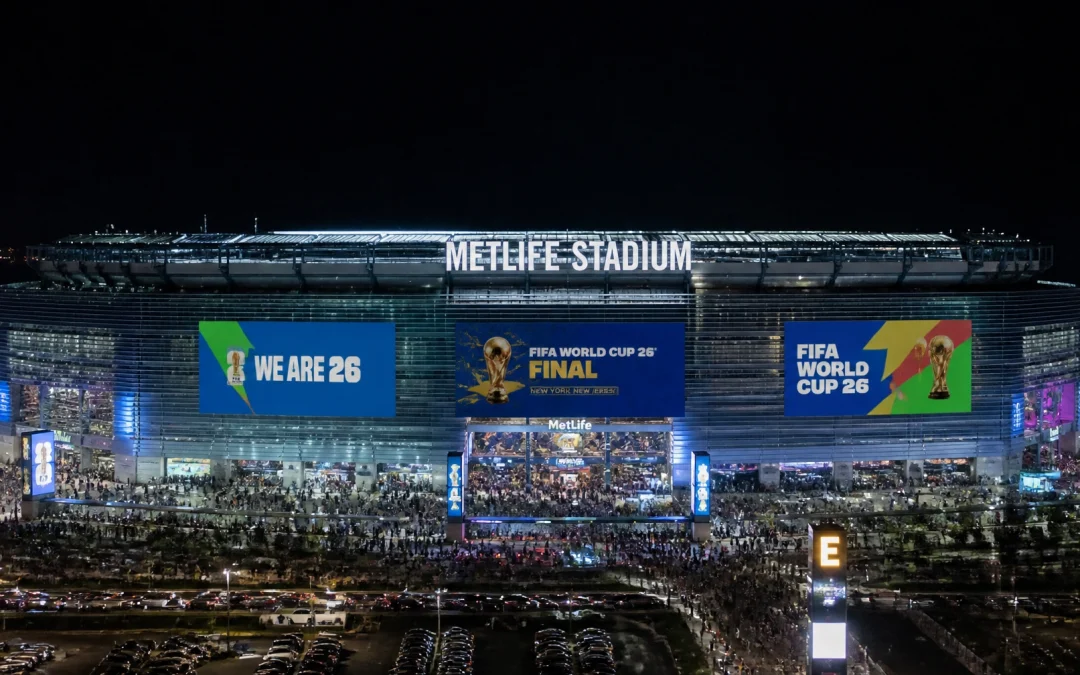
The 2026 World Cup Final is more than a soccer match. It is the single largest advertising opportunity of the decade. As the world turns its eyes to the New York New Jersey Stadium on July 19, 2026, brands are looking for ways to cut through the noise and reach the millions of fans flooding the region. To dominate this stage, a brand must move beyond traditional media and embrace a strategy that blankets the fan journey from the moment they land at the airport to the second they step into the stadium.
With 40 years of advertising leadership in the sports media landscape, the blueprint for success is clear. It involves a venue-wide approach that utilizes every available surface, from floors to billboards, to create an inescapable brand presence. This guide breaks down the strategic pillars required to own the biggest game on earth.
Strategy: The 10-Mile Stadium Perimeter
A successful World Cup campaign does not start at the stadium gates. It starts 10 miles out. The strategy relies on building a digital out-of-home (DOOH) network that surrounds the venue and captures fans throughout their daily commute, pre-game celebrations, and post-match festivities. By securing high-impact digital boards along major highways like the NJ Turnpike and within the transit corridors connecting Manhattan to East Rutherford, a brand maintains a constant visual dialogue with the audience.
The goal is to move beyond simple impressions. By leveraging a network of over 25,000 screens, brands can ensure they are the first thing a fan sees when they wake up in a hotel and the last thing they see before the whistle blows. This multi-layered approach ensures that the message is reinforced at every touchpoint.
Objective & Strategy: Owning the Arrivals
The fan journey begins at the airport. For the 2026 Final, JFK, Newark Liberty, and LaGuardia serve as the primary gateways for international and domestic travelers. Dominating these hubs is essential for establishing early brand authority.

Digital spectaculars in arrivals baggage claim, security walkways, and luxury lounges provide a captive audience with high dwell times. The strategy here is simple: greet the fans where they are most receptive. Whether they are waiting for bags or navigating the terminal, a bold, high-resolution digital display sets the tone for their entire tournament experience.
Technology Partners: Venue-Wide Coverage
Advertising in 2026 is no longer restricted to static signs. Through advanced technology partnerships, brands can now activate venue-wide coverage that reaches from the concourse floors to the massive digital billboards overlooking the pitch.

Digital floor ads are a particularly effective tactic for high-traffic zones. These vibrant, durable screens are placed in stadium entryways and club lounges, catching the eye of every fan as they navigate the venue. When paired with overhead LED displays and concourse digital signage, the result is a 360-degree brand environment. This level of integration ensures that no matter where a fan looks, the brand message is front and center.
For a deeper look into how these venue-wide strategies have evolved over four decades of sports media expertise, watch this breakdown of the current landscape:
https://www.youtube.com/watch?v=l6J-0zileKE
Execution: Fan Zones and Citywide Impact
Beyond the stadium, the 2026 World Cup Final creates massive hubs of activity in fan zones and city centers. Locations like Times Square and the official FIFA Fan Festivals are magnets for the hundreds of thousands of fans who do not have tickets but want to be part of the atmosphere.

The strategy for these zones focuses on "prestige displays." These are the massive digital spectaculars that define the NYC skyline. Running programmatic DOOH campaigns in these areas allows for real-time creative updates, such as live score tracking or countdowns to the final. This contextual relevance increases fan engagement and encourages social media sharing, effectively turning the OOH campaign into a viral digital moment.
Results: Measurable Brand Lift
The effectiveness of a stadium-centric OOH strategy is backed by significant data. Recent studies on large-scale sports events show that brands using a 10-mile stadium strategy see a substantial increase in brand preference.
- Brand Awareness: Campaigns focusing on the stadium perimeter and airport hubs typically see a 35% increase in top-of-mind awareness among target demographics.
- Foot Traffic: Retargeting fans via mobile devices after they have been exposed to DOOH screens has resulted in a 22% lift in nearby retail visits.
- Audience Reach: By covering transit hubs and fan zones, a single campaign can generate over 500 million impressions over the course of the tournament knockout stages.
These results are achieved by combining the scale of traditional billboards with the precision of modern data-driven targeting. For more insights on how to avoid common pitfalls in these high-stakes environments, check out these 7 mistakes you’re making with fan engagement.
Conclusion: The Ultimate Competitive Edge
The 2026 World Cup Final represents a unique moment in sports history. For a CMO, the challenge is not just to be present, but to be dominant. By applying the lessons learned from 40 years of advertising leadership, brands can create a comprehensive media plan that leaves nothing to chance.
From the first arrival at the airport to the final celebration in the fan zone, every screen is an opportunity. To learn more about how to secure your place in the 2026 spotlight, explore our guide on why your brand needs a 10-mile stadium strategy right now and see how to dominate the upcoming season.