
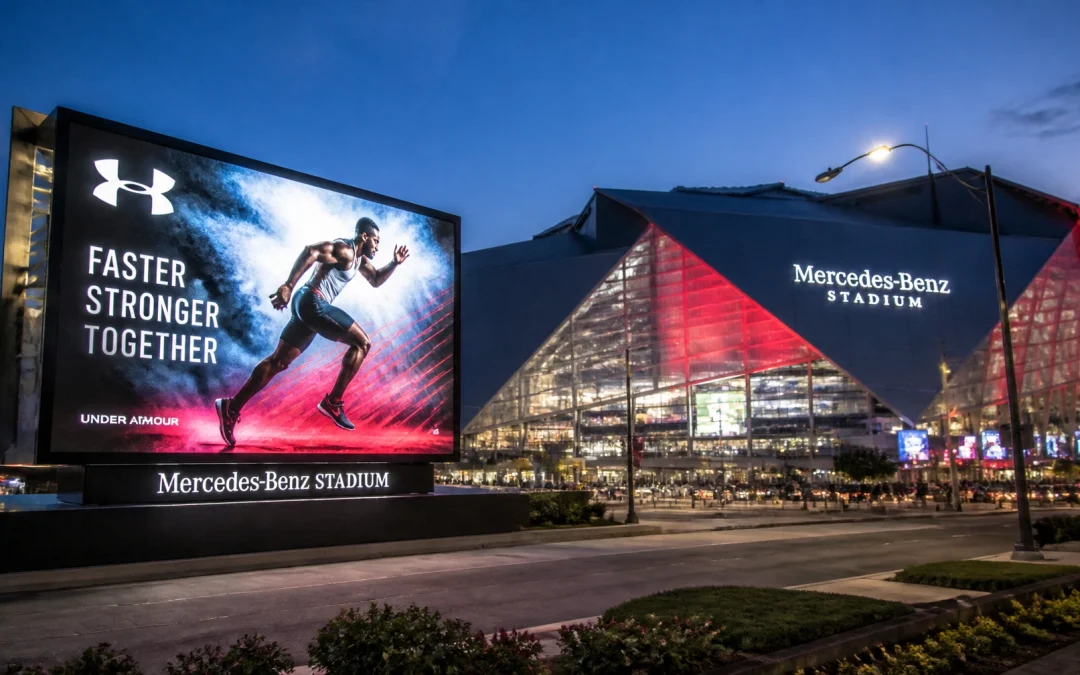
The traditional landscape of sports marketing is undergoing a significant transition. For decades, brands relied on static billboards and fixed signage within stadiums to capture the attention of fans. However, as consumer behavior shifts toward digital-first interactions, many legacy stadium advertising strategies are failing to deliver a measurable return on investment. The disconnect between a high-energy game environment and a static, unchanging ad often results in wasted spend and missed opportunities for engagement.
Digital Out of Home (DOOH) advertising, particularly when integrated into a programmatic framework, offers a solution to these challenges. By leveraging real-time data, dynamic creative, and a wider geographical reach, DOOH transforms traditional stadium media into a high-performance marketing engine. The following analysis outlines ten common reasons why stadium ad strategies fail and how the implementation of DOOH technology provides a corrective path.
1. Reliance on Static Creative in a Dynamic Environment
Traditional stadium ads are often static, remaining unchanged regardless of the game’s progress. When a brand runs a generic message during a high-stakes moment, it fails to resonate with the emotional state of the audience.
The DOOH Fix: Programmatic DOOH allows for dynamic creative optimization. Advertisers can use live data triggers to change messaging based on the score, a specific player's performance, or even the weather. A beverage brand can trigger a "celebratory" creative the moment a home team scores, aligning the brand with the fan’s peak emotional state.
2. Treating Sponsorship as Mere Logo Placement
Many brands operate under the assumption that a logo on a perimeter board is sufficient. While visibility is a component of brand awareness, simple exposure without a call to action or engagement layer rarely drives downstream results.
The DOOH Fix: DOOH enables interactive elements such as QR codes and mobile integration. By transforming a billboard into a gateway for a digital promotion, brands can move fans from passive observers to active participants. This shift turns a simple logo placement into a lead generation tool.
3. Fragmented Campaigns and Poor Digital Integration
A common error in sports marketing is the lack of synchronization between stadium media and other digital channels. If a fan sees one message in the arena and a completely different offer on their social media feed, the brand impact is diluted.
The DOOH Fix: Programmatic platforms allow for omnichannel synchronization. Brands can coordinate their DOOH placements with mobile retargeting. When a fan is exposed to a digital screen near the stadium, they can later be served a follow-up ad on their mobile device, reinforcing the message and increasing the likelihood of conversion.

4. Prioritizing Reach Over Relevance
Media buyers often focus on the largest events or the most famous stadiums without analyzing whether the audience matches the target demographic. Chasing massive reach at any cost often leads to high "waste" in impressions.
The DOOH Fix: DOOH provides granular targeting capabilities. Instead of buying a blanket season-long package, brands can select specific match days, times, and screen locations that align with their ideal customer profile. This precision ensures that the marketing budget is spent on the most relevant audience segments.
5. Ignoring the Full Fan Journey
Traditional stadium advertising is often limited to the physical interior of the venue. This approach ignores the thousands of fans who gather in bars, restaurants, and fan zones within a 10-mile radius of the stadium.
The DOOH Fix: The OOH Sports network specializes in the "perimeter" strategy, extending the campaign reach up to 10 miles around sports venues. By activating screens in the surrounding entertainment districts, brands can engage fans during the pre-game build-up and the post-game celebration, covering the entire match-day journey.
6. Lack of Measurable Results and Accountability
Historically, out-of-home advertising has been criticized for being difficult to measure. Many marketers treat stadium ads as a "black box" where they hope for awareness but cannot prove a direct impact on sales or engagement.
The DOOH Fix: Modern DOOH offers robust measurement frameworks. Through the use of device IDs and play logs, advertisers can track impression counts and even measure foot traffic lift to retail locations or website visits following exposure. For more details on how these metrics are applied, the OOH Sports case study section provides data-driven examples of campaign success.
7. High Entry Costs and Long-Term Commitments
Traditional stadium contracts often require significant upfront investments and multi-year commitments. This lack of flexibility prevents smaller brands from participating and stops larger brands from pivoting their strategy if a campaign is underperforming.
The DOOH Fix: Programmatic buying removes the barrier of high entry costs. Brands can launch campaigns with flexible budgets and shorter flight times. This allows for iterative testing, where a brand can experiment with different creative versions and optimize the spend in real-time based on performance.
8. Inconsistent Branding Across Touchpoints
When advertising is bought in silos, the creative quality and messaging can vary wildly between different vendors. This inconsistency weakens brand recognition and can confuse the target audience.
The DOOH Fix: Centralized management via a single platform like Sportrons ensures that the same high-resolution, brand-approved creative is deployed across every screen in the network. This uniformity builds credibility and ensures that the brand's identity remains intact regardless of the screen location.

9. Failure to Capitalize on Emotional Peaks
Sports are defined by moments of intense emotion. Traditional ads are static and cannot react to these peaks. An ad for a car during a tense timeout is often ignored, whereas an ad that celebrates a victory immediately after the final whistle captures maximum attention.
The DOOH Fix: Real-time triggers enable brands to become part of the narrative. By automating the creative switch based on game events, the advertisement feels like a natural extension of the fan experience rather than an interruption.
10. Operational Risks and Static Visibility
Outdoor stadium media is subject to environmental factors and technical limitations. If a static banner is obscured or a traditional billboard is poorly lit, the impression is lost. Furthermore, static ads cannot be updated if there is a sudden change in marketing strategy.
The DOOH Fix: Digital screens offer superior visibility in all lighting conditions. More importantly, the ability to update creative instantly means that if a promotional offer changes or a technical issue occurs, it can be addressed immediately through the centralized management dashboard.
Strategy: Implementing a Modern Sports DOOH Campaign
To move away from failing stadium strategies, media planners should adopt a structured approach to DOOH. The following steps outline the logistics of a successful execution:
- Define Geographic Parameters: Identify the target stadium and establish a 10-mile perimeter to capture fans throughout their journey.
- Select Data Triggers: Determine which game events (e.g., touchdowns, goals, weather changes) will trigger specific creative assets.
- Synchronize Mobile Retargeting: Ensure that the DOOH campaign is integrated with a mobile component to capture device IDs for follow-up messaging.
- Monitor and Optimize: Use real-time analytics to shift budget toward the highest-performing locations and times.
Objective & Strategy
The primary objective of shifting to a DOOH-led strategy is to increase brand relevance and measurability. By moving away from "awareness-only" metrics, brands can focus on "activation-driven" results. The strategy involves deploying creative across a network of digital screens that fans pass by on their way to the game, inside the venue, and at post-game locations. This creates a high-frequency, high-impact environment that traditional media cannot replicate.
Technology Partners and Mechanics
The execution of these campaigns relies on sophisticated programmatic platforms that connect media buyers with screen inventory. These systems handle the bidding, scheduling, and delivery of creative files. By utilizing the OOH Sports network, advertisers gain access to thousands of screens specifically chosen for their proximity to major sporting venues. The mechanics involve:
- Programmatic Bidding: Real-time auctions for screen time based on audience density.
- CMS Integration: Seamless delivery of high-definition video and static assets.
- Attribution Modeling: Linking screen exposures to digital actions or physical store visits.

Results and Impact Measurement
Data from recent shifts in the industry suggests that DOOH-integrated sports campaigns outperform traditional static placements across several key metrics. While individual results vary, standardized campaign reviews have shown:
- Brand Recall: A significant increase in unprompted brand recall when ads are synchronized with live game events.
- Engagement Rates: Up to a 40 percent increase in QR code scans compared to static boards with the same call to action.
- Conversion Lift: Improved retail foot traffic in the 10-mile radius surrounding the venue during game weekends.
By citing industry-standard brand lift studies, it is evident that the transition from static to digital is not merely a trend but a strategic necessity for brands looking to remain competitive in the sports arena.
Conclusion
The failure of traditional stadium advertising is often a result of its inability to keep pace with the dynamic nature of sports and the digital expectations of fans. By adopting a DOOH strategy, brands can fix these common issues, ensuring that their message is relevant, measurable, and impactful. For more insights on current industry trends and innovations, visiting the OOH Sports blog provides a wealth of information for media planners and brand managers alike.