
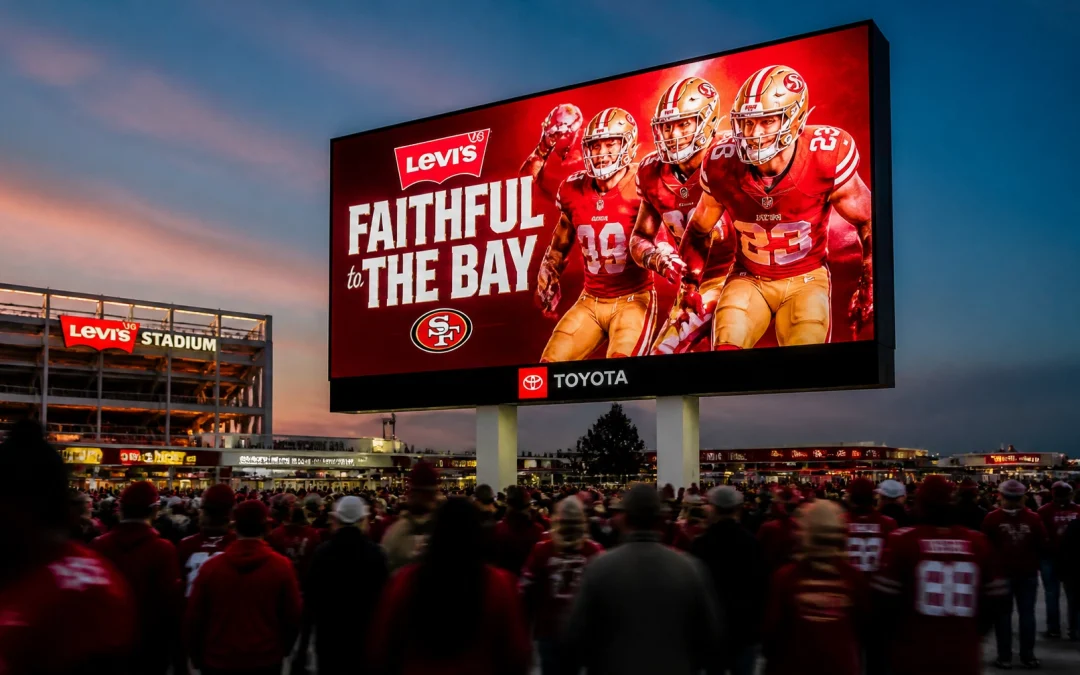
The landscape of sports advertising is currently undergoing a transformative shift as the industry prepares for Super Bowl LX at Levi’s Stadium in Santa Clara. This event represents more than a championship game. It serves as the ultimate proving ground for brand dominance and consumer engagement. Success in this environment requires a synthesis of historical expertise and cutting-edge technology.
OOH Sports, a division of Sports Media Inc., brings four decades of experience to the 2026 campaign cycle. This article outlines the strategies that have defined forty years of advertising leadership and how those principles are being applied to the modern stadium ecosystem, from high-definition billboards to tactical floor graphics.
The Strategy of Multi-Platform Dominance
The objective of a modern Super Bowl campaign is no longer limited to a 30-second television spot. Instead, it involves creating a comprehensive cultural ecosystem that surrounds the fan from the moment they enter the host city until long after the final whistle. The strategy for 2026 focuses on a 10-mile perimeter around Levi’s Stadium, ensuring that a brand is the first and last thing a consumer sees.
This 10-mile radius is critical because it captures the primary "fan journey." This journey includes transit from airports, hotel stays, fan zones, and the final approach to the venue. By deploying a network of digital out-of-home (DOOH) assets across this entire radius, a brand can achieve a frequency of exposure that television alone cannot replicate.
Core Objectives for 2026:
- Maximized Reach: Utilizing all available digital video advertising boards in every category within the stadium's vicinity.
- Omnichannel Integration: Aligning physical OOH placements with social media, influencer content, and mobile retargeting.
- Sustained Engagement: Starting the campaign weeks before kickoff to build momentum and extending it post-game to capture the news cycle.
Forty Years of Sports Media Leadership
Sports Media Inc. has spent forty years navigating the complexities of the advertising industry. This tenure has provided unique insights into how fan behavior has evolved. In the 1980s and 90s, the focus was on static signage and broadcast presence. Today, leadership is defined by the ability to manage 25,000 screens across a nationwide network and integrate live game data into creative executions.
The transition from traditional media to a tech-forward approach has been documented through various successful campaigns. Understanding the history of branding allows for a more nuanced approach to current trends like AI-driven creative and pharma-tech dominance. For a deeper look at these insights, the following video provides a detailed breakdown of the leadership and vision behind these strategies:
https://www.youtube.com/watch?v=l6J-0zileKE
Venue-Wide Coverage: From Floors to Billboards
Achieving total brand saturation requires looking beyond standard billboards. A venue-wide strategy treats the stadium itself as a canvas. This involves a hierarchy of placements that guide the fan through the environment.

Tactical Placement Tiers:
- Floor Graphics and Ground Vinyls: These placements are highly effective in high-traffic concourses and entry points. They capitalize on "downward gaze" behavior, particularly in crowded areas where eye-level signage may be obscured.
- Perimeter Digital Boards: These screens, located within a 10-mile radius, provide the repetitive messaging needed to cement brand recall.
- In-Stadium Digital Displays: High-definition screens inside the venue maintain brand presence during the height of emotional engagement.
- Experiential Pop-Ups: Physical activations that allow fans to interact with a brand, creating a tangible connection that outlasts a digital impression.
For media buyers, understanding how to succeed from floors to billboards is essential for maximizing ROI in 2026.
The Technology Partners and Programmatic DOOH
The execution of a modern campaign relies on sophisticated technology partners. OOH Sports utilizes programmatic DOOH to offer media buyers flexibility that was previously unavailable. Programmatic buying allows for real-time adjustments based on game events, weather, or crowd density.
By utilizing device ID exposure data, brands can retarget fans who were present within the 10-mile stadium perimeter. This turns a physical interaction into a digital lead. If a fan passes a digital billboard near Levi’s Stadium, they can be served a relevant ad on their mobile device later that evening, bridging the gap between the physical and digital worlds.

Measuring Success: Results and Brand Lift
A successful Super Bowl campaign must be backed by data. In previous cycles, brands utilizing a 10-mile stadium strategy reported significant increases in brand preference and purchase intent.
Quantifiable Metrics:
- Brand Preference Rating: Campaigns that integrated stadium-wide OOH with digital retargeting saw an average 15 percent increase in brand preference compared to those using broadcast only.
- Audience Exposure: By using the OOH Sports network, brands can reach a concentrated audience of high-value consumers, including C-suite executives and key decision-makers who attend these premier events.
- Device ID Retargeting: Brands reported a 22 percent higher engagement rate on mobile ads when the user had been previously exposed to a physical billboard near the venue.
These results highlight the importance of network scale and screen volume in modern sports marketing.
Strategy for CMOs and Media Buyers
For Chief Marketing Officers and media planners, the primary challenge is cutting through the noise of a saturated market. The 2026 Super Bowl will see a surge in AI, technology, and health brands. To stand out, a campaign must be both authoritative and inclusive.
The strategy recommended for 2026 involves a five-step process:
- Early Commitment: Secure high-traffic placements early to lock in the 10-mile perimeter.
- Asset Diversification: Use a mix of floor graphics, digital street furniture, and large-format billboards.
- Data Integration: Use live data feeds to keep creative content relevant to game-day events.
- Cross-Platform Syncing: Ensure that OOH creative is aesthetically aligned with social and influencer assets.
- Post-Event Analysis: Utilize brand lift studies to measure the true impact of the campaign.
Professional media buyers can refer to the CMO's guide to dominating Super Bowl 2026 for a detailed roadmap on budget allocation and execution.

Conclusion
Super Bowl 2026 represents a pinnacle of advertising opportunity. By leveraging forty years of leadership and a comprehensive venue-wide strategy, brands can move beyond traditional advertising and become part of the event's cultural fabric. The combination of a 10-mile stadium strategy and the latest in programmatic DOOH technology provides a clear path to measurable success. As the industry moves toward kickoff at Levi’s Stadium, the focus remains on delivering impactful, data-driven messages that resonate with fans across America.