
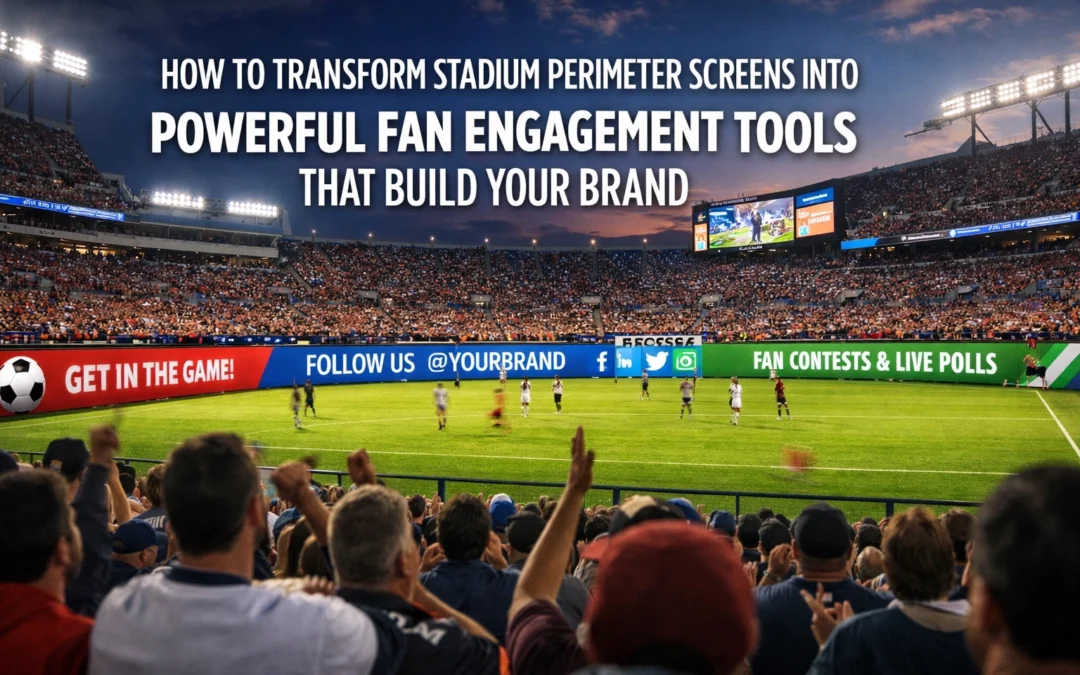
Stadium perimeter screens represent one of the most underutilized assets in sports marketing. While many brands treat these displays as simple rotating billboards, forward-thinking marketers are transforming them into dynamic engagement platforms that build lasting connections with fans and deliver measurable brand lift.
The shift from passive advertising to active fan engagement requires a strategic approach that combines interactive content, real-time personalization, and multi-platform integration. Brands that master this transformation see significant improvements in audience attention, emotional connection, and campaign performance.
The Strategic Value of Perimeter Screen Engagement
Traditional static perimeter advertising delivers basic brand visibility. However, modern digital perimeter screens offer capabilities that extend far beyond simple exposure. These screens reach captive audiences during high-emotion moments, creating opportunities for memorable brand experiences that drive both immediate engagement and long-term loyalty.
The strategic advantage lies in the convergence of three factors: guaranteed audience attention during live events, the emotional intensity of sports experiences, and the technical capability to deliver dynamic, responsive content. Brands that leverage all three elements position themselves to capture not just impressions, but meaningful interactions that influence purchasing behavior.

Interactive Elements That Drive Participation
Converting passive viewers into active participants begins with interactive content design. Live polls allow fans to vote on game predictions, player performance, or post-game activities, creating immediate engagement that transforms spectators into stakeholders in the stadium experience.
Game-style features such as trivia contests, prediction challenges, and fan competitions generate sustained attention throughout events. These interactive elements serve dual purposes: they strengthen emotional connections to the brand while simultaneously collecting valuable audience behavior data that enables more targeted campaigns over time.
Fan recognition moments, such as crowd shots during celebrations or highlighting social media posts from attendees, reinforce the sense of belonging and deepen connection to both the venue and associated brands. When fans see themselves reflected in the stadium experience, brand recall increases significantly.
Key interactive strategies include:
- Real-time voting systems that display aggregated fan opinions
- Gamified contests with immediate on-screen results
- Social media integration featuring fan-generated content
- Personalized celebrations for birthdays, anniversaries, or special occasions
- Live leaderboards for engagement challenges
Personalization at Scale
Generic advertising messages fail to capitalize on the unique opportunity perimeter screens provide. Effective personalization moves beyond demographics to deliver fan-centric content that acknowledges individual presence and participation.

Birthday wishes, anniversary celebrations, and personalized messages create emotionally charged moments that cultivate brand loyalty among attendees. This approach transforms advertising from interruption to recognition, fundamentally changing how fans perceive brand messaging within the stadium environment.
Real-time messaging capability enables content adaptation based on game progression, audience demographics, time of day, or external factors such as weather conditions. A beverage brand might promote cold drinks during intense gameplay in warm conditions, then shift to celebratory messaging after a home team victory.
The technical infrastructure supporting personalization includes data integration systems that connect ticketing information, mobile app usage, and real-time event data to content management platforms. This integration allows for dynamic content delivery that feels relevant rather than intrusive.
Multi-Platform Integration Strategy
Stadium perimeter screens function most effectively as nodes within broader engagement ecosystems. Social media integration creates continuity between in-venue experiences and digital platforms, extending engagement beyond the physical event.
Live social media updates featuring fan selfies, hashtag campaigns, and user-generated content create multi-channel participation where audiences both inside and outside the stadium contribute to shared experiences. This approach amplifies reach while providing social proof that enhances brand credibility.
QR code implementation offers direct pathways to extended engagement. Strategic placement of dynamic QR codes on perimeter screens enables fans to unlock exclusive content, access merchandise discounts, or participate in mobile-based interactive features. Research indicates that well-designed QR integration reduces distracting phone usage by up to 25%, keeping fans focused on live action while still enabling digital interaction during natural breaks.

The integration strategy should include:
- Hashtag campaigns displayed prominently with rotating fan posts
- Second-screen experiences that complement perimeter content
- Mobile app connectivity for seamless interaction
- Social media walls featuring real-time fan contributions
- Cross-platform contests that span physical and digital environments
Content Quality and Visual Impact
Visual clarity determines whether perimeter screen content captures attention or fades into background noise. High-resolution displays with wide viewing angles ensure every spectator benefits from content regardless of seating location, maximizing sponsor message reach and effectiveness.
Dynamic content formats including video, animation, and live statistics capture attention more effectively than static imagery. Movement, color contrast, and strategic timing all contribute to visual impact that cuts through the sensory competition present in live sports environments.
Real-time information display keeps fans continuously engaged with current game statistics, player profiles, instant replays, and score updates. This utility-driven content establishes perimeter screens as valuable information sources rather than pure advertising channels, increasing audience receptivity to commercial messages integrated within the content flow.
Content rotation timing requires careful consideration. Messages displayed too briefly fail to register, while content that lingers too long loses viewer attention. Optimal rotation cycles vary by content type but generally fall within 8-15 second intervals for commercial messages and 3-8 seconds for rapid information updates.
Technology Integration and Analytics
Advanced analytics transform perimeter screens from broadcast channels into performance measurement tools. AI-driven tracking systems monitor viewer engagement across platforms, feeding data instantly back to advertisers and enabling continuous campaign optimization.
The data collection framework should capture:
- Attention duration and frequency metrics
- Interaction rates for participatory content
- Social media amplification measurements
- Mobile app engagement correlation
- Purchase behavior attribution where applicable
These insights allow sponsors to understand fan behavior patterns and refine promotional strategies based on empirical evidence rather than assumptions. Campaigns become iterative, with each event providing learning opportunities that improve subsequent executions.

Integration with programmatic platforms enables automated content optimization based on real-time performance data. When specific creative executions generate higher engagement rates, the system automatically increases their rotation frequency, maximizing campaign efficiency without manual intervention.
Augmented Reality and Immersive Experiences
Cutting-edge implementations incorporate augmented reality anchors that extend 3D graphics beyond physical screen boundaries, creating immersive brand experiences that differentiate venues and generate social media amplification through shareability.
AR integration transforms perimeter screens into portals for extended reality experiences. Fans using mobile devices can point cameras at screens to unlock virtual product demonstrations, 3D brand mascots, or interactive gaming elements that blend physical and digital environments.
Dynamic QR codes that change during key game moments create urgency and incentivize immediate action. A beverage brand might trigger special offer codes only after scoring plays, driving both engagement and conversion during peak emotional moments.
These advanced technologies position perimeter screens as gateways for active participation rather than passive advertising displays. The shift fundamentally changes value proposition, moving from cost-per-impression models to cost-per-engagement frameworks that better align with contemporary marketing objectives.
Implementation Framework
Successful transformation of stadium perimeter screens into engagement platforms requires systematic planning and execution. The implementation process includes technical infrastructure assessment, content strategy development, measurement framework establishment, and continuous optimization protocols.
Technical requirements include:
- High-resolution LED displays with appropriate brightness and viewing angles
- Content management systems capable of real-time updates
- Integration APIs connecting ticketing, mobile apps, and social platforms
- Analytics infrastructure for performance tracking
- Backup systems ensuring reliability during live events

Content strategy development addresses messaging hierarchy, rotation schedules, interactive element design, and brand guideline compliance. Successful strategies balance commercial objectives with fan experience enhancement, recognizing that engagement drives long-term value more effectively than pure advertising exposure.
Measuring Success and Optimization
Performance measurement extends beyond traditional impression counting to encompass engagement metrics, emotional response indicators, and business outcome attribution. Brand lift studies conducted among stadium attendees provide direct evidence of perimeter screen campaign effectiveness.
Key performance indicators include:
- Interaction rates for participatory content elements
- Social media amplification metrics and sentiment analysis
- Mobile app downloads and engagement correlation
- Purchase consideration shifts measured through pre/post surveys
- Return on ad spend calculations including both direct and indirect attribution
Continuous optimization requires regular analysis of these metrics with systematic testing of creative variations, rotation timing adjustments, and interactive feature refinements. The most successful programs treat perimeter screen campaigns as living systems that evolve based on performance data and changing audience preferences.
Stadium perimeter screens represent significant untapped potential for brands seeking meaningful fan engagement. By moving beyond static advertising to embrace interactive, personalized, and integrated approaches, marketers transform these assets into powerful brand-building tools that deliver measurable results and lasting audience connections.