
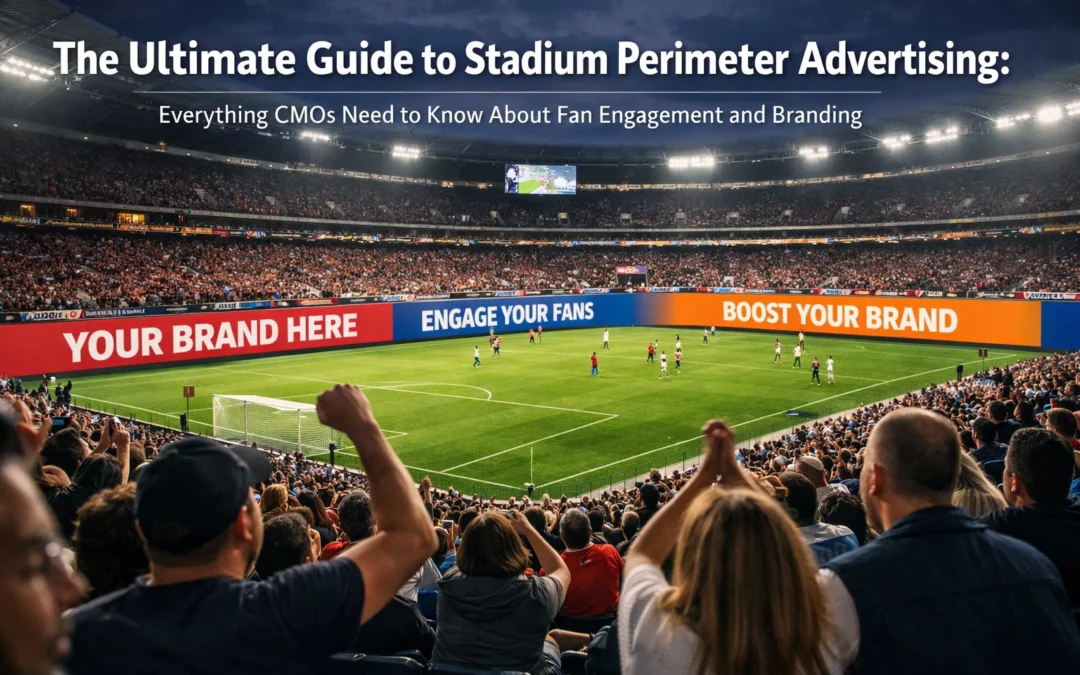
Stadium perimeter advertising sits at the intersection of mass visibility and brand credibility. For CMOs and creative directors navigating an increasingly fragmented media landscape, these digital displays positioned around sports venues offer something rare: guaranteed attention from highly engaged audiences across multiple platforms simultaneously.
The strategic value extends beyond simple impressions. When a brand appears on perimeter boards during a televised match, it signals market presence, financial strength, and alignment with professional sports culture. This guide breaks down what decision-makers need to understand about perimeter advertising's role in modern fan engagement and branding strategies.
What Perimeter Advertising Actually Delivers
Perimeter advertising refers to promotional displays positioned along the sidelines and behind goals of sports venues. These boards capture attention from two distinct audiences: in-stadium spectators and broadcast viewers watching from home or mobile devices.
The dual-channel exposure creates compounding visibility. A single advertisement appears in wide shots, close-ups, replays, highlight reels, and fan-generated social media content. This multiplication effect transforms a placement decision into weeks or months of continued brand exposure across platforms.
Regional sports venues alone attract tens of thousands of attendees throughout a season. Professional leagues multiply that reach exponentially through broadcast rights and streaming partnerships. The cumulative exposure from perimeter placement rivals or exceeds traditional advertising channels while offering better message control and brand context.

Why Strategic CMOs Prioritize Perimeter Boards
Credibility Through Association
Brand presence at professional sporting events communicates market positioning without explicit claims. For emerging brands, perimeter advertising accelerates recognition by placing logos alongside established competitors. For mature brands, it reinforces market leadership and maintains category dominance.
The psychological impact operates subtly. Fans associate perimeter advertisers with the professionalism, excitement, and success of the sport itself. This halo effect extends brand perception beyond product attributes into emotional territory that traditional advertising struggles to access.
Guaranteed Attention During High-Engagement Moments
Unlike pre-roll ads or banner placements that audiences actively avoid, perimeter boards appear organically within content fans actively seek. Viewers cannot skip replays or fast-forward through goal celebrations, the exact moments when perimeter advertisements receive maximum camera focus.
This forced exposure occurs when audience attention peaks rather than during breaks when engagement drops. The strategic timing creates significantly higher recall rates compared to interruptive advertising formats.
Cross-Platform Amplification
Modern perimeter advertising extends far beyond the stadium itself. LED board content appears in countless fan-generated photos, videos, and social media posts. A single match can generate millions of additional impressions as fans share highlight clips, celebration moments, and game commentary across platforms.
This organic distribution carries added credibility because fans share content voluntarily rather than brands pushing messages. The social proof embedded in peer-shared content amplifies brand messaging without additional media spend.

The Technology Evolution Reshaping Stadium Advertising
The transition from static signage to LED perimeter systems fundamentally changed what brands can achieve. Modern LED displays offer superior image quality, color reproduction, and brightness levels that ensure visibility even in challenging stadium lighting conditions.
Dynamic Content Rotation
LED technology enables multiple advertisers to share premium perimeter space through rotation schedules. Common rotation models include:
- 2:2 Rotation: The board divides into four sections featuring two sponsors each, balancing visibility with quality contact time
- Multi-session: Up to 14 sponsors display simultaneously in equal-sized sections, maximizing contact figures while ensuring consistent presence
- Interval-based rotation: Advertisements display in 30-second cycles, allowing animated content adapted to specific campaign messaging
These rotation strategies let brands select exposure levels matching campaign budgets and objectives while maintaining prime positioning.
Geographic Targeting Through Broadcast Technology
Advanced LED systems enable region-specific advertising during global broadcasts. A match shown simultaneously in multiple countries can display different sponsors to different audiences based on broadcast geography. This targeting maximizes relevance while allowing brands to focus budgets on priority markets.
The technology also supports real-time content updates. Brands can adjust messaging based on game developments, weather conditions, or breaking news, creating responsive campaigns that capitalize on emerging opportunities.
Measurable Engagement Data
Modern perimeter systems provide detailed analytics on viewer exposure, engagement duration, and brand recall. This data allows CMOs to measure ROI with precision previously unavailable in out-of-home advertising. Performance metrics inform future placement decisions and creative optimization, turning stadium advertising into a data-driven channel rather than a branding-only investment.

Strategic Placement Psychology
Not all perimeter board positions deliver equal value. Strategic placement requires understanding camera angles, game dynamics, and broadcast conventions.
Behind-Goal Positioning
Boards positioned behind goals capture celebration moments that replay extensively on social media and sports highlights. These emotionally charged scenes create strong memory associations between brands and positive fan experiences.
Corner Flag Areas
Set-piece situations like corner kicks guarantee sustained camera focus on these positions. The predictable nature of these moments allows brands to plan creative specifically for the extended visibility window.
Center-Pitch Boards
Wide shots and tactical overviews feature center-pitch positioning prominently. These placements work best for building broad brand awareness rather than detailed messaging.
Rotation Timing
LED rotations synchronize with natural breaks in play to maximize attention when viewers' eyes drift from the action. Professional systems use AI-powered scheduling that predicts optimal rotation moments based on game flow analysis.
Design Principles That Maximize Impact
Effective perimeter advertising follows specific creative guidelines shaped by viewing distance, screen resolution, and attention duration:
- Display logos or company names as large as possible for instant recognition across camera distances
- Minimize text to essential messages only, following the "less is more" principle for rapid comprehension
- Use strong contrasts and bright colors that stand out against field backgrounds and stadium lighting
- Design with social media sharing in mind, ensuring advertisements remain visible and readable when fans capture photos or videos
Creative teams should test designs at various resolutions and distances, simulating both in-stadium viewing and broadcast close-ups. Weather-resistant materials and professional installation using PVC hard foam or aluminum composite panels ensure consistent quality throughout the season.

Measuring ROI Beyond Impressions
CMOs evaluating perimeter advertising need frameworks that capture the full value spectrum:
Broadcast Exposure Value
Calculate equivalent advertising costs for achieving similar reach through traditional broadcast spots. Factor in the added credibility benefit that perimeter placement provides compared to standard commercial breaks.
Social Media Multiplication
Track brand appearances in user-generated content across platforms. Modern monitoring tools identify logo appearances in shared photos and videos, quantifying organic reach extension beyond paid placement.
Brand Lift Studies
Measure changes in brand awareness, consideration, and preference among audiences exposed to perimeter advertising compared to control groups. These studies validate the branding impact beyond simple visibility metrics.
Attribution Tracking
For direct-response objectives, use unique URLs, promo codes, or geofenced offers to track conversions stemming from stadium exposure. Device ID targeting enables retargeting of in-stadium attendees with follow-up campaigns that close the attribution loop.
Implementation Considerations for CMOs
Successful perimeter advertising campaigns require planning beyond creative development:
Venue Selection
Evaluate venues based on attendance figures, broadcast reach, audience demographics, and brand alignment. Regional venues may deliver better ROI for local brands than premium national placements with higher costs and broader but less relevant audiences.
Contract Structure
Negotiate multi-season agreements that lock in rates and positioning while building consistent brand association with specific teams or leagues. Include flexibility provisions for creative updates and rotation adjustments based on performance data.
Integration with Broader Campaigns
Coordinate perimeter creative with simultaneous digital, social, and traditional campaigns to create unified brand experiences. Use stadium placements to anchor larger sports marketing strategies that span multiple touchpoints.
Partner Vetting
Work with experienced stadium advertising specialists who understand technical requirements, creative optimization, and measurement protocols. The right partners navigate complex venue relationships and maximize value from each placement.

The Strategic Advantage
Stadium perimeter advertising delivers something increasingly rare in modern marketing: captive attention from highly engaged audiences during emotionally charged moments. For CMOs building brand equity, this combination of visibility, credibility, and cross-platform amplification creates strategic value that compounds over time.
The evolution toward LED technology and data-driven optimization transforms what was once a branding-only channel into a measurable, targetable advertising medium. Brands that master perimeter advertising gain competitive advantages in fan engagement, market positioning, and campaign efficiency.
The question for decision-makers is not whether perimeter advertising belongs in the marketing mix, but how to maximize its strategic value within broader fan engagement and branding initiatives.