
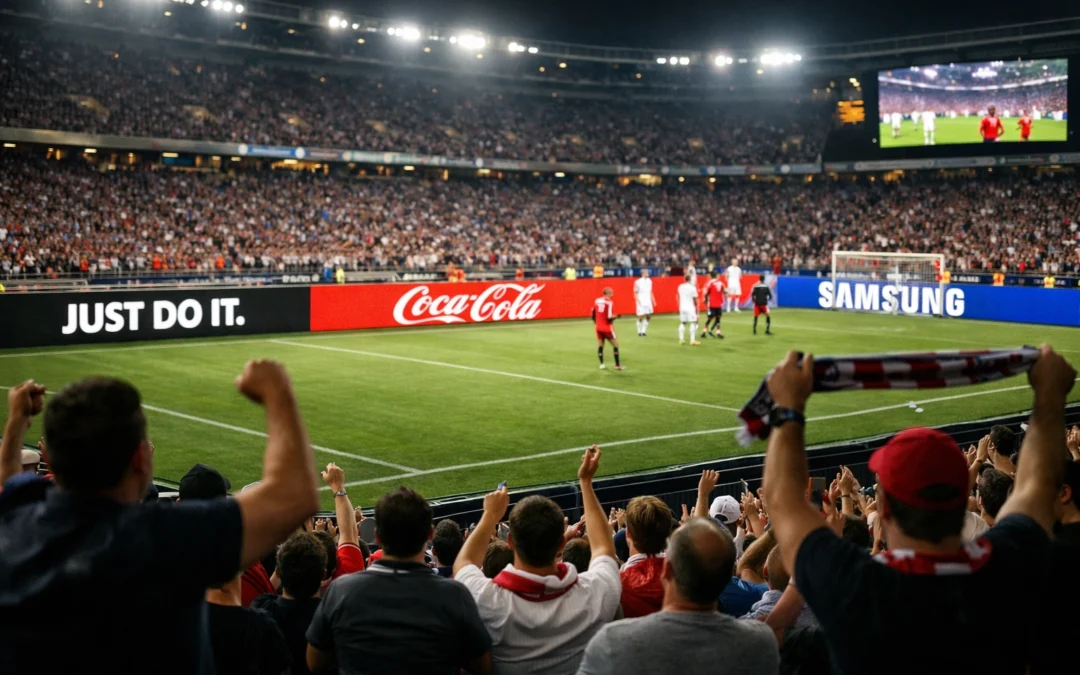
Stadium perimeter advertising represents one of the most valuable yet underutilized opportunities in sports marketing. When fans experience peak emotional moments during live events, brands positioned at field level capture attention during heightened receptivity windows. Smart CMOs understand that this advertising format operates differently than traditional interruption-based media, creating memorable brand moments through sustained, non-intrusive exposure.
The mechanics behind successful perimeter campaigns reveal a sophisticated interplay of psychology, timing, and technology. Brands that master these elements generate measurable impact on recall, consideration, and preference metrics.

The Psychology Behind Perimeter Advertising Success
Stadium perimeter advertising succeeds precisely because it does not interrupt the sporting experience. Unlike commercial breaks or banner ads, perimeter boards remain visible throughout play, creating consistent brand exposure during moments when viewers are emotionally engaged with on-field action. This passive yet sustained presence generates more positive reception than interruption-based formats.
Research demonstrates that consistent visual cues including clear brand names, logos, and strategic color schemes build brand recall over time, even when fans maintain primary focus on the game. The psychological principle at work involves peripheral processing, where the brain registers brand information without requiring direct attention.
Key psychological advantages include:
- Non-intrusive presence that avoids negative advertising associations
- Exposure during heightened emotional states linked to game action
- Sustained visibility across extended viewing periods
- Association with excitement, passion, and positive fan experiences
Dynamic displays significantly outperform static alternatives. Larger, animated displays incorporating product demonstrations and engaging visual content capture more attention and generate stronger memory encoding than traditional static boards. Motion naturally draws the eye during moments of natural emotional engagement without feeling forced or disruptive.
Strategic Positioning and Credibility Signaling
The perimeter of professional sports venues provides prime real estate that captures every fan's attention, both in-stadium and through broadcast coverage. This positioning communicates more than brand awareness. Presence on professional sports perimeters signals credibility and legitimacy, elevating brand perception through association with established, trusted institutions.
For CMOs evaluating channel investment, perimeter advertising offers unique positioning benefits:
Broadcast Amplification: Television and streaming coverage regularly features perimeter boards in frame, extending reach far beyond the stadium. Camera angles naturally capture perimeter boards during play, analysis segments, and replays.
Duration and Frequency: Unlike brief commercial spots, perimeter presence extends across entire game duration. Brands receive hundreds of subtle impressions per viewer over multiple hours.
Premium Association: Alignment with professional sports properties transfers positive brand attributes including quality, performance, and prestige.

Dynamic Content Strategies That Drive Engagement
Effective perimeter campaigns extend beyond static logo placement into active brand storytelling. Modern LED technology enables real-time content adjustment, allowing brands to show product demonstrations, special offers, and contextual messaging that resonates with current game situations.
Creative directors can leverage dynamic capabilities through several proven approaches:
Contextual Messaging: Adjusting content based on game situations, scores, or momentum shifts creates relevant, timely brand moments. A beverage brand might emphasize refreshment during timeouts or a financial services company might reference "smart plays" following strategic moments.
Product Demonstrations: Short animation loops showing product features or usage scenarios communicate value propositions more effectively than static imagery. These brief demonstrations repeat throughout the game, reinforcing key messages.
Call-to-Action Integration: QR codes, social media handles, or promotional codes provide direct response mechanisms. Placement of interactive elements during natural game pauses maximizes engagement potential.
Sequential Storytelling: Rotating through a series of related messages across the game creates a narrative arc that maintains viewer interest and communicates more complex value propositions.

Technology-Enabled Optimization and Personalization
Advanced perimeter advertising systems now incorporate AI-driven ad rotation, real-time performance analytics, and motion-tracking technology. These capabilities enable unprecedented optimization based on actual viewer engagement patterns.
Motion-tracking technology adjusts brightness and color based on camera angles, ensuring optimal visual experience for both in-stadium audiences and broadcast viewers. This technical precision maximizes brand visibility across diverse viewing contexts.
Virtual advertising technology represents particularly powerful innovation. Major sports leagues now utilize multiple broadcast feeds showing region-specific advertisements to different global audiences simultaneously. The Bundesliga, for example, employs up to five different broadcast feeds, allowing brands to personalize messaging for specific viewer segments during moments of peak emotional investment.
Data-driven targeting opportunities enable:
- Audience segmentation based on geographic, demographic, and behavioral data
- A/B testing of creative variations to identify highest-performing content
- Real-time adjustment based on engagement metrics
- Attribution modeling linking perimeter exposure to downstream actions
For creative directors, this data infrastructure supports continuous campaign refinement. Performance analytics reveal which creative elements drive strongest response, enabling iterative improvement across campaign lifecycles.
Fan Engagement Integration and Interactive Elements
Interactive perimeter advertising amplifies emotional connection by inviting participation. Integration of QR codes, live polls, and social media prompts encourages direct fan engagement, transforming passive exposure into active brand interaction.
Interactive features also generate valuable behavioral data. Sponsors collecting engagement metrics can develop more effective audience-based campaigns over time, targeting high-value segments with personalized messaging.
Research indicates fans view sponsorships more favorably than overt advertising. Brands positioning themselves as supporters of the club experience rather than intrusive advertisers receive more positive reception. Younger and more educated viewers particularly favor stadium advertising that feels integrated rather than impositive.
Effective engagement strategies include:
- Social media contests encouraging fan participation linked to game events
- Mobile app integration enabling exclusive perimeter-advertised offers
- Gamification elements rewarding fans for brand interactions
- Community initiatives connecting brand presence to local impact

Measurement Frameworks and Attribution Models
Successful CMOs demand measurable outcomes from perimeter advertising investments. Modern measurement frameworks extend beyond impression metrics to capture actual impact on brand health and business outcomes.
Brand lift studies measure changes in awareness, consideration, and preference among exposed audiences compared to control groups. These studies quantify perimeter advertising's impact on critical brand metrics, justifying investment through demonstrated ROI.
Attribution modeling connects perimeter exposure to downstream actions including website visits, store traffic, and purchases. Device ID exposure data enables retargeting audiences who attended games or viewed broadcasts, creating omnichannel campaign synergies.
Key measurement approaches include:
- Pre/post surveys measuring brand metric shifts
- Foot traffic analysis comparing exposed versus unexposed audiences
- Digital conversion tracking through exposed device IDs
- Social media engagement correlation with perimeter campaign timing
- Sales data analysis across campaign periods
Advanced analytics platforms aggregate these data streams, providing comprehensive campaign performance dashboards. CMOs gain clear visibility into how perimeter investments drive business outcomes, enabling data-informed optimization and budget allocation decisions.
Strategic Implementation Considerations
Successful perimeter advertising requires careful strategic planning beyond creative development. Venue selection, timing, content strategy, and measurement frameworks must align with broader campaign objectives.
High-value venues provide maximum exposure through combination of attendance volume, broadcast reach, and audience demographics. Professional leagues and championship events deliver premium positioning with corresponding investment requirements.
Content strategy should reflect the sustained exposure format. Rather than single-message repetition, effective campaigns rotate through complementary messages that collectively communicate brand positioning while maintaining visual interest across extended viewing periods.
Technology partnerships enable capabilities that would be cost-prohibitive to develop internally. Specialized platforms provide ad serving infrastructure, analytics capabilities, and creative production tools optimized for perimeter advertising contexts.
The most successful campaigns integrate perimeter advertising within broader omnichannel strategies. Perimeter presence drives awareness and consideration, while coordinated digital, social, and retail activations convert interest into action. This integration maximizes campaign efficiency through strategic synergies across channels.
Stadium perimeter advertising continues evolving as technology enables increasingly sophisticated targeting, personalization, and measurement. CMOs and creative directors who understand the unique psychological advantages, strategic positioning opportunities, and data-driven optimization possibilities position their brands to create memorable moments when fan emotions peak.