
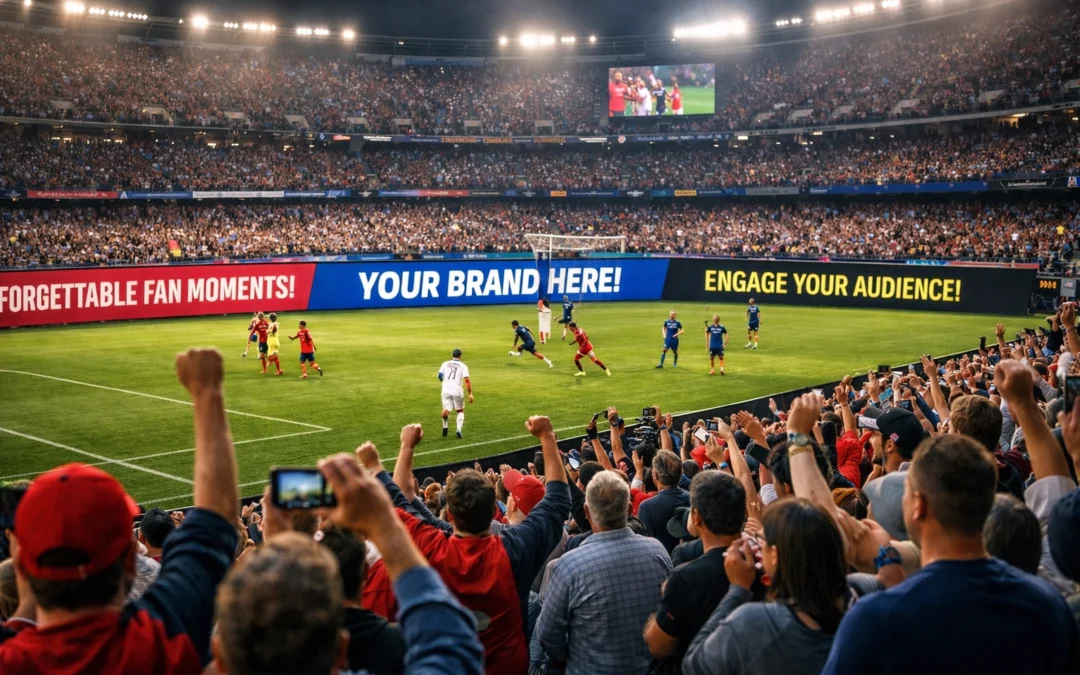
Stadium perimeter advertising has evolved far beyond static logos rotating around the pitch. Today's digital perimeter boards offer creative directors unprecedented opportunities to craft moments that resonate with fans emotionally, drive brand recall, and generate measurable business outcomes. The challenge lies in understanding how to leverage this unique canvas effectively.
Understanding the Dual Audience Dynamic
Stadium perimeter advertising serves two distinct audiences simultaneously: the spectators present in the venue and the millions watching through broadcast cameras. This dual-visibility characteristic requires strategic planning that optimizes for both viewing experiences.

Creative directors must analyze camera angles and broadcast times to ensure brand visibility translates effectively across both mediums. A message that performs well for in-stadium viewers may fall flat on television if positioned poorly relative to primary camera positions. Conversely, content optimized exclusively for broadcast visibility might miss opportunities to engage the live audience.
The technical specifications matter significantly. High-resolution displays ensure crisp, clear visuals regardless of viewing distance or angle. Wide viewing angles enable spectators seated throughout the stadium to engage with content comfortably, while brightness and color calibration ensure broadcast quality remains consistent across different lighting conditions and camera settings.
Prioritizing Motion and Dynamic Storytelling
Static content consistently underperforms in stadium environments where fans expect visual stimulation and movement. Motion-driven creative assets generate higher recall rates and maintain viewer engagement throughout extended match durations.
However, motion should serve storytelling objectives rather than exist purely for animation's sake. Subtle, purposeful animation that guides the viewer's eye and builds narrative momentum outperforms flashy, distracting movement. The goal is to create content that functions as a storytelling tool, delivering emotional resonance beyond simple brand recognition.
Consider these principles when developing motion-based perimeter content:
- Animation duration should align with typical viewer attention spans (20-30 seconds represents industry standard)
- Visual transitions should feel natural rather than jarring, maintaining the flow of the sporting experience
- Color palettes should consider stadium lighting conditions and broadcast color grading
- Typography must remain legible at various distances and viewing angles
- Brand elements should integrate seamlessly into the narrative rather than dominate every frame
Customization Strategies for Maximum Relevance

Digital perimeter technology enables content customization for specific events, teams, and audience demographics. This flexibility represents a fundamental advantage over traditional static signage. Creative directors can develop targeted campaigns that resonate with particular fan bases, align with specific sporting contexts, or respond to real-time developments during matches.
Customization opportunities include:
- Team-specific messaging that acknowledges home or visiting supporters
- Event-tied promotions aligned with championship matches or rivalry games
- Cultural or regional references that resonate with local audiences
- Seasonal campaigns that reflect current market conditions or product launches
- Contextual messaging that responds to game situations or weather conditions
The key lies in planning content libraries that offer sufficient variety while maintaining brand consistency. Developing modular creative systems allows rapid assembly of customized messages without requiring complete redesigns for each event.
Integrating Interactive and Real-Time Elements
Modern stadium perimeter advertising extends beyond passive viewing experiences. Interactive features transform spectators from observers into active participants, deepening engagement and creating memorable brand interactions.
Successful interactive strategies include:
- Live social media integration displaying fan-generated content with branded hashtags
- Real-time statistics and data visualizations that enhance the sporting experience
- QR codes directing fans to exclusive offers, e-commerce channels, or content extensions
- Product demonstrations showcasing brand offerings in dynamic, attention-grabbing formats
- Gamification elements that reward fan participation with prizes or recognition
These interactive components serve dual purposes. They enhance the fan experience by adding layers of engagement beyond the core sporting event. Simultaneously, they generate valuable data on audience behavior, preferences, and conversion patterns that inform future campaign optimization.
Cross-Channel Integration for Extended Impact

The stadium experience represents one touchpoint within broader omnichannel marketing strategies. Savvy creative directors extend perimeter advertising impact beyond the venue through coordinated digital and social media initiatives.
Geo-fencing technology enables retargeting of fans who attended matches where specific perimeter advertising appeared. These audiences receive follow-up messaging on social platforms, reinforcing brand exposure and driving conversion actions. The combination of physical presence at the stadium and subsequent digital engagement creates powerful brand momentum.
Additional cross-channel tactics include:
- Coordinating influencer presence in stadium locations where perimeter advertising appears visibly in their content
- Offering exclusive discount codes displayed on perimeter boards that fans can redeem through mobile applications
- Creating branded hashtags promoted through perimeter advertising and amplified across social channels
- Developing complementary content for pre-match and post-match engagement that references stadium advertising creative
- Building retargeting audiences based on device IDs detected within stadium geofences
This integrated approach transforms single-moment exposures into sustained engagement journeys that move fans through awareness, consideration, and conversion stages.
Technical Optimization and Rotation Strategies
The technical execution of stadium perimeter advertising directly impacts campaign effectiveness. Creative directors must collaborate closely with media planning teams to select optimal rotation strategies that align with campaign objectives.
Three primary rotation approaches serve different strategic goals:
Full Rotation: A single sponsor dominates all available inventory, creating maximum contact intensity and brand dominance. This approach suits campaigns prioritizing absolute visibility and recall over cost efficiency.
Balanced Rotation (4:4): Four sponsors share inventory equally, balancing quality exposure with reasonable contact frequency. This represents the most common approach for campaigns seeking optimal impact within budget constraints.
Multi-Sponsor Rotation: Up to 14 sponsors share inventory, maximizing reach across diverse brand exposures. This approach suits campaigns prioritizing breadth over intensity or testing new markets with lower initial investment.

Beyond rotation strategy, creative directors should consider:
- Slot duration (20-30 seconds provides optimal balance between impact and inventory efficiency)
- Frequency capping to avoid viewer fatigue across multi-match campaigns
- Contextual placement relative to match timing (pre-game, halftime, late-match scenarios)
- Coordination with broadcast commercial breaks to maximize total exposure
- A/B testing creative variations across different matches or venues
Measuring Success and Optimizing Performance
Stadium perimeter advertising offers multiple measurement frameworks that enable performance assessment and ongoing optimization. Brand lift studies quantify shifts in awareness, consideration, and preference among exposed audiences compared to control groups. Attribution modeling connects stadium exposures to downstream conversion behaviors, establishing clear ROI metrics.
Device-level tracking identifies fans present during matches and monitors their subsequent behaviors across digital channels. This data reveals which creative approaches, rotation strategies, and interactive elements drive the strongest engagement and conversion outcomes.
The most successful campaigns treat stadium perimeter advertising not as isolated placements but as components within integrated brand-building strategies. When creative excellence combines with strategic media planning and rigorous measurement, stadium perimeter advertising creates genuinely unforgettable fan moments that deliver measurable business results.
Creative directors who master these principles position their brands to capitalize on one of sports marketing's most powerful canvases, creating emotional connections with passionate audiences in environments where brand receptivity runs exceptionally high. The opportunity exists not merely to display messages but to craft experiences that fans remember, discuss, and act upon long after the final whistle.