
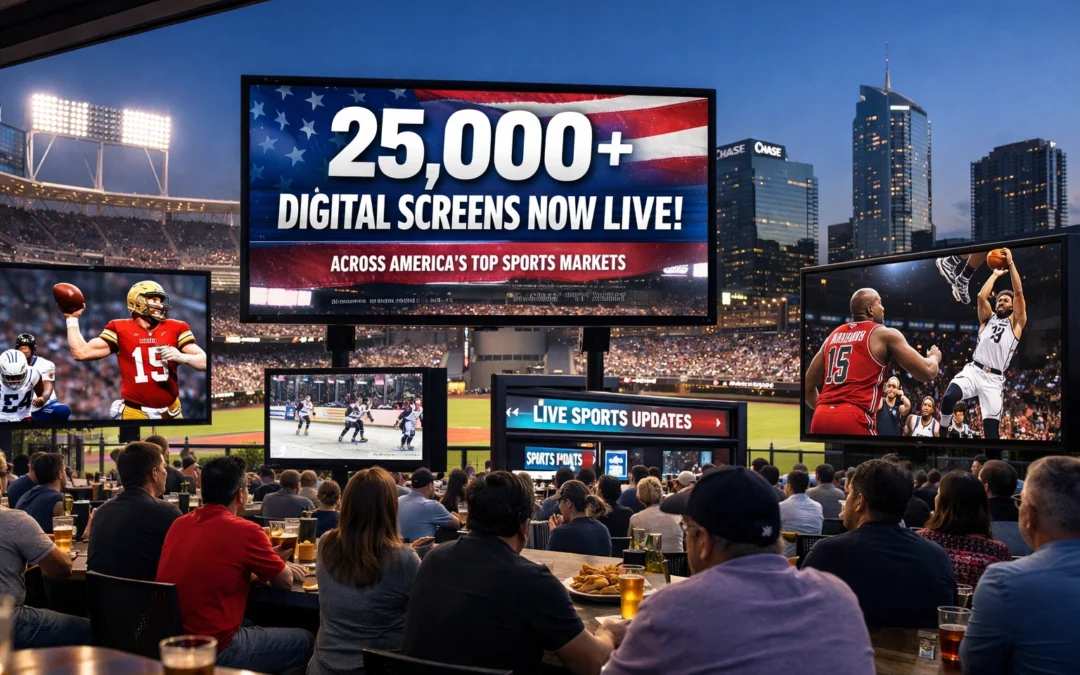
OOH Sports has reached a significant infrastructure milestone with the activation of more than 25,000 digital screens across major sports markets throughout the United States. The expanded network positions the company as one of the largest sports-focused digital out-of-home advertising platforms in North America, delivering unprecedented reach to engaged audiences in and around sports and entertainment environments.
The network expansion represents a strategic buildout across key markets where sports fans congregate, watch, and celebrate. Digital screens now blanket high-traffic zones including entertainment districts, retail corridors, transit hubs, hospitality venues, and dining destinations adjacent to major sports facilities.
Network Coverage and Geographic Reach
The 25,000+ screen network spans the nation's most valuable sports markets, creating comprehensive coverage that captures fan behavior throughout the entire event journey. Screens are strategically positioned to intercept audiences during natural engagement windows: before fans arrive at venues, during pre-game activities, throughout post-game celebrations, and along commute routes to and from events.

Geographic distribution emphasizes markets with multiple professional franchises, college athletics programs, and year-round sports activity. The network architecture ensures consistent brand presence across NFL cities, NBA markets, NHL territories, MLB regions, and college sports strongholds. This geographic strategy allows advertisers to activate campaigns nationally while maintaining the flexibility to execute hyperlocal targeting based on specific venue schedules and team performance.
Coverage extends beyond immediate venue proximity. Digital screens populate commercial corridors where fans gather for pre-game meals, post-game celebrations, and sports viewing parties. Transit routes connecting residential areas to sports districts receive concentrated screen placement, capturing audiences during the commute journey when engagement levels peak.
Technology Infrastructure and Programmatic Capabilities
The expanded network operates on a fully programmatic infrastructure, enabling real-time campaign deployment, dynamic creative optimization, and performance-based bidding. Media buyers access inventory through major demand-side platforms and programmatic exchanges, applying the same targeting parameters and optimization strategies used in digital media campaigns.
Programmatic capabilities include daypart targeting, venue-specific activation, team-based triggers, and weather-responsive creative. Advertisers can program campaigns to activate only during game days, adjust messaging based on live scores, or shift creative based on local weather conditions affecting outdoor events and viewing behavior.

Device ID capture technology enables omnichannel campaign orchestration. Screens throughout the network collect anonymized mobile device identifiers from passing foot traffic, building retargeting audiences for follow-up messaging across mobile display, connected TV, and social media platforms. This technology bridges physical and digital advertising, extending initial DOOH impressions into multi-touch attribution models.
The network supports dynamic creative feeds, allowing brands to rotate multiple messages throughout a campaign flight based on performance signals. Creative can adapt to time of day, day of week, proximity to major sporting events, or audience composition data derived from mobile device signals.
Strategic Advantages for Media Buyers
The scale of 25,000+ screens solves a persistent challenge in sports marketing: achieving broad reach while maintaining relevance to highly engaged audiences. Traditional venue-based advertising delivers captive attention but limited frequency and reach. The expanded OOH Sports network combines the contextual relevance of sports environments with the scale necessary to drive measurable brand lift and conversion outcomes.
Sports audiences captured through this network demonstrate significantly higher engagement than general population samples. Individuals in and around sports environments exhibit elevated attention levels, longer dwell times in commercial zones, and increased receptivity to brand messaging associated with positive experiences. Research consistently shows that advertising encountered during leisure and entertainment activities generates stronger recall and more favorable brand associations than messaging delivered during routine daily activities.

The network structure supports campaign strategies across the marketing funnel. Brand awareness campaigns benefit from high-frequency exposure across multiple touchpoints. Consideration-stage messaging can target audiences based on behavioral signals, such as proximity to retail locations or concentration in specific commercial districts. Conversion-focused campaigns leverage device ID capture for retargeting audiences with location-specific offers and calls to action.
Media buyers gain access to standardized measurement frameworks that quantify campaign impact through brand lift studies, foot traffic attribution, and device-level conversion tracking. Third-party verification partners provide independent measurement of impressions, reach, and frequency, ensuring accountability and enabling optimization based on performance data rather than proxy metrics.
Market Positioning and Industry Context
Digital out-of-home advertising continues to capture increasing share of total media budgets, with industry projections showing DOOH approaching half of all out-of-home spending within the next several years. Sports-focused DOOH represents one of the fastest-growing segments within this category, driven by advertiser demand for premium, contextually relevant environments that reach difficult-to-access demographics.
The 25,000+ screen milestone positions OOH Sports at the intersection of two powerful trends: the digitization of traditional out-of-home media and the premiumization of sports advertising inventory. While general DOOH networks offer scale, sports-specific networks deliver the audience quality and engagement levels that justify premium pricing and drive measurable ROI.
Advertisers increasingly recognize that sports audiences represent high-value consumer segments across categories. Sports fans demonstrate above-average household incomes, higher brand loyalty, and greater willingness to pay premium prices for products and services aligned with their interests and identity. Reaching these audiences in authentic sports environments amplifies message impact and brand affinity in ways that generic media placements cannot replicate.
Network Applications Across Advertiser Categories
The expanded network serves diverse advertiser categories with distinct campaign objectives. Beverage brands activate game-day messaging across entertainment districts, driving immediate purchase consideration in nearby retail and hospitality venues. Automotive advertisers deploy awareness campaigns that build consideration throughout extended sports seasons, leveraging the association between sports and performance. Financial services firms target affluent sports audiences with wealth management and premium credit card offers during major sporting events.

Regional and national retailers use the network to drive foot traffic to nearby store locations, activating campaigns based on proximity targeting and game-day schedules. Quick-service restaurants execute daypart-specific campaigns promoting pre-game meals and post-game specials. Technology brands align product launches with major sports moments, creating cultural relevance through strategic timing and contextual placement.
The network supports both national brand campaigns and hyperlocal activations. National brands achieve coast-to-coast reach while maintaining market-specific relevance through localized creative. Regional brands access premium inventory in their core markets without the budget requirements of national campaigns. Small businesses in sports districts activate tactical campaigns during peak traffic periods, competing effectively against larger advertisers through precise targeting and strategic timing.
Operational Excellence and Inventory Management
Network operations prioritize uptime reliability, creative quality control, and inventory yield optimization. All screens undergo regular maintenance cycles to ensure consistent performance during peak advertising periods. Technical infrastructure includes redundant systems, remote monitoring, and rapid response protocols that minimize downtime and maintain advertiser expectations.
Creative specifications follow industry-standard formats while accommodating high-resolution assets that maximize visual impact on large-format displays. The platform supports both static and motion creative, with file-handling systems that process submissions rapidly and maintain visual fidelity across the entire network. Quality control processes verify that creative meets technical specifications before campaign activation, preventing delivery issues and maximizing campaign effectiveness.
Inventory management balances advertiser demand with audience experience, preventing ad overload while maximizing revenue per screen. Sophisticated algorithms optimize the mix of advertisers, creative rotation frequency, and message sequencing to maintain viewer attention and prevent creative fatigue.
Looking Forward
The 25,000+ screen network establishes a foundation for continued expansion and technological innovation. As digital out-of-home advertising evolves, the infrastructure supports integration with emerging capabilities including artificial intelligence-driven creative optimization, enhanced attribution modeling, and deeper integration with broader marketing technology ecosystems.
The sports-focused network addresses fundamental shifts in media consumption and advertising effectiveness. As audiences fragment across digital channels and traditional media loses effectiveness, location-based advertising in premium environments delivers measurable results that justify continued investment. The combination of scale, targeting precision, and contextual relevance positions the OOH Sports network as essential infrastructure for brands seeking to reach valuable audiences in authentic, engaging environments.
For media buyers and brand marketers navigating an increasingly complex advertising landscape, the expanded network offers a proven channel that delivers reach, engagement, and measurable outcomes. The 25,000+ screens represent more than physical infrastructure: they constitute a strategic platform for connecting brands with passionate audiences during moments that matter most.