
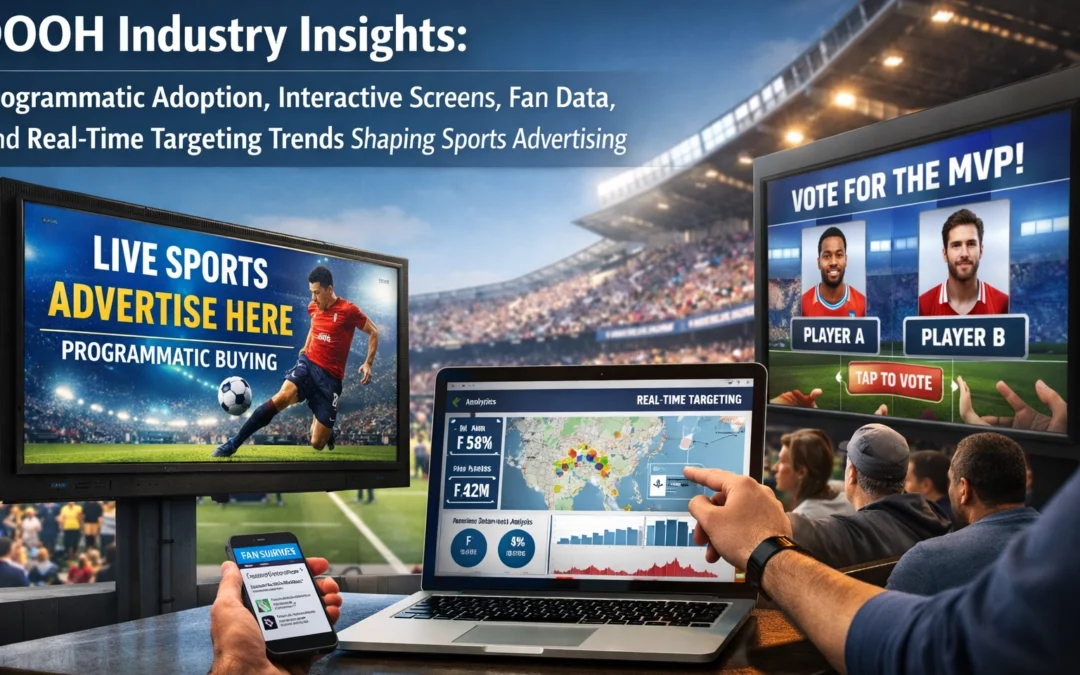
The digital out-of-home landscape continues its rapid transformation from static billboards to dynamic, data-driven advertising channels. For sports marketers, this evolution unlocks unprecedented opportunities to engage fans with precision, flexibility, and measurable impact. Recent industry shifts reveal how programmatic capabilities, interactive technology, and real-time optimization are reshaping the way brands connect with sports audiences.
Programmatic DOOH Transforms Sports Advertising into Performance Marketing
Programmatic digital out-of-home advertising has fundamentally altered the economics and execution of sports marketing campaigns. Digital OOH now represents a significant and growing portion of total out-of-home advertising spend, with projections indicating continued double-digit growth rates. This shift reflects more than technological advancement, it demonstrates programmatic DOOH's emergence as a legitimate performance marketing channel rather than simply a branding medium.

The transition from static to programmatic delivery enables advertisers to purchase inventory, update creative, and optimize campaigns with the same agility available in other digital channels. Sports marketers no longer face the multi-week lead times and fixed placements that characterized traditional billboard campaigns. Instead, programmatic platforms provide access to inventory across venue types, geographic markets, and audience segments through unified buying interfaces.
This operational flexibility carries strategic implications. Brands can test creative variations across markets, adjust spending based on campaign performance, and shift budgets toward high-performing placements without contractual limitations. The programmatic model removes barriers to entry that previously restricted sports advertising to brands with substantial budgets and long planning horizons.
Real-Time Campaign Adaptation Responds to Live Event Dynamics
Programmatic infrastructure enables a capability particularly valuable in sports marketing: real-time message adaptation based on game events and contextual factors. Advertisers can now trigger creative updates based on scoring plays, weather conditions, crowd movement patterns, and competitive outcomes.

This responsiveness transforms campaign strategy. A sports betting operator can shift messaging from pre-game odds to live betting opportunities as events unfold. A beverage brand can adjust creative based on temperature fluctuations throughout a game day. An athletic apparel company can celebrate championship victories with congratulatory messaging within minutes of final whistles.
Dynamic Creative Optimization extends this concept further by automatically adjusting messaging based on venue characteristics and daypart patterns. A streaming service promoting fight content might deploy high-energy creative in sports bars during evening hours while emphasizing athlete discipline narratives in fitness centers during morning periods. This contextual adaptation occurs without manual intervention, driven by automated rules and audience data.
The measurement capabilities accompanying real-time optimization provide closed-loop attribution. Device ID tracking connects DOOH exposure to downstream actions, including website visits, app downloads, and retail foot traffic. Brand lift studies quantify awareness and consideration shifts among exposed audiences compared to control groups. These metrics enable optimization cycles similar to digital advertising, with campaigns adjusted based on performance data rather than assumptions.
Interactive Elements Convert Passive Impressions into Active Engagement
Interactive technology additions transform DOOH from one-way broadcast to two-way exchange. QR codes, mobile prompts, and live polling mechanisms invite audiences to engage directly with advertised content, creating immediate response opportunities and first-party data collection pathways.
These interactive elements serve multiple strategic functions. They provide measurable engagement metrics beyond impression delivery, with scan rates and response volumes indicating genuine audience interest. They enable immediate conversion actions, directing interested consumers to product pages, ticket purchasing interfaces, or promotional offers. Most significantly, they facilitate opt-in data capture, allowing brands to build direct relationships with engaged audience members.
The data collected through interactive DOOH supports subsequent targeting and personalization. A fan who scans a QR code to access exclusive content provides both explicit interest signals and device identification. That individual becomes addressable across connected TV, mobile display, and social media platforms. The DOOH interaction initiates a cross-channel relationship rather than serving as an isolated touchpoint.
Sports environments prove particularly conducive to interactive DOOH deployment. Fans attending events arrive with heightened engagement levels and time availability during pre-game periods, halftime intervals, and post-game departures. The concentrated audience attention creates optimal conditions for prompting actions that require brief but focused interaction.
Fan Response Data Validates DOOH Effectiveness in Sports Marketing
Measurement studies consistently demonstrate strong recall and action rates for out-of-home advertising in sports contexts. Nearly six in ten fans recall seeing OOH advertising at major sporting events, indicating high visibility and message penetration. More significantly, over 90 percent of fans who notice these advertisements report taking follow-up actions, from searching for additional information to making immediate purchases.

The economic impact extends beyond direct response. Approximately 99 percent of fans who attend events after seeing OOH advertising spend money in local establishments, connecting venue visits to broader economic activity in surrounding commerce zones. This spending pattern creates opportunities for hospitality, retail, and entertainment brands to capture consumers during high-intent purchasing windows.
Social amplification represents another measurable outcome. More than four in ten consumers discuss sporting events with friends or family after encountering OOH advertisements, extending message reach through word-of-mouth channels. This organic amplification multiplies paid impressions without additional media investment.
Attribution capabilities now rival those available in purely digital channels. Device ID tracking connects DOOH exposure to subsequent online and offline behaviors. Foot traffic analysis measures venue visits among exposed versus unexposed populations. Sales lift studies compare purchase patterns between test and control groups. These measurement approaches provide concrete performance validation beyond traditional awareness metrics.
Campaign results demonstrate the performance potential. Brands deploying programmatic DOOH in targeted sports marketing initiatives report substantial lifts in purchase consideration, often exceeding 70 percent increases versus baseline measurements. Brand perception metrics show similar improvements, with positive sentiment ratings climbing significantly among audiences exposed to contextually relevant sports DOOH placements.
Omnichannel Integration Captures Fragmented Sports Viewership
Sports consumption patterns have fragmented across linear television, streaming platforms, mobile devices, and social media channels. This dispersion complicates efforts to achieve broad reach among sports audiences through any single media channel. DOOH addresses this challenge by capturing audiences in physical spaces where they concentrate during sporting events, creating a complementary reach vehicle to screen-based media.
The strategic value lies in DOOH's ability to reach sports fans regardless of viewing platform preferences. Whether an individual watches games on cable television, streaming services, or mobile apps matters less when that person passes through transit corridors, entertainment districts, or retail zones during game periods. DOOH placements in these high-traffic locations deliver exposure across audience segments that prove difficult to reach efficiently through fragmented digital inventory.
Device identification capabilities enable omnichannel campaign orchestration. Audiences exposed to DOOH creative become addressable through retargeting across connected TV, mobile display, and social media platforms. This sequential messaging reinforces initial DOOH exposure and provides multiple touchpoints throughout consumer decision journeys. The combined impact of physical and digital exposures exceeds the additive effect of isolated channel deployments.
Challenger Brands Access Sports Audiences Without Official Sponsorships
Programmatic buying democratizes access to sports audiences by eliminating the requirement for official sponsorship agreements. Brands can now reach fans through targeted DOOH placements surrounding venues, in entertainment districts, and along transit routes without negotiating multi-year partnership deals or paying premium sponsorship fees.
This accessibility shift creates opportunities for smaller brands and category challengers to compete for sports audience attention. A craft beverage brand can target fans attending games through strategically placed DOOH inventory rather than competing for official league sponsorships against category leaders with substantially larger budgets. An emerging athletic apparel company can reach marathon participants through race weekend DOOH deployments without securing official event partnerships.
The programmatic model also enables testing and optimization before committing to long-term sponsorship agreements. Brands can validate audience response and message effectiveness through targeted DOOH campaigns, using performance data to inform decisions about deeper sports marketing investments. This test-and-learn approach reduces risk and provides empirical evidence supporting larger strategic commitments.
For established brands with existing sponsorship portfolios, programmatic DOOH provides tactical flexibility to amplify official partnerships and reach audiences beyond contracted inventory. Sponsor brands can extend message delivery throughout surrounding areas, multiplying the impact of venue-based placements through complementary off-site advertising.
Strategic Implications for Sports Marketers
The convergence of programmatic automation, interactive technology, and measurement capabilities positions DOOH as a critical component of modern sports marketing strategies. The channel combines the broad reach and contextual relevance of traditional out-of-home advertising with the targeting precision, message flexibility, and performance accountability of digital media.
Sports marketers evaluating DOOH investments should prioritize partners offering programmatic buying capabilities, device-level targeting, real-time creative optimization, and cross-channel measurement. Campaign planning should account for DOOH's role within broader omnichannel strategies, using physical placements to initiate consumer journeys that continue across digital touchpoints.
The opportunity extends beyond major leagues and marquee events. Regional sports properties, college athletics, and emerging sports categories present high-value targeting opportunities through DOOH deployments that reach passionate local fan bases. The programmatic model makes these focused campaigns economically viable at budget levels previously insufficient for meaningful sports advertising presence.
As digital out-of-home infrastructure continues expanding and programmatic capabilities mature, the channel's role in sports marketing will grow correspondingly. Brands that develop expertise in programmatic DOOH deployment, measurement, and optimization position themselves to capitalize on this evolution and reach sports audiences with increasing efficiency and impact.