
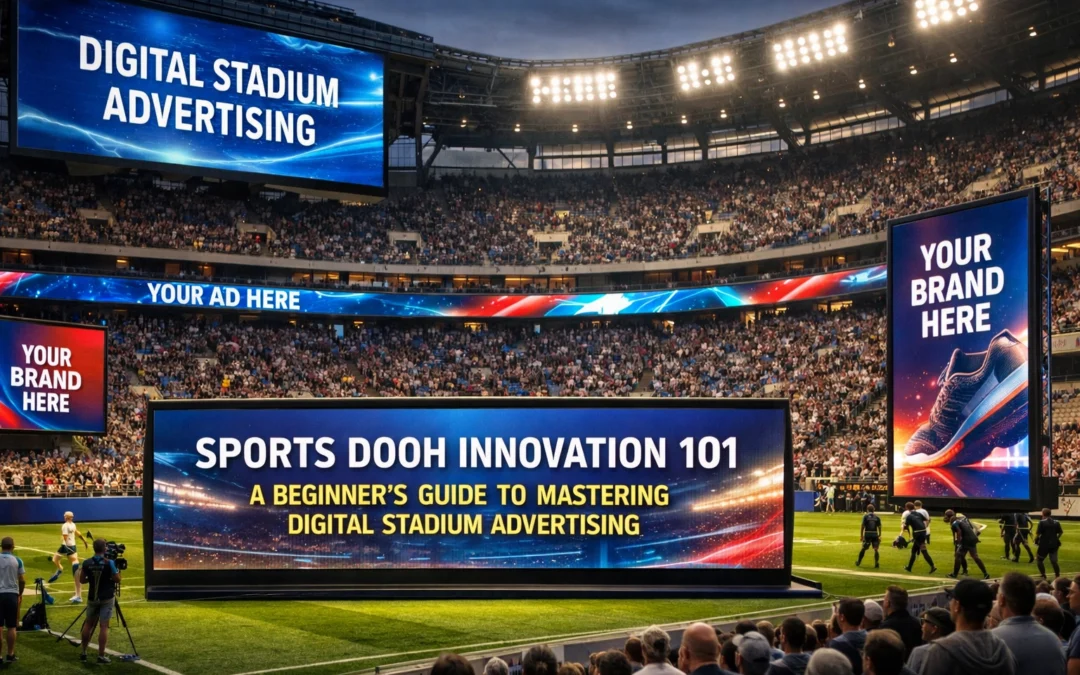
Digital out-of-home (DOOH) advertising represents a significant evolution in sports marketing, combining the reach of traditional outdoor advertising with the precision and flexibility of digital technology. For media buyers and brand managers seeking to connect with sports fans, understanding DOOH's capabilities and strategic applications has become essential.
DOOH in the sports context involves deploying digital screens in physical locations where sports fans concentrate before, during, and after games. Unlike traditional static billboards, these digital displays deliver targeted, dynamic content that can be updated instantly based on game action, audience behavior, or campaign performance. The fundamental advantage lies in reaching highly engaged audiences at moments when their attention and emotional investment peak.
Core DOOH Placements in Sports Advertising
Strategic placement determines DOOH campaign effectiveness. Sports-focused DOOH inventory typically includes several high-value locations:

Stadium and Arena Environments
- Digital screens inside venues, including concourses, entrance areas, and sightlines
- Perimeter boards visible during broadcasts
- Premium suite and hospitality area displays
Transportation and Transit Routes
- Highway billboards along routes leading to stadiums
- Digital panels at bus shelters and transit stations
- Airport screens in cities hosting major sporting events
Fan Congregation Areas
- Sports bars and restaurants displaying games
- Public viewing areas and fan zones
- Residential lobbies in neighborhoods with high fan density
- Retail locations near stadiums
The concentration of passionate, engaged audiences around game-day events transforms surrounding digital inventory into premium advertising real estate. Fans traveling to venues, gathering to watch games, or celebrating victories represent a captive audience with elevated emotional states, making advertising messages more memorable and impactful.
Real-Time Dynamic Capabilities
DOOH's most powerful innovation for sports advertising involves real-time content updates that respond to live game action. This capability allows advertisers to maintain relevance throughout the fan experience, adjusting messaging based on scores, highlights, or outcomes.

Dynamic creative execution might include:
- Score-triggered messaging that celebrates home team victories
- Player-specific content activated when star athletes make significant plays
- Weather-responsive creative for outdoor viewing events
- Time-sensitive offers valid only during specific game moments
A restaurant chain, for example, might display "Celebrate the win with $1 appetizers tonight only!" immediately following a home team victory, capitalizing on fan euphoria and proximity to the venue. This level of responsiveness keeps advertising fresh and aligned with audience emotional states, significantly improving engagement compared to static messaging.
The technical infrastructure supporting real-time DOOH involves programmatic platforms that automatically update creative based on predetermined triggers or manual adjustments by campaign managers monitoring games in progress.
Precision Targeting Strategies
DOOH platforms enable audience targeting with precision previously unavailable in traditional outdoor advertising. Media buyers can deploy multiple targeting methodologies to ensure message delivery to desired audiences:
Geotargeting
Geotargeting displays location-specific content on screens aligned with local audience interests. A beverage brand might show different creative featuring the home team in each market, personalizing messaging at scale across multiple venues simultaneously.
Point-of-Interest (POI) Targeting
POI targeting surrounds consumers with coordinated messaging around key locations. For sports campaigns, this involves identifying screens within specific distances of stadiums, creating a messaging perimeter that captures fans during their journey to and from events.
Dayparting and Event-Based Activation
Timing ad delivery to align with game schedules maximizes efficiency. Campaigns can activate only during specific windows, such as two hours before kickoff through two hours after final whistle, ensuring budget allocation to peak engagement moments.
Audience Segment Targeting
Advanced DOOH platforms incorporate mobile device data and demographic information to target specific audience segments. Luxury automotive brands might target screens in affluent neighborhoods near premium seating sections, while mass-market consumer goods target broader fan base locations.
Omnichannel Integration
Maximum campaign impact requires integrating DOOH within broader marketing strategies that mirror how fans actually engage with sports across multiple touchpoints.

Upper-Funnel Awareness Building
Connected TV (CTV) and social media campaigns build brand recognition before major sporting events, priming audiences for DOOH exposures. Pre-game advertising across streaming platforms and social feeds establishes brand presence in fan consciousness.
Peak Engagement Through DOOH
High-impact DOOH placements activate when excitement and foot traffic reach maximum levels. Screens near stadiums, in fan zones, or along transit routes deliver messaging at moments when fans are most emotionally invested and receptive.
Post-Game Retargeting
Following DOOH exposure, retargeting campaigns across CTV, digital audio, and display advertising maintain brand presence and drive conversions. Device IDs exposed to DOOH screens create retargeting audiences for follow-up messaging across other digital channels.
This coordinated approach recognizes that sports fans interact with brands across physical and digital environments throughout the game-day experience. Unified messaging across touchpoints reinforces brand recall and provides multiple conversion opportunities.
Strategic Planning and Timing Considerations
Successful DOOH campaigns in sports require advance planning and strategic flexibility. High-demand screens near stadiums or in fan-heavy zones often sell out months before major events, particularly for playoffs, championships, or marquee matchups. Media buyers seeking guaranteed placement during peak moments must secure inventory early through programmatic guaranteed deals or direct buys.
However, programmatic platforms also enable real-time inventory activation, allowing brands to capitalize on unexpected opportunities. A team's surprise playoff run or a breaking sports story might create sudden advertising opportunities that nimble brands can exploit through programmatic bidding.
Budget allocation strategies vary based on brand objectives and scale:
- Enterprise brands typically secure season-long commitments for consistent presence throughout fan experiences
- Regional brands target specific game dates or playoff series aligned with promotional cycles
- Local businesses focus on geo-specific inventory in neighborhoods or venues where target customers concentrate, achieving cost efficiency through precise targeting rather than broad reach
Measurement and ROI Verification
DOOH has evolved from an unmeasurable medium to one offering robust attribution and performance metrics. Modern measurement methodologies track multiple performance indicators:

Exposure Verification
Location technology confirms when and where ads displayed, documenting audience size and demographic composition through mobile device data from individuals passing screens during campaign flights.
Attribution and Foot Traffic
Device IDs exposed to DOOH screens enable tracking of subsequent behaviors, including venue visits, retail location traffic, or website visits. This attribution connects DOOH exposure to downstream actions, quantifying direct campaign impact.
Brand Lift Studies
Controlled studies comparing brand metrics among exposed versus non-exposed audiences measure shifts in awareness, consideration, preference, and purchase intent attributable to DOOH campaigns.
Cross-Channel Amplification
Research demonstrates that outdoor advertising amplifies reach when paired with other media channels, extending combined reach above 90 percent in integrated campaigns. DOOH specifically enhances digital campaign performance by priming audiences for subsequent online exposures.
These measurement capabilities transform DOOH from a brand-building tool with uncertain ROI into an accountable performance channel with clear attribution paths.
Getting Started with Sports DOOH
For media buyers and brand managers beginning DOOH exploration in sports marketing, several foundational steps ensure effective campaign launches:
Establish clear objectives that align DOOH strengths with business goals. DOOH excels at building awareness, driving foot traffic, and creating event-specific urgency, making it ideal for product launches, promotional events, or brand positioning campaigns.
Identify high-value inventory by mapping target audience behaviors around sporting events. Understanding where fans travel, gather, and celebrate helps prioritize screen locations delivering maximum exposure at optimal moments.
Develop dynamic creative that capitalizes on DOOH's real-time capabilities. Static messaging underutilizes the medium's potential, while responsive creative that adapts to game action and fan emotions maximizes engagement.
Integrate DOOH within omnichannel strategies rather than treating it as a standalone channel. Coordination with digital campaigns creates synergistic effects that exceed isolated channel performance.
Partner with experienced vendors who understand sports marketing nuances and provide measurement capabilities that verify performance. Technology platforms, creative partners, and measurement providers all contribute to campaign success.
Digital out-of-home advertising in sports environments offers media buyers and brand managers powerful capabilities for reaching passionate, engaged audiences at moments when receptivity peaks. Understanding placement strategies, dynamic capabilities, targeting methodologies, and measurement approaches enables effective deployment of this evolving channel within comprehensive sports marketing campaigns.