
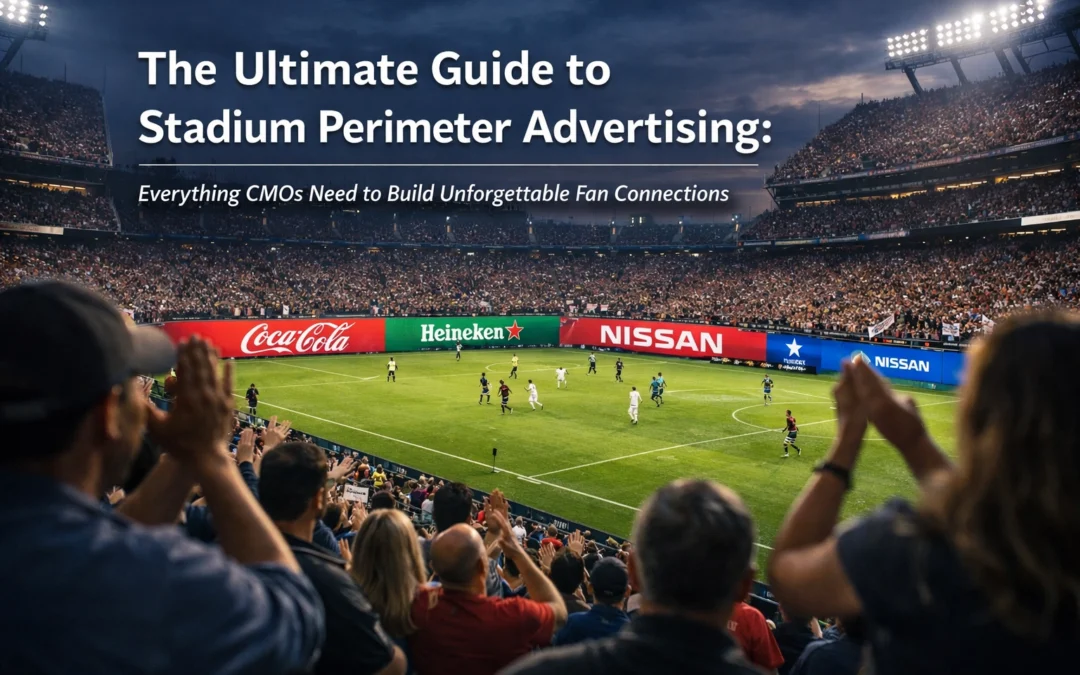

Stadium perimeter advertising represents one of the most underutilized yet powerful channels in sports marketing. The boards and LED displays running along the field's edge deliver brand exposure to two distinct audiences simultaneously: fans in stadium seats and millions watching from home. For CMOs and creative directors seeking measurable brand lift and sustained visibility, this placement offers advantages that digital banners and social media campaigns struggle to match.
Why Perimeter Advertising Delivers Exceptional Returns
The strategic value of perimeter placements stems from continuous camera capture during live broadcasts. Every play, goal, and pivotal moment features brand messaging in the frame. This repeated exposure builds brand recall through natural viewing behavior rather than forced interruption.
Modern perimeter systems have evolved far beyond static signage. Dynamic LED technology enables brands to display animations, rotate messaging, and adapt content in real time. Virtual Replacement Technology allows global brands to target specific geographic markets while stadium attendees see localized messaging, maximizing relevance across diverse viewer segments.

The dual-audience model creates compounding value. In-stadium fans experience the energy of live sports while absorbing brand messages throughout the event. Television audiences, often numbering in the millions for major sporting events, receive the same exposure through broadcast feeds. This combination of physical presence and broadcast reach positions perimeter advertising as a high-impact channel for brand building.
Visibility Advantages That Set Perimeter Advertising Apart
Perimeter LED displays offer brightness and clarity that performs even in challenging stadium environments. High resolution and superior color reproduction ensure messages remain sharp and readable from any seat or camera angle. The continuous canvas running the length of the field captures attention from every sightline, creating unavoidable exposure during gameplay.
Unlike traditional out-of-home formats constrained by location or viewing angles, stadium perimeter advertising benefits from the directed attention of engaged audiences. Fans attend sporting events with heightened emotional investment, creating a receptive mindset for brand messages. This context transforms passive exposure into active engagement.
The physical scale of perimeter displays amplifies impact. Large-format messaging visible from hundreds of feet away reinforces brand presence without requiring close proximity. This visibility extends beyond the stadium through broadcast coverage, print media, and social sharing, multiplying impressions far beyond the initial placement cost.
Strategic Placement Considerations for Maximum Impact
Prime advertising locations command premium rates for valid reasons. Positioning near midfield or goal areas ensures maximum camera time during critical game moments. These high-action zones deliver disproportionate value through concentrated exposure during plays that generate the most viewer attention.
Effective stadium advertising strategy extends beyond perimeter boards to include complementary placements:
- Scoreboards and digital screens positioned in high-traffic areas
- Concourse walkways where fans congregate during breaks
- Exterior walls and wrap advertising that reach audiences before and after events
- Fan zones that create opportunities for interactive brand experiences
- Seating areas including seat covers, cup holders, and aisle decals
This multi-point approach reinforces brand messaging through varied touchpoints, increasing recall and creating a cohesive brand presence throughout the venue. CMOs should consider how perimeter advertising integrates with broader activation strategies to maximize return on investment.

Implementation and Content Delivery Best Practices
Design principles for perimeter advertising prioritize clarity and impact. Effective messaging follows a minimalist approach: logos and company names display prominently at large formats with minimal text. Strong contrasts and bright colors ensure visibility from distance and maintain readability during fast-paced action.
Materials must withstand weather exposure and frequent handling. UV direct printing processes deliver durability while maintaining color vibrancy throughout campaign duration. This technical consideration protects investment and ensures consistent brand representation regardless of environmental conditions.
Modern rotation formats offer flexible visibility options tailored to campaign objectives:
- 30-second rotations provide standard display length for advertisements, balancing exposure with rotation variety
- 2:2 rotation systems feature four sections with two sponsors each, optimizing visibility quality
- Multi-session formats accommodate up to 14 sponsors simultaneously with equal-sized sections, guaranteeing consistent contact figures across advertiser portfolios
The choice between rotation formats depends on budget allocation, competitive considerations, and campaign goals. Exclusive placements deliver undivided attention but command premium pricing. Shared rotations reduce cost while maintaining substantial exposure levels.
Building Meaningful Fan Connections Through Integrated Strategy
Stadium perimeter advertising succeeds when brands move beyond passive messaging to create emotional connections with sports enthusiasts. Branded fan zones complement perimeter placements by offering interactive games, product samples, and activities that deepen engagement beyond visual exposure.
Dynamic content timing enables sophisticated messaging strategies. Brands can run specific offers during the first half and shift to different messaging in the second half, adapting to fan engagement patterns and game momentum. This flexibility allows real-time optimization based on audience response and game context.

The integration of AI and data analytics transforms perimeter advertising from broadcast medium to smart, interactive platform. Brands can track viewer engagement patterns, measure ad effectiveness through brand lift studies, and refine campaigns based on performance data. This measurement capability addresses a traditional weakness of out-of-home advertising by providing concrete ROI metrics comparable to digital channels.
Investment Considerations and Cost Structure
Stadium advertising investment varies based on multiple factors. Stadium size and popularity establish baseline pricing, with major league venues commanding premium rates compared to minor league or collegiate facilities. Specific location within the venue creates pricing tiers, as pitch-proximity placements deliver superior camera time and visibility.
Campaign duration affects total investment and per-game costs. Season-long commitments typically offer volume discounts compared to single-game activations. Event type creates additional pricing variation, with regular season matches priced differently than playoff games, cup finals, or international competitions that attract larger audiences.
LED perimeter systems offer modular designs enabling quick installation with minimal setup time. This operational efficiency reduces activation costs and allows brands to execute campaigns with shorter lead times compared to traditional sponsorship packages requiring extensive advance planning.
The return on investment calculation should account for both direct exposure metrics and indirect brand benefits. Perimeter placements generate impressions through live attendance, broadcast coverage, highlight reels, social media sharing, and news coverage. This extended reach amplifies the value of initial placement investment.
The Evolution Toward Data-Driven Sports Marketing
Modern perimeter advertising represents a fundamental shift in sports marketing methodology. Static signage has given way to dynamic, responsive systems that adapt to audience behavior and campaign performance in real time. This evolution positions stadium advertising as a sophisticated channel comparable to programmatic digital media.

Brands leveraging perimeter advertising gain access to engaged, emotionally invested audiences in contexts that enhance message receptivity. The combination of physical presence, broadcast reach, and measurement capability creates a compelling value proposition for CMOs seeking to build lasting brand connections.
The sports marketing landscape continues to evolve, but the fundamental appeal of stadium perimeter advertising remains constant: authentic exposure to passionate audiences during moments of peak engagement. For brands willing to invest in strategic placement and creative excellence, this channel delivers measurable results that justify premium positioning in marketing mix allocation.
Stadium perimeter advertising provides creative directors and CMOs with a proven platform for building brand awareness, driving purchase consideration, and creating emotional connections with target audiences. The key lies in strategic planning, creative execution, and integration with broader marketing initiatives to maximize impact across all customer touchpoints.