
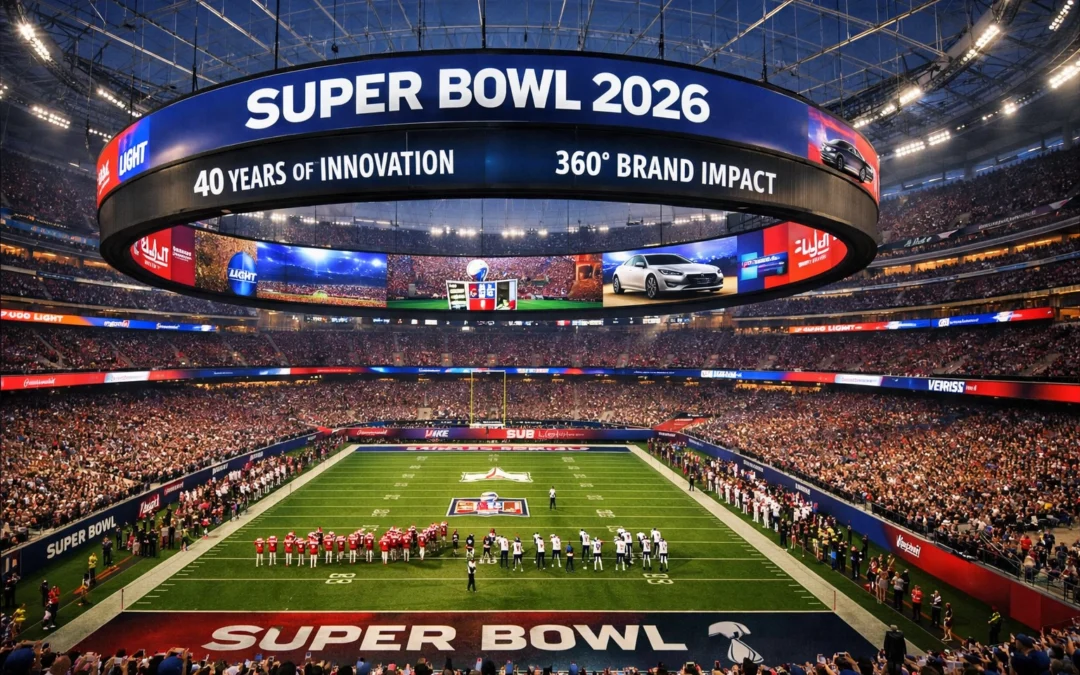
The Super Bowl LX broadcast on February 8, 2026 commanded $7 million for a 30-second television spot, with NBCUniversal selling out its entire commercial inventory months in advance. Brands like Xfinity, Anthropic, and Amazon invested heavily in broadcast advertising to reach the anticipated 130+ million viewers. Yet while marketers focused on securing precious seconds of airtime, a quieter revolution in sports advertising has been unfolding across stadium infrastructure itself.
Over the past four decades, venue-wide advertising has transformed from simple painted signage to sophisticated digital ecosystems that deliver continuous brand exposure throughout the entire game experience. This evolution represents a fundamental shift in how advertisers capture attention during major sporting events.
The Four-Decade Evolution of Stadium Advertising
Stadium advertising began as static painted boards and vinyl banners positioned around playing fields. These early implementations offered brands visibility but lacked flexibility, measurement capabilities, or the ability to target specific audience segments.

The introduction of LED perimeter boards in the 1990s marked the first significant advancement. These digital displays allowed for rotating advertisements and basic scheduling capabilities. Brands could now purchase time slots rather than permanent placements, increasing inventory availability and reducing costs for individual advertisers.
The 2000s brought high-definition video boards and coordinated display networks. Stadiums began treating their entire venue as an integrated advertising platform rather than a collection of individual placements. This shift enabled synchronized campaigns across multiple surfaces and created opportunities for immersive brand experiences.
The current generation of stadium advertising leverages programmatic technology, real-time content updates, and audience data integration. Brands can now deploy campaigns that respond to game situations, adjust messaging based on audience demographics, and measure impact with precision previously reserved for digital channels.
360-Degree Coverage: From Floors to Ceilings
Modern stadium advertising encompasses every surface visible to attendees and broadcast audiences. This comprehensive approach creates multiple touchpoint opportunities throughout the game experience.
Floor Graphics and Field-Level Displays
Vinyl floor graphics in concourses and entryways deliver brand impressions as fans enter venues. These placements capture attention during high-traffic moments when audiences are actively moving through spaces and have heightened receptivity to environmental messaging.
Field-level LED boards positioned at ground level provide premium visibility for both in-stadium audiences and television broadcasts. Camera angles frequently capture these displays during gameplay, extending reach beyond physical attendance.
Perimeter and Dasher Boards
Perimeter advertising surrounding playing surfaces represents the most visible inventory category. Digital LED technology enables rotation schedules that accommodate multiple brands within single games. Advanced systems can detect broadcast camera positions and prioritize high-value placements when cameras are active.
https://www.youtube.com/watch?v=l6J-0zileKE
Concourse and Concession Integration
Digital screens throughout concourses reach audiences during peak engagement moments. Fans moving between seats and concessions demonstrate higher attention levels than during passive viewing periods. Strategic placement near food and beverage locations captures audiences in purchase-ready mindsets.
Upper-Level and External Billboards
Large-format billboards visible from outside stadiums extend brand reach to surrounding neighborhoods and transit corridors. These placements deliver impressions days before events, building anticipation and driving ticket sales while also serving broader marketing objectives.

Suite and Premium Seating Environments
Digital displays in club levels and suite corridors target high-value audience segments. These placements offer opportunities for premium product positioning and can deliver differentiated messaging to audiences with elevated purchasing power.
Measuring Impact Beyond the Broadcast
Traditional Super Bowl advertising measurement focused primarily on television ratings and subsequent brand lift studies. Stadium-based advertising introduces additional measurement methodologies that provide granular performance insights.
Device ID tracking enables attribution between venue exposure and post-event behaviors. Brands can identify individuals who attended games or entered stadium proximity zones, then measure website visits, app downloads, store visits, and purchase activity within defined windows following exposure.
Geofencing technology creates virtual boundaries around venues, capturing mobile device data from attendees. This audience data supports retargeting campaigns and enables comparative analysis between exposed and control groups. Recent campaigns have demonstrated lift measurements comparable to traditional digital advertising channels.
Broadcast integration tracking quantifies television exposure of stadium placements. Advanced analytics platforms monitor camera angles and calculate impression delivery based on screen time during broadcasts. For Super Bowl LX, stadium advertising placements generated an estimated 180 million television impressions beyond purchased commercial inventory.
Cost Efficiency Compared to Broadcast Inventory
A 30-second Super Bowl commercial cost $7 million in 2026. For context, comprehensive stadium advertising packages covering multiple surfaces throughout a venue typically cost 5-15% of a single broadcast spot while delivering exposure throughout the entire game duration.

Stadium advertising provides continuous visibility rather than brief moments of attention. A perimeter LED board rotates through multiple brands but maintains presence throughout four quarters, halftime, and pre-game activities. Total exposure time significantly exceeds 30 seconds while reaching both broadcast audiences and premium in-stadium attendees.
The combination of lower costs and extended exposure creates favorable cost-per-impression ratios. Brands seeking Super Bowl association without broadcast pricing can achieve meaningful presence through strategic venue placements.
Technology Driving Modern Stadium Campaigns
Programmatic DOOH platforms have transformed stadium advertising from manual insertion orders to automated, data-driven campaigns. These systems enable real-time bidding, dynamic creative optimization, and cross-channel coordination.
Brands can now launch stadium campaigns within 24 hours, adjusting placements based on performance data and game circumstances. A beverage brand might increase presence during hot weather games, while a financial services company could emphasize messaging during high-stakes playoff situations.
Integration with omnichannel campaigns allows stadium advertising to function as one component within coordinated strategies. Mobile retargeting reaches attendees after they leave venues, reinforcing messages delivered during games. Social media campaigns can reference stadium creative, creating cohesive brand narratives across touchpoints.
Advanced content management systems support dynamic creative that responds to game situations. A sports betting brand might update odds displays in real-time, while an automotive manufacturer could showcase different vehicle models based on local market preferences.
The Super Bowl as Stadium Innovation Showcase
The Super Bowl serves as an annual demonstration of stadium advertising capabilities. Venues hosting the event typically undergo technology upgrades that set new standards for the industry. Innovations debuted during Super Bowl broadcasts subsequently spread throughout professional and collegiate venues.
Super Bowl LX showcased several notable advancements. Enhanced LED resolution delivered cinema-quality imagery on perimeter boards. Coordinated lighting effects synchronized with video content created immersive environmental experiences. Augmented reality elements visible through mobile apps layered digital content onto physical spaces.
These innovations reflect broader trends in experiential marketing. Brands increasingly seek opportunities to create memorable moments rather than simply delivering messages. Stadium environments offer unique capabilities for sensory engagement that broadcast advertising cannot replicate.
Strategic Considerations for Brand Campaigns
Brands evaluating stadium advertising for major events should consider several strategic factors. Timing considerations include advance booking requirements, which can extend 6-12 months for premium events. Category exclusivity provisions may limit opportunities within competitive categories.
Creative requirements differ from broadcast advertising. Stadium placements must remain visible and legible from various distances and angles. Simple, bold designs with minimal text typically perform better than complex executions. Color contrast and movement attract attention more effectively than static imagery.
Integration with broader marketing strategies maximizes impact. Stadium presence supports social media content creation, provides material for employee engagement initiatives, and reinforces brand positioning statements. The association with major sporting events carries inherent brand equity that extends beyond direct exposure metrics.

Measurement planning should begin during campaign design. Establishing baseline metrics, defining success criteria, and implementing tracking methodologies ensures accurate performance assessment. Brands should align stadium advertising goals with overall marketing objectives rather than treating venue placements as isolated tactics.
Looking Beyond 2026
The trajectory of stadium advertising points toward increasingly sophisticated, data-driven implementations. Emerging technologies including AI-powered content optimization, biometric engagement tracking, and personalized messaging will further enhance capabilities.
The fundamental advantage of stadium advertising remains its ability to capture audiences during moments of peak engagement. Sports fans demonstrate heightened emotional states and elevated attention levels during games. This psychological context creates favorable conditions for brand messaging that broadcast commercials alone cannot fully exploit.
As broadcast advertising costs continue rising and audience fragmentation accelerates, stadium-based strategies offer compelling alternatives. The 40-year evolution from painted signage to programmatic digital networks demonstrates continuous innovation in pursuit of effective audience engagement. Brands willing to embrace venue-wide approaches can achieve Super Bowl association at fractions of traditional broadcast costs while delivering measurable business impact.
The next generation of stadium advertising will likely blur boundaries between physical and digital experiences, creating hybrid environments where brand interactions span multiple dimensions. For marketers seeking competitive advantages in sports marketing, understanding these evolving capabilities represents essential strategic knowledge.