
Network Expansion Milestone
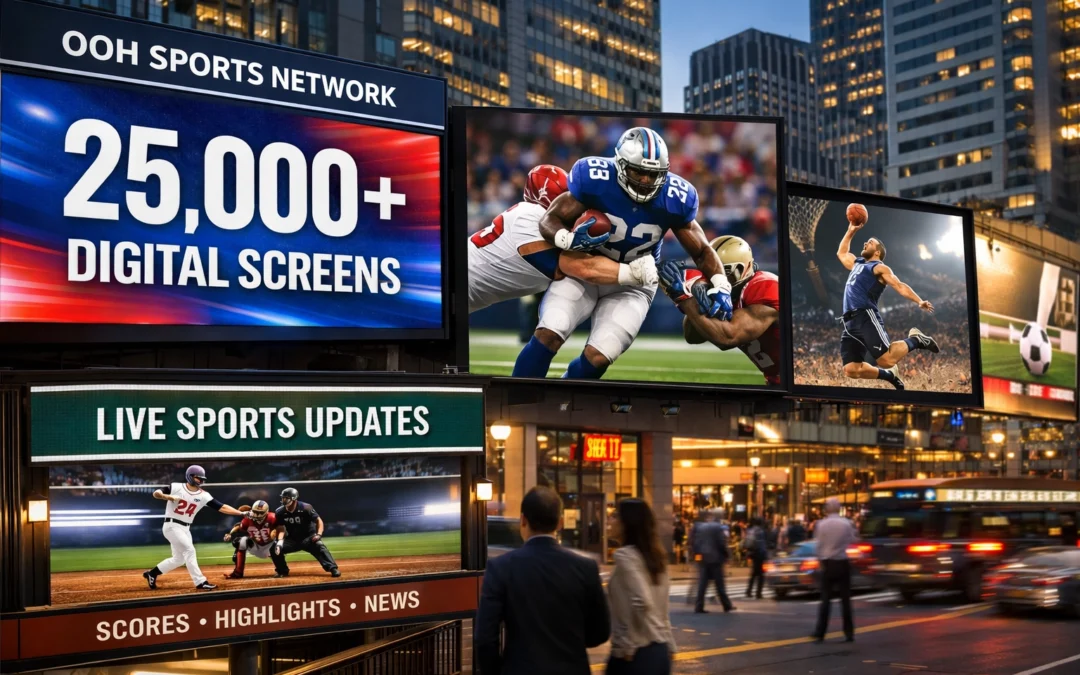
OOH Sports has expanded its digital out-of-home network to more than 25,000 screens, marking a significant infrastructure milestone in the sports marketing landscape. This expansion positions the network as one of the largest sport-focused DOOH platforms available to media buyers and advertisers seeking to reach sports fans at scale.
The expanded footprint includes premium placements across stadiums, sports complexes, retail environments, commute corridors, and entertainment districts. Each screen location has been strategically selected to maximize exposure during moments when sports fans are most engaged and receptive to brand messaging.

What This Scale Means for Sports Marketers
The 25,000-screen network represents more than a quantitative increase. It signals a fundamental shift in how sports marketing budgets should be allocated and deployed across channels.
Digital out-of-home has evolved from a tactical test budget into a core media channel. Industry projections indicate that programmatic DOOH spending is expected to reach $1.22 billion, with overall DOOH growing at a 7.6% compound annual growth rate compared to traditional out-of-home's 0.7% growth rate. The OOH Sports expansion directly addresses this market shift by providing advertisers with the infrastructure needed to execute sophisticated, data-driven campaigns at scale.
Strategic Implications for Budget Allocation
Sports marketers should consider several strategic shifts when evaluating the expanded network:
Omnichannel Integration
Rather than treating sports DOOH as a standalone media buy, the network's scale enables seamless integration within broader omnichannel strategies. Campaigns can now extend from digital and social channels into physical environments where sports fans congregate, creating unified brand experiences across touchpoints. This integration is particularly valuable during major sporting events, when fan attention spans multiple platforms simultaneously.
Programmatic Capabilities
The network supports programmatic buying workflows, allowing advertisers to manage campaigns through familiar demand-side platforms with real-time triggers, frequency controls, and contextual intelligence. Brands can shift from months-ahead planning cycles to moment-based relevance, adjusting creative and targeting based on live sports outcomes, weather conditions, or competitive activity.
However, industry data indicates that 59% of marketers still purchase OOH through direct deals rather than programmatic channels. The OOH Sports expansion provides an opportunity for brands to adopt programmatic methodologies and gain the efficiency advantages they deliver.

Enhanced Measurement and Attribution
The expanded network incorporates advanced measurement capabilities that address longstanding challenges in out-of-home attribution. By layering mobile signals and AI analytics in privacy-compliant ways, the platform provides audience insights that connect screen exposures to downstream business outcomes.
Performance Metrics That Matter
Advertisers can now measure campaigns using metrics that align with digital channel standards:
- Store visit lift: Attribution models track device IDs exposed to DOOH campaigns and measure incremental foot traffic to retail locations, dealerships, or branded experiences.
- Conversion tracking: Integration with CRM systems and point-of-sale data allows measurement of direct sales impact from screen exposure.
- Brand lift studies: Pre- and post-campaign surveys quantify shifts in brand awareness, consideration, and preference ratings among exposed audiences.
- Cross-channel attribution: Multi-touch models assess how DOOH exposure influences performance in paid search, social, and display channels.
This measurement infrastructure moves DOOH evaluation beyond impression-based metrics to accountability standards that align with CFO expectations and performance marketing disciplines.

Retail Media Convergence
The network expansion positions OOH Sports to capitalize on the convergence between sports marketing and retail media. In-store retail media is projected to represent 55.9% of DOOH growth through the end of the decade, creating opportunities for sports-adjacent retail activations.
Brands can now execute coordinated campaigns that reach fans during the sports viewing experience and at the point of purchase. A beer brand, for example, can run stadium perimeter advertising during games and extend that creative into grocery store screens where purchase decisions occur. This seamless handoff between awareness and conversion environments significantly improves marketing efficiency.
Programmatic Buying: The New Standard
The scale of the expanded network makes programmatic buying not just possible but preferable for most campaigns. Programmatic DOOH provides several advantages over traditional insertion order workflows:
Real-Time Optimization
Campaigns can be adjusted based on live performance data. If certain dayparts, venues, or creative variants outperform others, budget can be reallocated automatically to maximize results. This optimization happens continuously throughout the campaign flight, rather than waiting for post-campaign analysis.
Dynamic Creative
The platform supports dynamic creative optimization, where messaging adapts based on contextual factors such as game scores, weather conditions, time of day, or audience demographics in proximity to specific screens. A sports apparel brand can serve different creative to fans leaving a winning team's stadium versus those departing after a loss.
Audience Targeting Precision
While maintaining privacy compliance, programmatic DOOH enables targeting based on aggregated mobile signals, venue characteristics, and temporal patterns. Campaigns can reach specific audience segments such as high-income sports fans, families with children, or business travelers, with creative tailored to each segment's preferences and behaviors.

Budget Reallocation Recommendations
The network expansion should prompt sports marketers to reassess traditional budget allocation models. Several shifts merit consideration:
Shift from Broadcast to Addressable
As traditional sports broadcast audiences fragment across streaming platforms, addressable DOOH provides a complement that reaches sports fans in physical environments with near-broadcast scale but digital targeting precision. Brands should consider reallocating a portion of broadcast budgets to DOOH to maintain reach while gaining targeting capabilities.
Test-and-Learn Budgets
The programmatic infrastructure supports agile test-and-learn methodologies. Rather than committing large budgets to annual sponsorships with fixed terms, marketers can allocate modest test budgets to validate messaging, creative approaches, and venue selections before scaling successful tactics.
Seasonal Flexibility
Unlike traditional venue sponsorships that require year-long commitments, the expanded network allows seasonal budget allocation aligned with product cycles or competitive dynamics. A tax preparation service can concentrate spending during tax season, while a sports betting operator can increase presence during playoff periods.
Network Infrastructure and Quality Standards
The 25,000-screen expansion maintains rigorous quality standards across the footprint. Each screen meets technical specifications for brightness, resolution, and viewability to ensure creative displays as intended regardless of lighting conditions or viewing angles.
The network infrastructure includes centralized content management systems that enable instantaneous creative updates across all screens or targeted subsets. This capability is critical for time-sensitive campaigns tied to game outcomes, breaking news, or limited-time offers.
Venue partnerships are curated to ensure brand-safe environments and high-quality placements. The network prioritizes premium sports venues, entertainment districts, and retail environments where audiences are engaged and receptive rather than maximizing screen count through low-quality placements.

Future-Proofing Sports Marketing Investments
The OOH Sports network expansion represents infrastructure designed for long-term growth in sports marketing sophistication. As measurement standards evolve, privacy regulations tighten, and audience fragmentation accelerates, the network's programmatic capabilities and scale provide a stable platform for reaching sports fans.
Brands that integrate the expanded DOOH network into their sports marketing strategies gain several competitive advantages. They access sports fan audiences at scale with targeting precision previously unavailable in physical environments. They measure campaigns using digital attribution standards that justify investment and inform optimization. And they maintain flexibility to adjust strategies as market conditions and competitive dynamics shift.
The expansion from concept to 25,000 screens establishes OOH Sports as critical infrastructure in the sports marketing ecosystem. Media buyers and brand marketers now have access to a platform that combines the reach and impact of traditional sports advertising with the precision and accountability of digital channels.
For organizations evaluating their sports marketing budgets, the expanded network merits serious consideration as a core component of omnichannel strategies rather than a supplemental tactic. The scale, measurement capabilities, and programmatic infrastructure now available through OOH Sports enable sophisticated campaign execution that was previously inaccessible in out-of-home environments.