
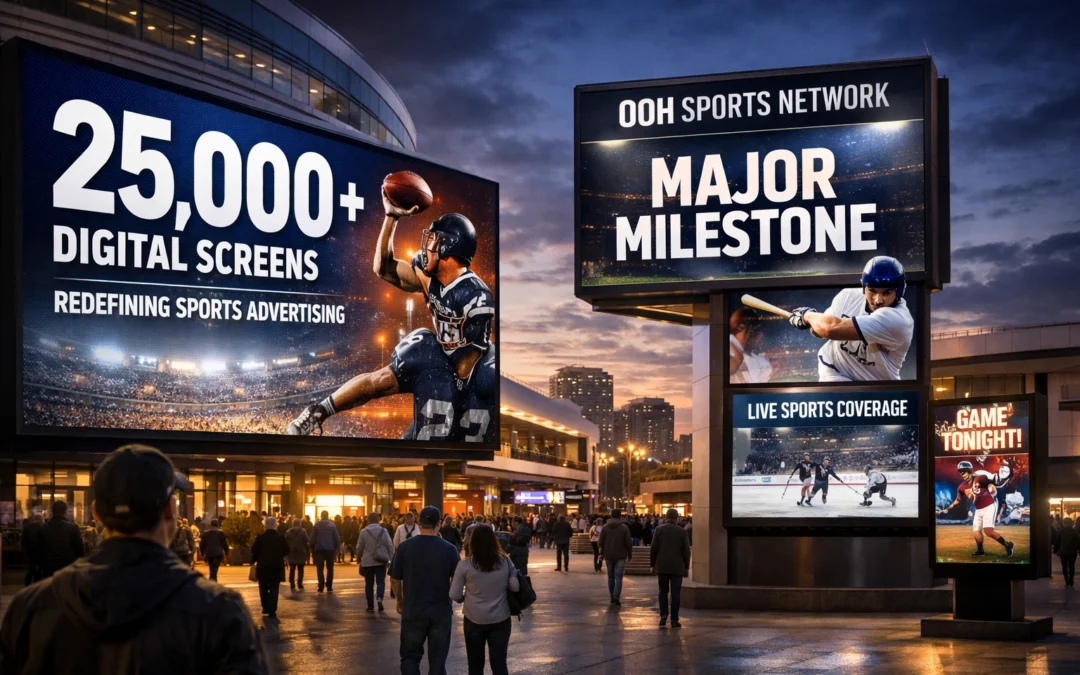
The sports advertising landscape has reached a turning point. OOH Sports Network has expanded its digital screen infrastructure to more than 25,000 locations across America, creating the largest sports-focused out-of-home advertising network in the country. This expansion represents a fundamental shift in how brands can connect with sports audiences beyond traditional stadium walls.
The network's scale positions advertisers to reach consumers throughout their entire game-day journey, from pre-game preparation to post-game celebrations. Digital screens are strategically deployed in bars, restaurants, hotels, convenience stores, and entertainment venues within a three-mile radius of major sports facilities, capturing audiences when they are most engaged with sports content.
Network Infrastructure and Geographic Coverage
The 25,000+ digital screens span major metropolitan markets and mid-sized cities with active sports cultures. Screens are concentrated in high-traffic commercial zones where sports fans naturally congregate on game days. This placement strategy extends far beyond stadium perimeter advertising, building a network that intercepts audiences at multiple touchpoints throughout their day.

Each screen location is selected based on foot traffic patterns, proximity to sports venues, and demographic alignment with key advertiser targets. The network includes establishments frequented by sports enthusiasts: sports bars with multiple viewing areas, casual dining restaurants showing live games, hotels hosting visiting fans and teams, and convenience stores near transportation hubs.
This geographic diversity allows brands to deploy localized campaigns that respond to specific sporting events, team performances, or regional market conditions. A campaign can run nationally across all screens or target specific markets where a brand has distribution, new product launches, or promotional activities.
Real-Time Campaign Capabilities
Digital infrastructure enables time-sensitive messaging that static outdoor advertising cannot match. Campaigns adjust creative elements based on time of day, day of week, and proximity to game time. Pre-game messaging can drive attendance or viewership, while post-game creative can capitalize on team victories or tournament outcomes.
The network supports dynamic content updates that respond to live sporting events. If a team advances in playoffs, messaging can shift within hours to reflect new competitive matchups. When weather conditions affect outdoor games, campaigns can pivot to promote indoor viewing locations or weather-appropriate products.

Animated content and video capabilities bring creative executions to life in ways that traditional billboards cannot replicate. Motion graphics, product demonstrations, and sequential storytelling techniques create higher engagement rates than static imagery. Screens cycle through multiple advertisers throughout each hour, providing frequent exposure in venues where consumers spend extended periods.
Seasonal campaign updates deploy instantly across the entire network without physical production or installation delays. Holiday promotions, back-to-school messaging, or summer product launches activate simultaneously in all markets, ensuring brand consistency while allowing for regional customization when needed.
Extended Audience Reach Beyond Venue Walls
Traditional stadium advertising reaches only ticket holders who attend games in person. The OOH Sports Network captures the significantly larger audience that watches games in commercial establishments or travels through sports districts on game days. Research indicates that consumers spend approximately 70 percent of their waking hours outside their homes, creating substantial opportunities for brands to deliver messages during natural daily activities.
The three-mile radius strategy recognizes that sports fandom extends well beyond arena seats. Fans gather at nearby bars to watch away games, families stop at restaurants before or after events, and casual viewers choose establishments with screens showing popular matchups. Each of these moments represents an advertising opportunity that traditional sports media cannot efficiently target.

This extended reach proves particularly valuable for brands seeking to connect with sports audiences without the substantial investment required for official team sponsorships or broadcast rights. The network provides association with sports culture and game-day excitement at a fraction of stadium naming rights or jersey sponsorship costs.
Audience composition varies by venue type and location, allowing advertisers to target specific demographics. Sports bars attract core fans with deep team loyalty, while family restaurants capture parents introducing children to sports, and hotels reach traveling business professionals following their hometown teams remotely.
Sequential Messaging and Consumer Journey Mapping
Unlike broadcast advertising compressed into 15 or 30-second spots, out-of-home campaigns deliver sustained presence throughout consumer journeys. A sports fan might encounter the same brand message three to five times on game day: once near their home in the morning, again at lunch near their workplace, and multiple times at the venue where they watch the game.
This sequential exposure builds message retention and brand recall more effectively than single-exposure media. Early touchpoints introduce products or brand positioning, while later exposures provide calls to action, promotional details, or urgency messaging. The cumulative effect creates impression value that exceeds what time-limited broadcast windows can achieve.
The network structure supports coordinated campaigns that tell brand stories across multiple locations. A beverage brand might display product imagery at convenience stores in the afternoon, shift to social consumption scenarios at bars in the evening, and feature celebratory messaging during post-game hours. This progression mirrors the natural flow of consumer behavior on game days.
Programmatic Integration and Measurement
The network operates within programmatic digital out-of-home buying platforms, allowing media buyers to activate campaigns through existing demand-side platforms and trading desks. This integration streamlines campaign planning and execution while providing transparent pricing and performance metrics.
Programmatic capabilities enable audience-based buying rather than simple venue selection. Campaigns can target demographic segments, behavioral profiles, or lookalike audiences modeled from first-party customer data. Real-time bidding ensures efficient media spend allocation across the network's inventory.

Measurement methodologies track campaign delivery, audience exposure, and attribution outcomes. Device ID technology connects out-of-home exposures to downstream consumer actions, including website visits, mobile app installations, and physical store visits. This closed-loop attribution provides accountability that historically challenged out-of-home advertising.
Brand lift studies quantify changes in awareness, consideration, preference, and purchase intent among exposed audiences compared to control groups. These metrics demonstrate campaign effectiveness using research methods familiar to brand marketers accustomed to digital and broadcast measurement standards.
Market Positioning and Competitive Advantages
The 25,000+ screen milestone establishes OOH Sports Network as the dominant sports-focused digital out-of-home platform in America. This scale provides several competitive advantages for advertisers. Broad geographic coverage enables true national campaigns without assembling inventory from multiple vendors. Concentrated sports audience targeting delivers efficiency that general outdoor advertising cannot match. Digital flexibility supports campaign optimization and creative testing throughout flight periods.
The network's sports specialization creates contextual relevance that amplifies message impact. Advertisements appear in environments where consumers are actively engaged with sports content, either watching games, discussing team performance, or celebrating with fellow fans. This contextual alignment increases attention and message receptivity compared to advertising in neutral environments.
Strategic Value for Media Buyers
Media planners evaluating sports marketing investments now have an alternative to traditional stadium sponsorships and broadcast media buys. The OOH Sports Network delivers sports audience reach at accessible price points, making sports marketing viable for brands previously priced out of major sports properties.
Campaign flexibility allows brands to test sports marketing effectiveness before committing to long-term sponsorship agreements. Seasonal activations can align with specific sports calendars, supporting product launches, promotional periods, or competitive responses without year-round commitments.
The omnichannel integration potential positions digital out-of-home as a complementary channel within broader marketing programs. Campaigns can coordinate messaging across mobile, social, display, and out-of-home touchpoints, creating consistent brand experiences throughout consumer journeys. Sequential retargeting extends reach beyond physical locations, serving follow-up messages to mobile devices after out-of-home exposure.
Network Expansion and Future Development
The 25,000+ screen milestone represents current scale, with continued expansion planned in emerging sports markets and underserved geographic regions. New venue partnerships add inventory in categories where sports viewership is growing, including entertainment complexes, retail environments, and transportation hubs.
Technology enhancements focus on increasing campaign sophistication and measurement precision. Advanced audience targeting capabilities will leverage location intelligence, behavioral data, and predictive modeling to identify high-value consumer segments. Enhanced creative formats will support interactive elements, mobile integration, and personalized messaging variations.
The infrastructure foundation positions OOH Sports Network to adapt as sports media consumption patterns evolve. Whether audiences watch games in traditional venues or new formats emerge, the network's flexibility ensures continued relevance for advertisers seeking to connect with sports fans.
For brands evaluating sports marketing opportunities, the expanded OOH Sports Network represents a strategic platform delivering scale, targeting precision, and measurable results across America's largest sports markets.