
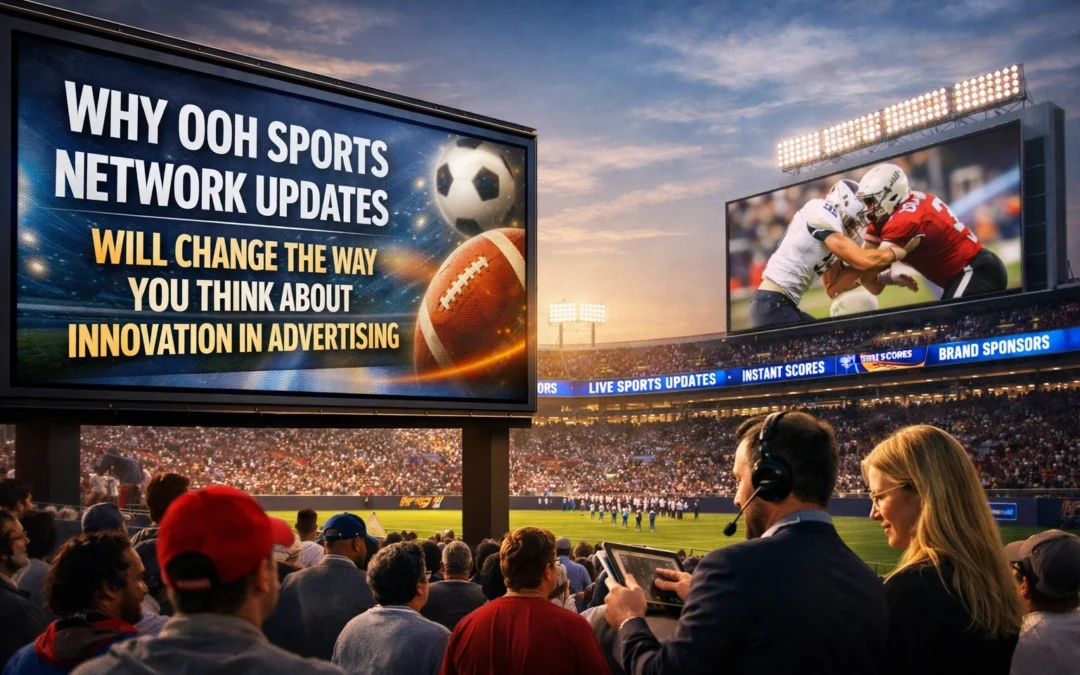
The landscape of sports marketing is undergoing a fundamental shift. As traditional media channels face fragmentation, the ability to reach fans during high-emotion, live-action moments has become the gold standard for advertisers. OOH Sports has emerged as a primary driver of this evolution, moving beyond static placements to offer a dynamic, programmatic, and highly scalable network. This expansion signifies a major milestone for the industry, providing media buyers with unprecedented access to sports enthusiasts across the country.
The Evolution of the OOH Sports Network
Advertising in the sports sector was once limited to high cost stadium sponsorships or static billboards that remained unchanged for months. The current OOH Sports network model disrupts this traditional approach by integrating digital technology with high-traffic physical locations. With the recent expansion to 25,000 digital screens, the network offers a level of reach that rivals national television broadcasts while maintaining the localized precision of digital marketing.
This growth is not merely about quantity. It represents a strategic shift in how brand messages are delivered. By placing screens in sports bars, fitness centers, transit hubs, and entertainment districts, OOH Sports ensures that brand messaging remains present throughout the entire fan journey. Whether a consumer is traveling to a game, watching it at a local venue, or celebrating after a victory, the network maintains consistent visibility.
For a deeper look into the scale of this expansion, industry professionals can review the report on how 25,000 digital screens are changing the sports marketing landscape.

Objective and Strategy
The primary objective of the OOH Sports network updates is to bridge the gap between digital ease and physical impact. Media buyers often struggle with the limitations of social media, where ads can be easily skipped or ignored. In contrast, digital out-of-home (DOOH) advertising within the sports environment captures attention when fans are most engaged.
The strategy focuses on three core pillars:
- Contextual Relevance: Delivering ads that align with live sporting events, scores, and fan sentiment.
- Programmatic Flexibility: Allowing advertisers to buy inventory in real time, adjusting campaigns based on game outcomes or weather conditions.
- Audience Density: Targeting high-intent zones where sports fans gather in large numbers.
By utilizing stadium perimeter targeting, brands can capture the energy of the crowd without the multi-million dollar price tag of official sponsorships. This tactical approach is explored in detail through the analysis of why stadium perimeter ads capture hearts and wallets better than social media.
Technology Partners and Programmatic Innovation
The backbone of the OOH Sports network is a sophisticated technological stack. The integration of advanced Demand-Side Platforms (DSPs) allows for seamless campaign execution. One notable partner in this space is StackAdapt, which has played a crucial role in driving programmatic DOOH adoption. This partnership enables advertisers to manage omnichannel campaigns that include outdoor screens alongside mobile and desktop placements.
The use of programmatic technology means that campaigns are no longer "set it and forget it." Instead, they are data driven. Advertisers can utilize device IDs to track exposure and retarget audiences who have seen their OOH ads, creating a continuous marketing funnel. The impact of these technical integrations is further discussed in the spotlight on StackAdapt and programmatic adoption.

Execution and Logistics
Executing a nationwide sports campaign requires a high degree of logistical coordination. OOH Sports simplifies this process by providing a unified platform for multi-market deployment. The process involves several key steps:
- Geofencing: Defining specific geographic boundaries around stadiums or sports bars to trigger ad displays.
- Dynamic Creative Optimization (DCO): Utilizing live data feeds to update creative elements in real time. For example, a sports betting brand can update odds on a screen as a game progresses.
- Real-Time Triggering: Activating ads based on specific "trigger" events, such as a home run, a touchdown, or a sudden change in weather.
This level of precision allows for highly efficient spend. Rather than wasting impressions during times of low engagement, the network focuses on the "power hours" surrounding major sporting events. This efficiency is a primary reason why sports betting DOOH campaigns can now be launched and converted in under 24 hours.
Measurable Outcomes and Success Metrics
The success of the OOH Sports network is validated by significant data from recent brand campaigns. When examining the results of programmatic DOOH, the metrics consistently show higher engagement compared to traditional formats.
Case Study: White Claw
White Claw utilized the OOH Sports network for the launch of its vodka line. By targeting specific demographics in high-traffic sports environments, the campaign achieved a 74% lift in purchase consideration. This result demonstrates the power of reaching consumers when they are in a social, brand-receptive mindset. Detailed logistics of this campaign are available in the White Claw case study.
Case Study: AB InBev (Mike’s Hard Iced Tea)
For the Mike’s Hard Iced Tea campaign, the focus was on brand image. The programmatic DOOH approach led to a 119% lift in positive brand image. The ability to align the brand with the positive emotions of sports viewing proved to be a decisive factor. The full report on this 119% lift can be found here.
Case Study: Sea-Doo
Sea-Doo’s first foray into DOOH through the network resulted in a 144% increase in purchase consideration. By targeting transit hubs and recreation-adjacent areas, the brand successfully reached its core outdoor-enthusiast audience. Analysis of this 144% increase highlights the effectiveness of specialized targeting.

The Strategic Importance of Ambush Marketing
Innovation in advertising often involves finding clever ways to gain visibility without the constraints of official sponsorship agreements. OOH Sports enables brands to execute "ambush marketing" at scale. A prime example is Nike's presence during the NYC Marathon. Although not an official sponsor, Nike maintained a massive presence through strategic OOH placements along the race route and in high-density fan areas. The effectiveness of this strategy is documented in the analysis of how Nike dominated the NYC Marathon visibility.
By using the OOH Sports network, brands can achieve "official sponsor" levels of recognition through smart placement and timing rather than expensive rights fees.
The Future Trajectory of Sports DOOH
The industry is projected to reach massive heights in the coming years. Estimates suggest that DOOH sports advertising will hit $50 billion by 2030. This growth is driven by the continuous improvement of AI-powered analytics and real-time data integration.
As AI becomes more integrated into the OOH Sports network, the ability to predict audience movements and sentiments will improve. This allows for even more granular targeting, ensuring that every dollar spent is optimized for maximum ROI. The comparison between AI-powered DOOH and traditional stadium ads shows a clear trend toward the adoption of automated, intelligent systems.

Strategic Takeaways for Media Buyers
For media buyers looking to capitalize on these network updates, several strategies are essential:
- Prioritize Integration: Ensure OOH efforts are part of an omnichannel strategy, using DOOH to prime audiences for mobile and social retargeting.
- Leverage Live Data: Use game scores and event schedules to dictate creative shifts.
- Focus on the Fan Experience: Create ads that provide value, such as live updates or interactive elements, rather than just static promotions.
- Monitor Real-Time Performance: Use the programmatic dashboard to make adjustments mid-campaign based on performance data.
The evolution of OOH Sports from a simple advertising network into a complex, data-driven marketing ecosystem represents the future of brand engagement. By moving away from "background noise" and toward active participation in the fan experience, the network provides a roadmap for innovation in the modern advertising landscape.

As the network continues to expand and its technological capabilities grow, the opportunity for brands to connect with the sports audience has never been more significant. For more information on navigating this evolving space, visit the OOH Sports homepage or explore the comprehensive sitemap for specific industry insights and strategy guides.