
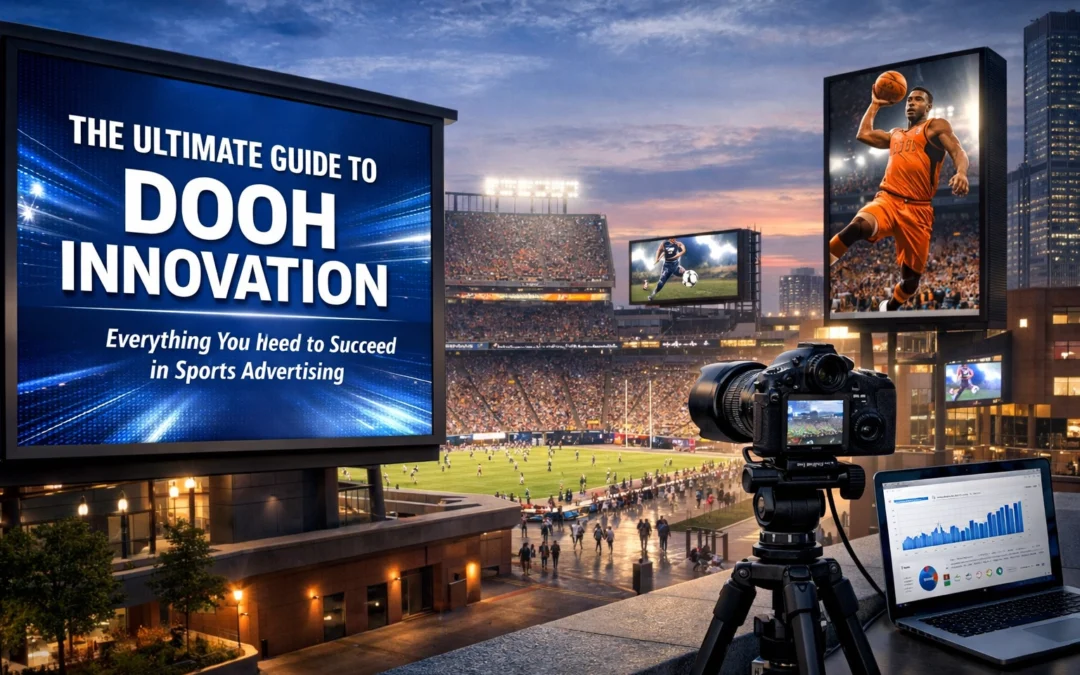
Digital Out-of-Home (DOOH) advertising represents a significant evolution in the way brands connect with sports enthusiasts. As traditional television viewership becomes increasingly fragmented and static billboards struggle to capture the attention of a fast-moving audience, DOOH offers a dynamic, high-impact alternative. This guide examines the strategic innovations within the DOOH space and provides a roadmap for brands looking to maximize their impact in the sports advertising sector.
The Strategic Shift Toward Digital Out-of-Home
The landscape of sports marketing is undergoing a fundamental transformation. While massive television spots during championship games remain a staple, the costs associated with these placements often range from $200,000 to over $2 million per spot. DOOH advertising provides a more cost-effective and flexible entry point, allowing for real-time personalization and repeated exposure during premium sports moments.
One of the primary advantages of DOOH is its resilience against ad-blocking technology. Unlike digital ads on mobile devices or computers, physical digital screens cannot be skipped or hidden. This ensures that the message reaches the intended audience in high-traffic environments such as stadium concourses, sports bars, and urban transit hubs. Furthermore, DOOH allows for greater viewer attention and memory retention compared to traditional static formats.
When integrated into an omnichannel strategy, DOOH acts as a powerful reinforcement tool. A study on audience behavior suggests that when a fan sees a 30-second television commercial followed by a shorter version on a digital panel during their daily commute, the campaign's memory structure is significantly strengthened. This synergy makes every advertising dollar more efficient by creating multiple touchpoints in the consumer journey.

Location-Based Tactics and Point-of-Interest Targeting
The effectiveness of DOOH in sports advertising is rooted in its ability to target specific locations where fans congregate. Placing digital billboards near arenas and venues captures the attention of fans both before and after an event, maximizing exposure during periods of high emotional engagement.
For sports apparel brands, this means the ability to showcase game-day merchandise in the immediate vicinity of the stadium. For collegiate teams, DOOH can be utilized to drive last-minute ticket sales or promote upcoming season memberships. A critical technical component of this strategy involves geofencing. By capturing mobile device IDs around DOOH screens, advertisers can retarget these specific audiences with relevant follow-up ads on their personal devices after they leave the tournament or game.
Local businesses also find significant value in location-tailored campaigns. Sports bars, restaurants, and retail outlets can activate DOOH ads to promote viewing parties or special game-day offers. This approach allows local entities to capitalize on the excitement of major sporting events without requiring a direct, high-cost affiliation with national sports organizations.
Further insights into the importance of location-based engagement can be found in the analysis of why stadium perimeter ads capture hearts and wallets.
Real-Time Optimization and Dynamic Storytelling
The transition from static placements to responsive, data-driven campaigns is perhaps the most significant innovation in DOOH. Programmatic technology enables advertisers to adjust creative content automatically based on external triggers or live data feeds.
Several key applications of dynamic storytelling include:
- Betting Partners: Sportsbooks can stream live odds to digital screens in sports bars and lounges nationwide. This transforms a traditional advertisement into utility content that fans find genuinely useful during a game.
- Apparel and Equipment Brands: Weather-based triggers can change the creative in real-time. For instance, if rain begins at an outdoor stadium, a brand can instantly switch to promoting waterproof gear or rain jackets.
- Beverage and CPG Brands: Countdown clocks to major championship events can be synchronized across thousands of retail locations, building anticipation and driving immediate purchase intent.
Programmatic DOOH platforms allow for automated adjustments based on current inventory levels, time of day, and live tournament updates. This level of agility ensures that the content remains relevant to the audience at every moment of the day.

Measuring Impact Through Data and Analytics
Modern DOOH platforms have moved beyond simple estimates of foot traffic. Advertisers now have access to comprehensive, real-time reporting that tracks a variety of key performance indicators. These include total impressions, audience demographics, dwell times, and engagement rates.
The use of QR code integration has become a standard method for measuring direct interaction. When a fan scans a code on a digital screen to enter a contest or receive a discount, it provides a clear attribution link between the physical advertisement and a digital conversion.
Detailed analytics dashboards offer transparency and actionable insights, allowing brands to optimize their campaigns mid-flight. To understand the scale of modern networks, one might consider the recent growth of the OOH Sports network to 25,000 digital screens, which provides a vast infrastructure for data collection and audience reach.
Quantifiable Success in Sports-Adjacent Campaigns
The effectiveness of programmatic DOOH is well-documented through various brand lift studies. These results demonstrate how strategic digital placements can move the needle on key brand metrics:
- Purchase Consideration: A campaign for White Claw's vodka launch utilized programmatic DOOH to achieve a 74% lift in purchase consideration. Detailed results of this campaign can be reviewed at White Claw's DOOH case study.
- Brand Image: Mike's Hard Iced Tea saw a 119% lift in positive brand image by leveraging programmatic DOOH to reach consumers in relevant social environments. More details are available in the Mike's Hard brand study.
- High-Intent Growth: Sea-Doo achieved a 144% increase in purchase consideration during its first digital OOH campaign by focusing on high-intent locations. The full breakdown is provided in the Sea-Doo campaign analysis.
These figures highlight that when DOOH is executed with precision, it consistently outperforms traditional media in driving brand preference and intent.

Creative Best Practices for High-Movement Environments
Content designed for DOOH must adhere to specific creative principles to be effective. Because audiences are often in motion, the window to deliver a message is brief, typically under five seconds.
- Simplicity and Clarity: Use bold fonts and high-contrast color schemes. The primary message should be legible from a distance.
- Single Call-to-Action: Avoid cluttering the screen with multiple messages. One clear instruction, such as a URL or a QR code scan, is most effective.
- Visual Movement: Subtle motion graphics are more effective than static images at catching the eye, but excessive movement can be distracting and difficult to process.
- Social Integration: Prominently display hashtags or social media handles. Encouraging fans to share their game-day experiences using branded hashtags bridges the gap between the physical screen and the digital social space.
Brands can also utilize Sportrons to create high-impact, sports-focused digital content that resonates with fans in high-energy environments.
Hyper-Local and Community Connections
Innovation in DOOH also involves targeting niche audience segments in community-specific environments. In many regions, sports facilities such as local hockey rinks or community gyms serve as central hubs for families and fitness enthusiasts.
Targeting hockey parents during tournament weekends or fitness-conscious individuals in a gym setting allows brands to deliver messages that have high emotional resonance. These environments offer a high "dwell time," as parents often spend hours at a facility during a tournament. This provides an opportunity for more detailed storytelling or repeated brand exposure that reinforces a positive association with the local community.

The Implementation Framework
For brands ready to leverage these innovations, a structured approach is necessary to ensure success. The following framework outlines the essential steps in a DOOH campaign:
- Facility Selection: Identify and select target facilities that align with the brand’s specific objectives and audience demographics.
- Creative Production: Craft campaigns using expert creative support to ensure that the content is optimized for the specific digital screens and environment.
- Launch and Optimization: Deploy the campaign using programmatic platforms that allow for real-time contextual adjustments based on live data.
- Measurement and Analysis: Use detailed ROI analytics and brand lift studies to measure the success of the campaign and inform future strategies.
By combining location-based intelligence with flexible, modern technology, brands can transform their sports marketing efforts. The goal is to move beyond simple arena placements and create a comprehensive strategy that meets fans in their everyday spaces.
For more information on how to implement these strategies, visit the OOH Sports marketing page or explore more in-depth examples in the case study section. Success in the modern advertising landscape requires a commitment to innovation and a data-driven approach to reaching the sports audience where they live, work, and play.