
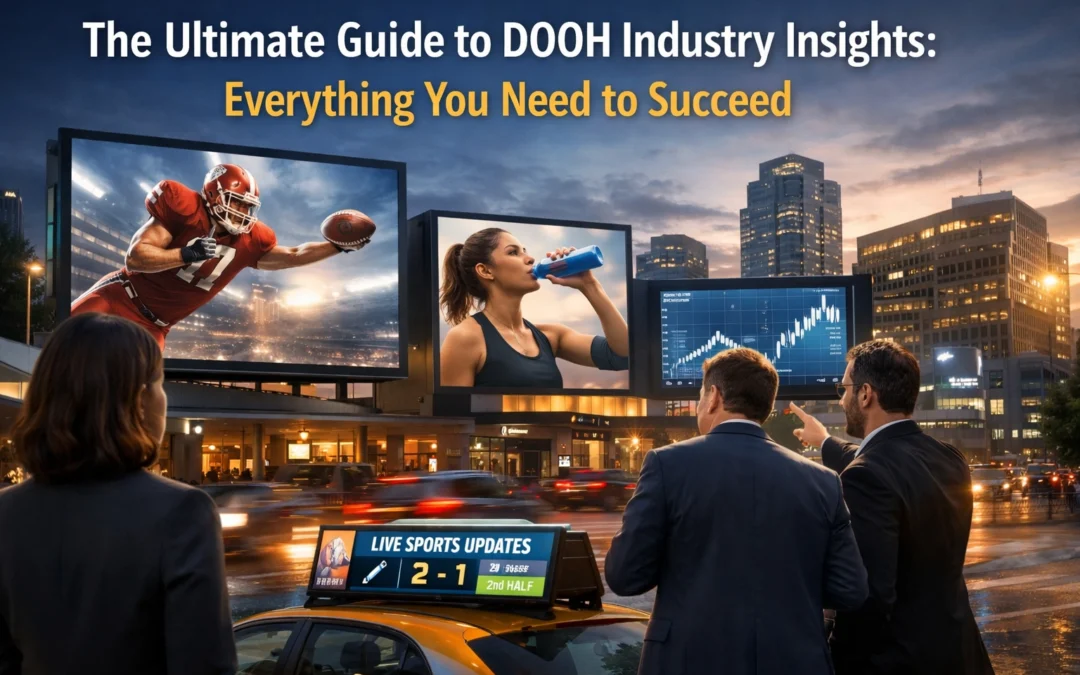
The landscape of advertising continues to shift toward digital integration, and perhaps no sector demonstrates this evolution more clearly than digital out-of-home (DOOH) advertising. As physical and digital worlds converge, the ability to reach consumers during high-impact moments, particularly in sports and entertainment environments, has become a cornerstone of modern marketing strategy. This guide examines the current state of the industry, emerging trends, and the technological advancements driving measurable success for brands today.
Market Landscape and Growth Projections
The global DOOH market is currently experiencing a period of significant expansion. Valued at over $20 billion, the industry is projected to maintain a compound annual growth rate exceeding 12 percent through the next decade. North America remains a dominant force in this space, accounting for approximately one third of the total market share.
This growth is fueled by the transition from traditional static displays to interconnected digital networks. Research indicates that digital's share of total out-of-home spending is expected to reach nearly half of all OOH expenditures within the next few years. This shift is not merely a change in hardware but a fundamental change in how media is bought, sold, and optimized. For advertisers looking to scale, understanding the infrastructure behind these numbers is essential. Information regarding the scale of these networks can be found at the OOH Sports network expansion page.

The Rise of Programmatic DOOH (pDOOH)
Automation has moved from an experimental luxury to an industry standard. Programmatic DOOH (pDOOH) allows advertisers to purchase screen time using the same data-driven workflows utilized in online display and social media.
Strategic Buying Models
Modern pDOOH strategies generally utilize four primary purchasing models:
- Real-Time Bidding (RTB): An open auction environment where impressions are bought and sold in milliseconds based on specific audience criteria.
- Private Marketplace (PMP): An invite-only auction that provides buyers with access to premium inventory with more control over placement.
- Programmatic Guaranteed (PG): A model that ensures a fixed number of impressions at a set price, combining the certainty of direct buys with the efficiency of automation.
- Non-Guaranteed Fixed Price: A hybrid approach that offers a set price without a guaranteed volume of impressions.
These models allow planners to manage OOH alongside other digital channels such as connected TV (CTV) and mobile, using shared key performance indicators (KPIs) and consistent reporting structures. This level of synchronization ensures that a brand message remains cohesive across every touchpoint in a consumer’s journey.
Dynamic Creative Optimization (DCO)
One of the most powerful advantages of DOOH over its static predecessors is the ability to deploy Dynamic Creative Optimization (DCO). This technology enables ads to change in real-time based on external data triggers.
Data Triggers for Maximum Relevance
In the context of sports advertising, DCO is particularly effective. Creative assets can be programmed to update automatically based on:
- Live Game Scores: Messaging that reacts to a win or a specific play in real-time.
- Weather Conditions: Promoting cold beverages on hot days or apparel during sudden rain.
- Time of Day: Shifting from breakfast-focused content to evening entertainment options.
- Location-Based Events: Tailoring ads to specific neighborhoods or stadium zones to reflect local demographics.
By moving away from a one-size-fits-all creative approach, brands can ensure their messaging reflects the immediate context and intent of the audience at the moment of exposure. This relevance is a key driver in increasing brand recall and consumer action.

Audience-First Planning Strategies
The industry is currently moving away from location-based planning and toward audience-first planning. Rather than selecting screens based solely on physical geography, sophisticated marketers are now focusing on the specific moments and mindsets of the people they wish to reach.
Identifying Key Moments
Success in DOOH requires identifying where the target audience spends their time and what their intent is in those locations. High-traffic areas such as transit hubs, retail centers, and sports arenas offer unique opportunities for engagement. For instance, stadium perimeter ads capture the attention of fans when they are at peak emotional engagement, a state that is difficult to replicate through traditional mobile or social scrolling.

Measurement and Attribution Methodology
A common historical criticism of out-of-home advertising was the difficulty of accurate measurement. However, modern DOOH leverages mobile location data and advanced analytics to provide transparency and accountability that rivals other digital channels.
Leveraging Mobile Device Data
By analyzing anonymous mobile device IDs, marketers can determine how many people passed within the viewing zone of a specific digital screen. This data provides insights into:
- Dwell Time: How long an individual remained in sight of the advertisement.
- Frequency: How often a unique visitor was exposed to the message.
- Visitation Lift: Tracking whether an individual visited a physical retail location or a website after being exposed to a DOOH ad.
This integration between DOOH and mobile devices allows for powerful retargeting strategies. A consumer who sees a digital billboard near a stadium can be served a follow-up ad on their mobile device later that evening, reinforcing the message and driving a conversion. More information on specialized measurement tools like Sportrons can help clarify these technical processes.
Impact and Results: Data-Driven Case Studies
The effectiveness of DOOH is best illustrated through measurable outcomes. Recent campaigns in the beverage industry have demonstrated the high ROI achievable through programmatic DOOH and strategic placement.
Brand Performance Metrics
- Purchase Consideration: A programmatic DOOH campaign for White Claw’s vodka launch resulted in a 74 percent lift in purchase consideration. Detailed mechanics of this execution can be reviewed in the White Claw case study.
- Brand Image: AB InBev’s Mike’s Hard Iced Tea saw a 119 percent lift in positive brand image by utilizing programmatic DOOH to reach consumers in relevant social and retail environments. The full analysis is available at the AB InBev case study page.
These results confirm that when DOOH is combined with programmatic precision and creative flexibility, the impact on brand health and consumer behavior is substantial.

Omnichannel Integration
DOOH no longer exists in a vacuum. It is most effective when used as part of a broader omnichannel strategy. By bringing digital narratives into the physical world, DOOH reinforces the messaging seen on CTV, social media, and retail platforms.
Bridging the Physical and Digital Divide
The continuity between channels is vital for maintaining brand salience. For example, a campaign might begin with a high-impact video on a sports-themed DOOH screen, continue with a social media ad, and culminate in a mobile notification when the user enters a retail environment. This multi-layered approach ensures that the brand remains top-of-mind throughout the consumer's daily routine. Brands interested in exploring these integrated marketing services can find more details at OOH Sports Marketing.
Strategic Recommendations for Success
To succeed in the current DOOH landscape, advertisers should prioritize the following tactics:
- Utilize Automation: Transition from manual buying to programmatic platforms to gain better control over budget and targeting.
- Focus on Context: Use DCO to ensure creative is relevant to the time, place, and environment.
- Implement Robust Measurement: Go beyond simple impressions and use mobile attribution to track actual business outcomes such as foot traffic and sales lift.
- Align with Premium Content: In the sports world, placing ads in high-engagement environments like stadiums and arenas offers a unique advantage in capturing fan attention.
The shift toward a smarter, more intentional, and more accountable execution of out-of-home advertising defines the most successful strategies today. By embracing automation and data-driven planning, brands can turn physical spaces into powerful engines for growth. For those ready to begin or refine their journey in this space, the OOH Sports blog provides ongoing updates on industry shifts and technological advancements.