
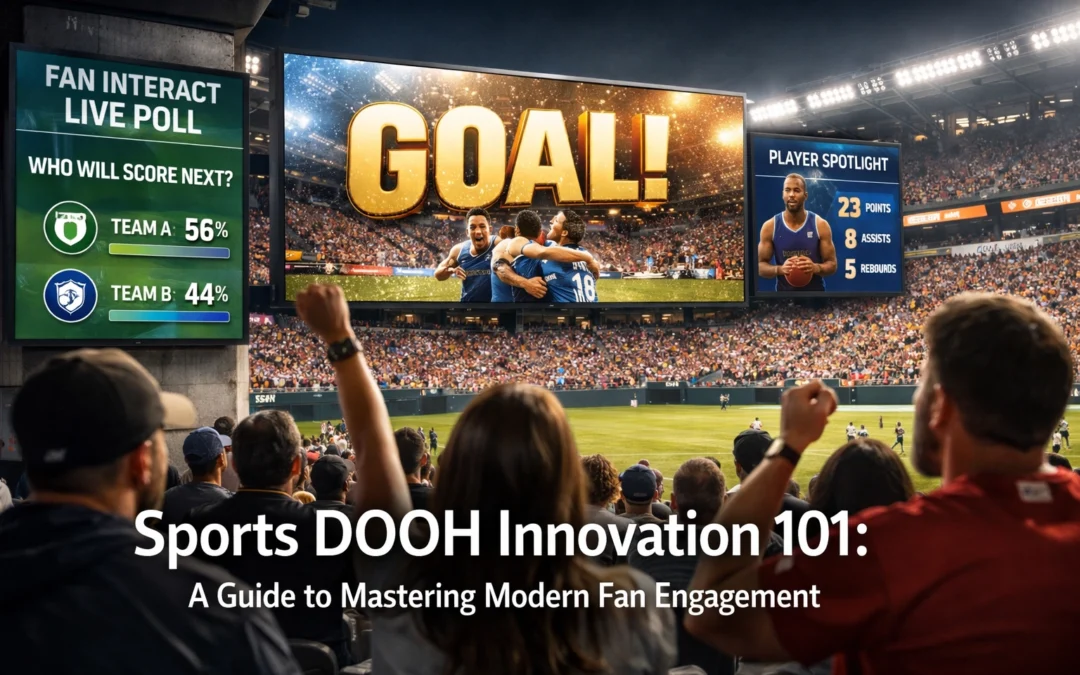
Digital Out-of-Home (DOOH) advertising has transitioned from a simple location-based medium into a sophisticated, routine-based strategy. For media buyers and brand managers, this shift offers a unique opportunity to reach sports fans across multiple touchpoints in their daily lives. Unlike traditional television advertising, which often requires significant investment for limited time slots, DOOH provides a flexible and ad-block-proof format. It delivers repeated exposure by integrating messaging into the natural flow of a consumer's day.
As the landscape of sports consumption evolves, brands must look beyond the stadium walls to capture attention. Modern fan engagement requires a blend of data-driven targeting and creative agility. This guide explores the core components of sports DOOH innovation and how it can be leveraged to drive measurable brand lift and consumer action.

The Three-Phase Fan Engagement Strategy
Successful sports marketing campaigns do not just happen during the game. They align with distinct phases of fan behavior. By segmenting a campaign into pre-game, during-game, and post-game phases, advertisers can provide relevant content that matches the emotional state and needs of the audience.
Phase 1: Pre-Game Anticipation
The 48 hour window leading up to a kickoff or tip-off is defined by logistics and anticipation. Fans are actively searching for game times, opponent stats, and viewing locations. Media buyers can deploy screens in transit hubs, office spaces, and grocery stores during this time.
Using digital displays to show broadcast schedules, betting lines, or countdown clocks provides immediate utility. This approach turns a brand from a passive advertiser into a helpful resource for the fan. Strategic placements during the commute or at the point of purchase help establish brand presence early in the fan journey. More information on expanding these reach capabilities can be found at oohsports.com.
Phase 2: During-Game Interaction
The game window is characterized by collective attention and the fear of missing out. This is the peak of context-based marketing. Inside venues and in surrounding high-traffic areas, dynamic creative that reacts to live events proves highly effective.
When a home team scores, an ad can update instantly to celebrate the moment. During halftime, beverage brands can prompt fans to refresh their drinks. This level of synchronization is why stadium perimeter ads often outperform social media in terms of immediate emotional resonance. For a deeper dive into this phenomenon, readers may explore why stadium perimeter ads capture hearts and wallets.
Phase 3: Post-Game Momentum
The campaign does not end with the final whistle. The post-game phase is about extending momentum and driving conversions. By using geofenced mobile device IDs, brands can retarget fans who were exposed to OOH screens earlier in the day. This creates a bridge between the physical and digital worlds, turning a brief impression on a highway billboard into a long-term customer relationship.

Objective and Strategy: Dynamic Creative Optimization
Dynamic Creative Optimization (DCO) is the engine behind modern DOOH innovation. It allows brands to move away from static images and toward living content that updates based on real-world data feeds. This technology ensures that the message remains relevant regardless of when or where it is seen.
Several triggers are commonly used in sports marketing:
- Live Scores and Odds: Betting partners can stream live odds to sports bar screens in real-time. This converts the ad space into a content hub that fans check repeatedly throughout the game.
- Weather Triggers: Apparel brands can trigger ads for rain gear when a storm hits a stadium or promote cold-weather merchandise when temperatures drop.
- Inventory and Locality: Retailers can use DOOH to show real-time stock levels of team jerseys at the nearest store location.
The use of Sportrons technology enables these dynamic updates at scale, ensuring that thousands of screens across a network display the most current and impactful information.
Synchronized Multi-Format Campaigns
The most impactful sports marketing efforts orchestrate coordination across multiple DOOH formats. This creates a narrative progression rather than treating each placement as an isolated event. This is often referred to as the priming effect. When a fan encounters a brand on a highway billboard, then again at a transit station, and finally on a street-level installation near the stadium, the memory structure of the brand is significantly strengthened.
A synchronized strategy typically includes:
- Digital Billboards: Used on major highways to establish broad brand presence and reach fans traveling to the game.
- Transit Advertising: Reinforces messaging during the commute, particularly in urban environments.
- Airport Displays: Captures out-of-town fans traveling for major championship events.
- Street-Level Screens: Provides the final touchpoint before fans enter the venue.
- Stadium Perimeters: Delivers the peak-context message when fan excitement is at its highest.
By utilizing a vast network, such as the OOH Sports network expansion, brand managers can ensure their message follows the fan from their front door to the front row.

Location-Based Targeting and Proximity
Hyperlocal targeting is a cornerstone of sports DOOH. Brands can focus their spend on specific zip codes or even specific city blocks surrounding an arena. This proximity advertising captures fans in a high-intent state. Local businesses, such as sports bars and restaurants, can use this to drive immediate foot traffic by offering game-day specials.
However, location-based targeting is not limited to the stadium. Strategic placements near colleges, universities, and popular fan hangouts allow brands to reach specific demographics without the premium cost of in-stadium placements. This level of precision allows non-endemic brands, such as insurance or financial services, to participate in the excitement of a sporting event in a way that feels organic and relevant.
Measurement and Performance Infrastructure
For media buyers, the primary concern is often how to measure the success of an OOH campaign. Modern DOOH infrastructure has solved many of the attribution challenges of the past. By integrating with broader digital ecosystems, OOH Sports can provide data-driven insights that connect screen exposure to real-world outcomes.
Measurement tactics include:
- Brand Lift Studies: Assessing the increase in brand awareness or purchase intent among those exposed to the ads.
- Foot Traffic Attribution: Tracking how many people visited a retail location after passing a digital screen.
- Device ID Retargeting: Following up with fans on their mobile devices to measure click-through rates and online conversions.
This data-driven approach ensures that every marketing dollar is spent efficiently and that campaigns can be optimized mid-flight based on performance.

Real-World Impact: Case Studies
The effectiveness of programmatic DOOH is best demonstrated through results. Large-scale brands have already begun to move significant portions of their budgets into this space due to the high return on investment.
For instance, White Claw utilized a programmatic DOOH campaign to support a vodka launch. By targeting screens in high-traffic areas and using data-driven placements, the campaign achieved a 74% lift in purchase consideration. Detailed logistics of this execution can be found in the White Claw case study.
Similarly, AB InBev’s Mike’s Hard Iced Tea saw a 119% lift in positive brand image through a synchronized DOOH campaign. The strategy focused on reaching consumers during key social moments, proving that context and timing are just as important as the creative itself. More details are available in the AB InBev report.

Mastering the Future of Fan Engagement
The innovation in sports DOOH is not just about the screens. It is about the intelligence behind them. As the industry moves toward more automated and data-rich environments, the ability to reach fans in a way that is respectful, relevant, and engaging becomes the ultimate competitive advantage.
Media buyers and brand managers who master these tools can create campaigns that are not just seen, but felt. By focusing on the fan's journey and utilizing the full spectrum of digital out-of-home capabilities, brands can secure a permanent place in the sports culture of today and tomorrow. For those ready to begin their next campaign, additional resources and contact information are available at the OOH Sports contact page.