
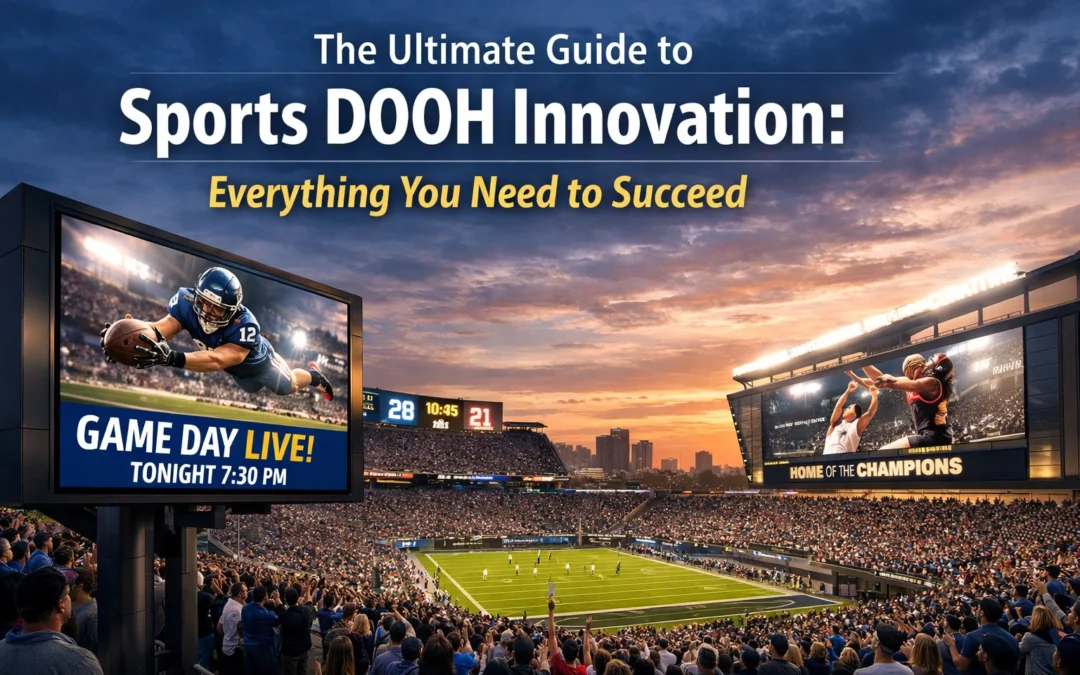
Digital Out-of-Home (DOOH) advertising has moved beyond simple digital billboards. In the world of sports marketing, it has become a sophisticated tool that allows brands to reach fans exactly where they are. Whether a fan is grabbing a drink at a local sports bar, commuting to work, or shopping for game-day snacks, DOOH ensures the brand message remains a constant part of the fan experience.
Innovation in this space is no longer just an option for major brands. It is a requirement for anyone looking to maximize the impact of their marketing budget. This guide explores how OOH Sports and modern DOOH technology are changing the way media buyers and brand managers approach sports advertising.
The Evolution of Sports Advertising
Historically, sports marketing was tied to the stadium or the television broadcast. While these remain powerful channels, they are limited by time and geography. Modern sports marketing takes a more holistic view of the fan journey. It recognizes that being a fan is a lifestyle, not just a three-hour event.
By shifting from location-based strategies to routine-based strategies, brands can engage fans at scale across everyday touchpoints. This approach uses DOOH to bridge the gap between digital content and the physical world. When a fan sees an ad on a digital screen in a high-traffic urban area, it reinforces the message they may have seen on social media or during a live game.

Strategic Applications Across Fan Touchpoints
To succeed in sports DOOH, it is essential to understand the different environments where fans spend their time. Each location offers a unique opportunity for engagement.
Sports Bars and Restaurants: The Stadium Proxy
Sports bars are the primary gathering spots for fans who are not at the stadium. These venues offer high dwell times and a communal atmosphere. In these spaces, screens are not background noise. They are the focal point of the environment.
Effective creative in these spaces often mirrors the energy of the live event. Campaigns that leverage real-time scores or game updates tend to see higher engagement. For instance, a beverage brand might trigger a specific ad the moment a home team scores, turning a standard advertisement into a celebration of the moment.
Retail and Grocery Spaces
The hours leading up to a major game are critical for consumer packaged goods brands. Fans are often in retail environments stocking up on supplies. DOOH screens in these locations provide a final nudge at the point of purchase.
Commuter and Urban Paths
The daily commute is a prime time for brand reinforcement. Using digital urban panels, brands can maintain visibility throughout the fan's day. This sequential exposure helps build a memory structure, making the brand more recognizable when the fan eventually sits down to watch the game.
Innovation Through Dynamic Creative Optimization
One of the most significant innovations in the industry is Dynamic Creative Optimization (DCO). This technology allows advertisers to change their creative content in real time based on external data feeds.
In the context of sports, this means ads can be triggered by:
- Live game scores and results.
- Current weather conditions (e.g., promoting rain gear if it is storming at the stadium).
- Countdown clocks to major championship events.
- Live betting odds for sports wagering partners.
This level of personalization ensures that the content is always relevant to the viewer. It moves the brand from being a passive observer to an active participant in the sports conversation.

The Power of Programmatic DOOH
Programmatic technology has simplified the way media buyers access OOH Sports inventory. Instead of manual bookings and long lead times, programmatic DOOH allows for impression-by-impression decisioning. This flexibility is vital in the fast-moving world of sports.
If a particular team makes an unexpected run in the playoffs, brands can pivot their strategy instantly to capture the rising excitement. This agility ensures that marketing dollars are always spent where they will have the most significant impact.
Measurable Success and Brand Lift
The effectiveness of sports DOOH is not just theoretical. Data-driven analysis has shown significant results across various categories. By leveraging mobile data and brand lift studies, companies can measure the exact impact of their campaigns.
Case Study: Beverage Industry Impact
In a campaign for White Claw, the use of programmatic DOOH led to a 74 percent lift in purchase consideration for a new product launch. This was achieved by targeting specific high-traffic locations where the target audience was most likely to be present. The full details of this execution can be found in the White Claw case study.
Case Study: Enhancing Brand Image
Another successful implementation involved Mike's Hard Iced Tea. This campaign saw a 119 percent lift in positive brand image. By using a programmatic approach, the brand was able to maintain a consistent presence across multiple markets, reinforcing its position as a go-to choice for fans. More information is available in the Mike's Hard Iced Tea analysis.
Case Study: Reaching New Audiences
For Sea-Doo, a first-time foray into digital OOH resulted in a 144 percent increase in purchase consideration. This proves that even for brands outside of the immediate sports category, the sports-adjacent audience is highly receptive to well-placed DOOH messaging. The strategic breakdown is detailed in the Sea-Doo campaign report.

Developing an Engagement Framework
A successful sports DOOH strategy should be viewed through a three-phase framework: Pre-Game, During-Game, and Post-Game.
Pre-Game: Building Anticipation
During the days leading up to an event, the focus is on building excitement. DOOH screens can display highlights from previous matchups, interviews, or countdowns. This phase captures fans while they are in the planning and preparation stage.
During-Game: Collective Attention
While the game is live, the focus shifts to real-time relevance. This is the peak moment for emotional engagement. Creative should be reactive, acknowledging what is happening on the field. This creates a sense of shared experience between the brand and the fan.
Post-Game: Community Extension
The conversation does not end with the final whistle. Post-game content, such as victory celebrations or "better luck next time" messaging, helps maintain the connection. It extends the life of the campaign beyond the live broadcast.
Key Success Factors for Media Buyers
To get the most out of a sports DOOH investment, media buyers should focus on a few key areas:
- Contextual Relevance: Generic ads are less effective than those tailored to specific teams or regions.
- Flexibility: Use platforms that allow for real-time adjustments. The ability to pause, start, or change creative based on game outcomes is a major advantage.
- Omnichannel Integration: DOOH should not exist in a vacuum. It works best when paired with mobile, social, and TV advertising to create a "priming effect."
- Data-Driven Targeting: Leverage location data to understand where fans gather and optimize screen selection accordingly.

The Scale of the Opportunity
The reach of digital out-of-home networks continues to grow. For example, the OOH Sports network provides access to tens of thousands of digital screens across the country. This scale allows brands to execute national campaigns with local precision.
By integrating into the fan's daily routine, brands move from being simple sponsors to becoming a part of the fan community. This creates authentic relationships that last far longer than a single season.
Conclusion
The innovation in sports DOOH offers a powerful way for brand managers to cut through the noise. By utilizing dynamic creative, programmatic buying, and strategic location targeting, advertisers can ensure their message is seen by the right fans at the right time.
For those looking to stay ahead of the competition, understanding these trends is the first step. To learn more about how to implement these strategies, visit the OOH Sports marketing page or reach out via the contact page to discuss specific campaign goals. Success in the modern sports landscape requires more than just showing up. It requires being there for every part of the fan journey.