
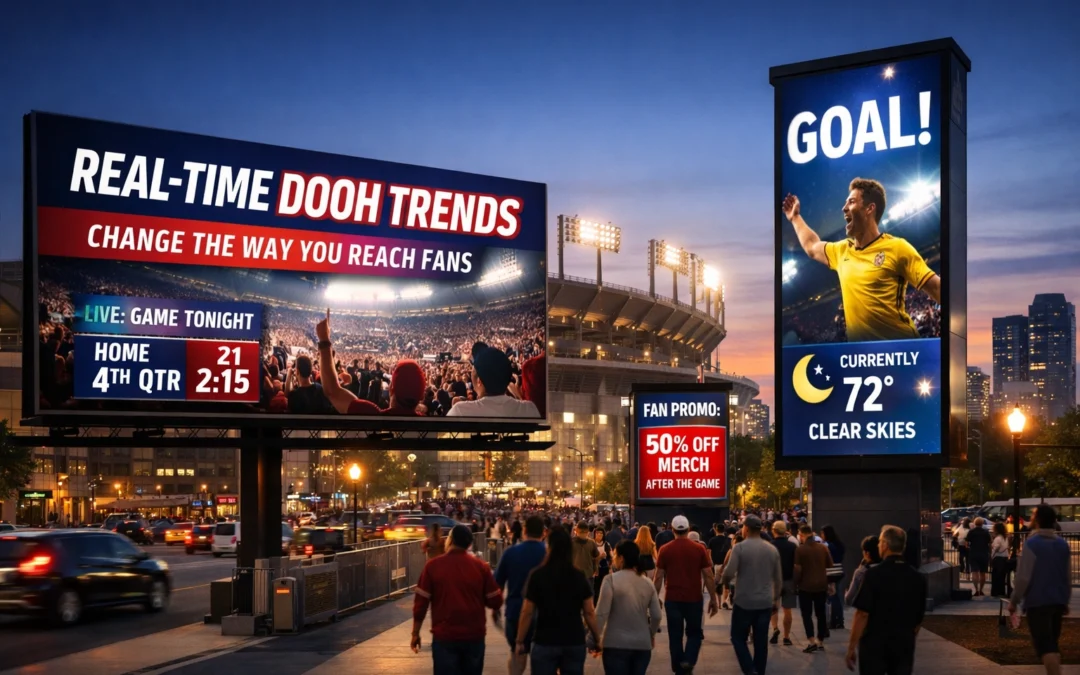
The landscape of sports advertising is undergoing a significant transformation. As traditional static billboards move into the background, Digital Out-of-Home (DOOH) technology is taking center stage by offering real-time, context-aware messaging. This shift is not merely about changing the medium from paper to pixels. It is about the ability to reach fans at precisely the right moment with content that reflects their current environment and emotional state. In a world where sports fans are constantly connected, the physical world must keep pace with the digital one.
The Evolution of Fan Engagement
Engagement in the modern sports era is defined by immediacy. Fans expect updates on scores, player statistics, and game highlights to be available at their fingertips. DOOH advertising bridges the gap between the stadium experience and the daily commute. By utilizing real-time data feeds, brands can now deliver messages that change based on what is happening on the field. This capability ensures that an advertisement remains relevant whether a team is celebrating a victory or regrouping after a loss.
Unlike traditional outdoor media, which often requires weeks of lead time for printing and installation, digital screens allow for instant creative updates. This flexibility is essential for sports marketing, where the narrative can change in a matter of seconds. Strategic planning now involves not just where a screen is located, but what specific triggers will prompt a creative change.

Dynamic Content Adaptation as a Strategic Advantage
The ability to adapt content dynamically is one of the most powerful tools in a media buyer's arsenal. Real-time flexibility allows brands to respond to changing conditions such as weather, traffic patterns, and live game events. For instance, a beverage brand might trigger an advertisement for a refreshing cold drink when the local temperature rises above a certain threshold during a summer baseball game. Conversely, if a game goes into overtime, messaging can pivot to highlight late-night food options or transportation services.
Data signals such as location, time of day, and product availability are now standard components of campaign execution. This move away from one-size-fits-all creative ensures that the audience context and intent are reflected at the moment of exposure. During major tentpole moments, brands can reinforce digital narratives found on social media or CTV by bringing those stories into physical spaces at peak attention times. This creates a unified brand experience that feels cohesive across all touchpoints.
For more information on how network expansions are facilitating these strategies, visit OOH Sports Network Expands to 25,000 Digital Screens.
Hyperlocal and Audience-Centric Targeting Mechanics
Smart DOOH systems are equipped with sensors, GPS, and artificial intelligence to tailor content based on local contexts. This hyperlocal approach allows marketers to focus on specific real-world moments rather than just screen locations. By using first-party data from loyalty programs and digital touchpoints, brands can guide when and where messages appear to maximize impact.
Research indicates that hyperlocal smart billboards can boost action rates by 6% and increase purchase intent by 1.3 times compared to generic advertisements. Furthermore, 55% of audiences report that these campaigns feel personally relevant to them. In the context of sports, this might mean displaying specific team merchandise ads only in neighborhoods where fan density is highest or near the stadium on game day. This level of precision ensures that marketing budgets are spent efficiently, reaching the individuals most likely to convert.

The Integration of Programmatic Technology
Programmatic DOOH (pDOOH) has become the industry standard for efficiency and scale. It allows brands to launch campaigns quickly, optimize budgets based on real-time performance, and adjust frequency or time slots on the fly. The automation of the buying process means that advertisers can bid on inventory that meets specific criteria, such as a high concentration of sports fans during a pre-game window.
Technology platforms like Sportrons provide the infrastructure necessary to execute these complex buys. By integrating with various data providers, these platforms enable a level of targeting that was previously impossible in out-of-home advertising. Programmatic triggers can be set to pause or start campaigns based on live score updates or even the sentiment of fans on social media, ensuring the brand always strikes the right chord.
Omnichannel Integration and the Path to Purchase
Real-time DOOH does not exist in a vacuum. It is an integral part of an omnichannel strategy that includes mobile, social, and digital video. Through the use of geo-fencing and retargeting, brands can continue the conversation with a fan after they have passed a digital screen. For example, a fan who sees a DOOH ad for a specific jersey near the stadium might later receive a targeted mobile advertisement with a discount code for that same item.
The inclusion of interactive elements like QR codes has further bridged the gap between physical exposure and digital action. These tools provide a direct path to purchase, allowing fans to buy tickets, order food, or join a mailing list with a simple scan. This connectivity creates a seamless journey for the consumer and provides valuable attribution data for the advertiser.

Measuring the Success of Modern DOOH Campaigns
One of the most significant advancements in DOOH is the ability to measure performance with high precision. Metrics have evolved beyond simple impressions to include dwell time, interaction rates, and physical visitation. Brands can now use device ID data to track whether a person who was exposed to a DOOH ad eventually visited a retail location or a stadium.
Case studies show the tangible impact of these strategies. For instance, a programmatic DOOH campaign for a major beverage brand resulted in a 74% lift in purchase consideration. Another study highlighted a 119% lift in positive brand image through the strategic use of pDOOH. These results demonstrate that when technology and creative strategy align, the impact on the bottom line is substantial. Detailed examples of these outcomes can be found in the OOH Sports Case Studies.
Specific campaign results often include:
- 74% lift in purchase consideration for new product launches.
- 119% lift in positive brand image ratings.
- Significant increases in store or stadium foot traffic.
- Higher engagement rates compared to static outdoor media.
For deeper insights into these metrics, refer to the White Claw Case Study and the AB InBev Case Study.

Strategic Implementation and Technology Partners
Success in real-time DOOH requires a combination of high-quality inventory, advanced data signals, and a clear understanding of the target audience. Collaborative efforts between agencies, technology providers, and media owners are essential for executing campaigns that resonate. The process involves selecting the right triggers, designing creative that can adapt without losing brand identity, and establishing clear KPIs for measurement.
Media buyers are encouraged to explore comprehensive guides to stay ahead of the curve. Resources like the Ultimate Guide to Sports DOOH Trends offer valuable frameworks for planning and execution. By focusing on audience-centric strategies and leveraging the full capabilities of programmatic platforms, brands can ensure they remain relevant in an increasingly competitive landscape.
Conclusion
The future of sports advertising is dynamic, data-driven, and deeply integrated into the fan experience. Real-time DOOH trends are changing the way brands communicate by prioritizing relevance and context. Through the use of programmatic automation, hyperlocal targeting, and sophisticated measurement tools, advertisers can reach fans in ways that were once unimaginable. As technology continues to evolve, those who embrace these innovations will find themselves better positioned to capture the attention and loyalty of sports fans worldwide.
To explore how these trends can be applied to specific marketing goals, more information is available at OOH Sports. For inquiries regarding partnership opportunities or campaign planning, please visit the Contact Page.